This is neat! It kind of looks like a ziploc. https://cockeyed.com/science/eyeclops/eyeclops_ziplock.shtml
That was fascinating, thanks.
61–70 of 191 posts
This is neat! It kind of looks like a ziploc. https://cockeyed.com/science/eyeclops/eyeclops_ziplock.shtml
Earlier quoted context omitted.
Extrusion is soooo 2032. Here in 2045 we direct nanobots to assemble our 3D-fractal pasta to atomic precision. Look for it under the brand name FractalDente™.
Do we still throw it against the wall to see when it's done? Or will it make the wall collapse to a point?
Earlier quoted context omitted.
I like my veggies in curry to be cut in uneven sizes because of this reason. Some pieces are still a little hard and crunchy, some are soft, gravy like.
I think this is an underexplored idea. I often do it with onions, both putting some in early and putting some in very late. It's a cheap way to get "two" vegetables in your stir fry or chili or something for the effort of one.
After I started the pasta, I realised there was no enough sauce. So I added fresh crushed tomatoes, which had only enough time to warm up, and not really cook much with the existing sauce.
I discovered that tomato having two flavours in the sauce, lets both flavours complement each other.
It seems like there are many possibilities, with more and less cooked things together.
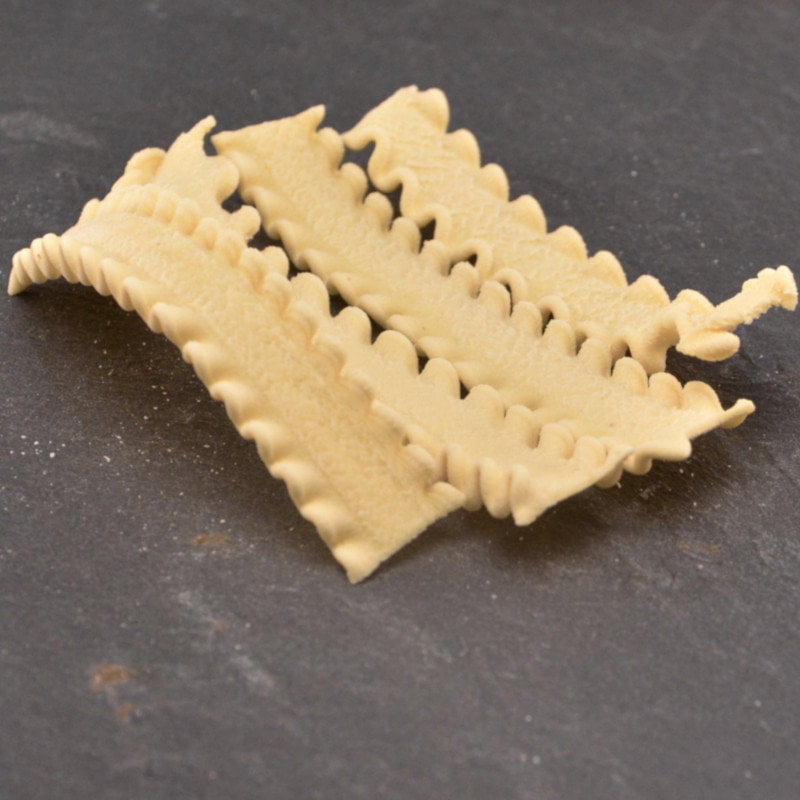
Ew. Looks like a sea slug. https://en.wikipedia.org/wiki/Sea_slug#/media/File:Glossodor...
The pasta. Not the sea slug. Though all sea slugs looks like they were made during evolution's goth phase.
Earlier quoted context omitted.
I thought the point of cooking pasta al dente is that it doesnt get mushy when combined with sauce where it continues to cook a bit longer.
Not really. I mean you want to cook it differently and slightly less if you're going to finish it in the sauce but that's a different thing. Al dente is specifically undercooking it a bit because you prefer that texture over the fully cooked texture. If you pull it a little early then let it fully finish in the sauce it's not what I would consider al dente.
The meaning of cooked and overcooked depends a lot on personal taste, but generally al dente it's when it's still elastic but not mushy, like if you apply pressure with the border of a fork, it goes back to the original shape when you relieve the pressure and doesn't fall apart.
But that's simply the help visualize it and it's not even applicable to all kinds of pasta, practically we taste the pasta while it's still cooking and decide if it's all dente or not based on our experience.
Usually when pasta cooked the exact amount of time specified on the package it should be "al dente", but you shouldn't trust it and start tasting it a couple of minutes before that point.
Anyway not all pasta makes sense al dente, fresh pasta or stuffed pasta like ravioli or tortellini for example cannot (and shouldn't) be cooked al dente.
Structural integrity is important for this condition, so I think the ruffles may help, but I think the main shape needs more corrugation to hold up under compression.
Radiatore are currently my reigning favorite, especially for mac and cheese. This looks like it has less overall surface-area-to-volume than radiatore, but is better for holding thicker sauces vs the thin fin gaps in radiatore.
https://pastidea.com/wp-content/uploads/2017/01/762-TRAFILA-...