Earlier quoted context omitted.
Cost of living.
rents are falling though. so not the same.
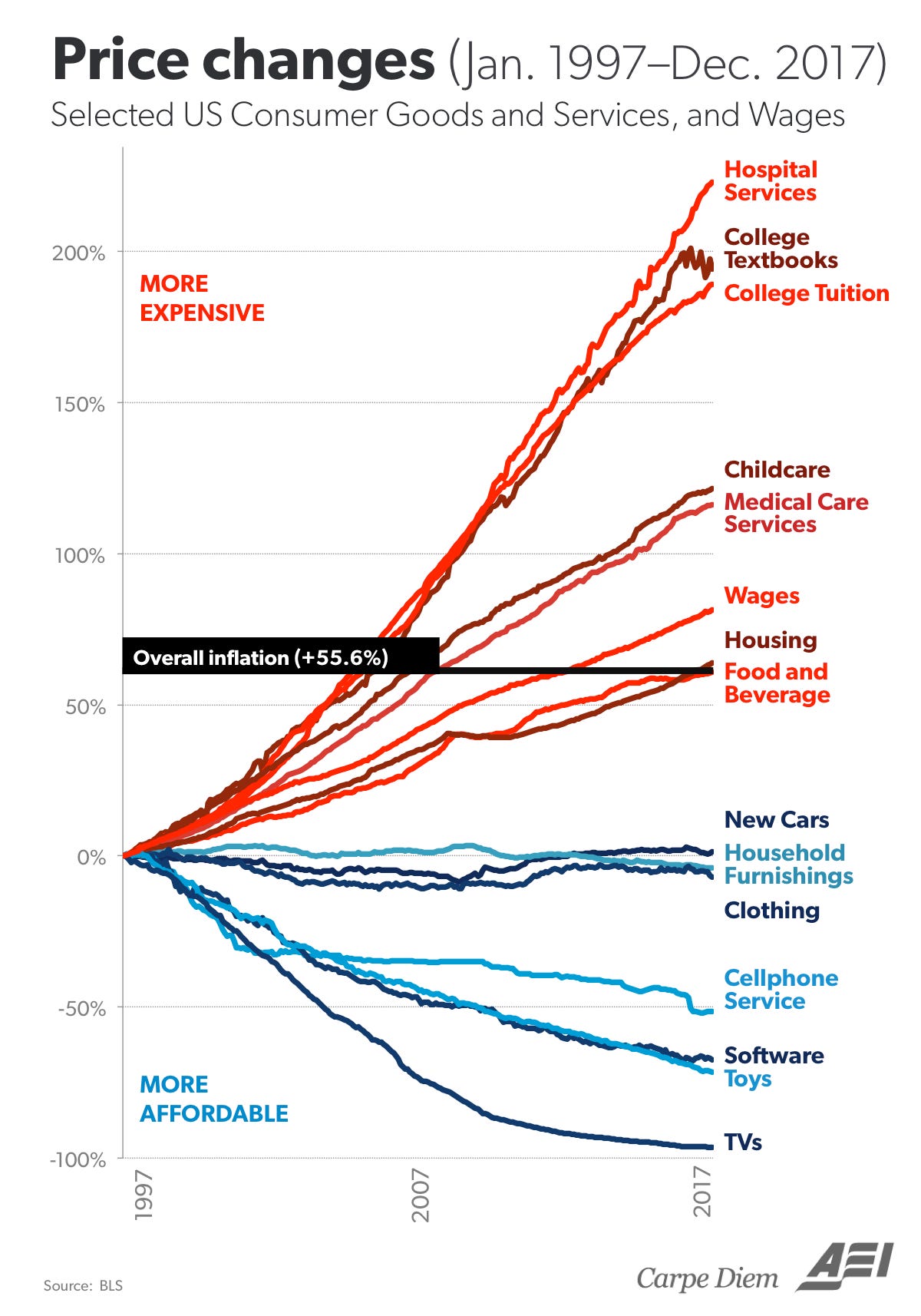
Rents are falling slightly in dense urban areas that were already inflated from a decades long surge (65% in LA, 30% nationally [1]), but are actually increasing in suburban areas [2]. In those areas, the increases are affecting all sectors of the market:
"Overall, CoStar data show the largest rent increases have come in higher-end properties, where average rent for a vacant unit in the Inland Empire has grown 9.3% over the last year, compared with the previous four-year average of 3.8%.
In older, more rundown properties where lower-income households are likely to live, rent is up 3.4%, compared with the previous four-year average of 4.9%."
1. https://www.latimes.com/business/real-estate/story/2019-12-2...
2. https://www.latimes.com/business/story/2020-11-23/rent-falli...