Live data from Hacker News

Vertical farming does not save space

lowtechmagazine.com

201–210 of 464 posts

Re: Vertical farming does not save space

#201
post #191

Earlier quoted context omitted.

the US has 80000 tonnes of spent nuclear reactor waste. SpaceX launch cost in 2017 was $2700/kg. presumably lower now. by my math, that's $215bn to launch all our nuclear waste into space. Is there a reason that's not a viable option?

The danger of launch failure making the planet uninhabitable.

How do you imagine that would happen? Even if a rocket fails catastrophically, pulverizing the nuclear waste, distributing it evenly across earth, how do you imagine that would make the planet inhabitable? Is the planet inhabitable now, after all the atomic bombs that exploded and all the nuclear waste that went into the ocean?

And what do you think drives the latest Mars rover, Perseverance?
Re: Vertical farming does not save space

#202

Earlier quoted context omitted.

The difference with solar/wind space requirements is so big that it does not matter. If the land is reserved and left to nature that is still a positive thing because that helps the environment and biodiversity. But I'm sure that they could put solar panels on it if they wanted. The point is that this land is not required for production and in any case solar require much, much more land, so, no, it's not even close.

It doesn't really make sense to talk about land usage that just so happens to be owned by a nuclear plant, or even certain fixed land requirements for a nuclear plant. It only makes sense to talk about the limiting behavior of land usage for various types of power plants.

Solar has hugely larger requirements than nuclear however you look at it, contrary to what was suggested above.

Re: Vertical farming does not save space

#203
post #74

Earlier quoted context omitted.

The other thing to remember is that there is a lot of land that isn't suitable for farming for one reason or another that can be used for solar.

Right, which is why it doesn't make sense yet for countries like the US, where there is enough open land and connective infrastructure to grow plants with free sun energy. If you were to use solar, then you'd need a country that has a lot of land that would be better used on solar panels rather than farmland, so maybe one that is mostly tundras or deserts.

I was really only addressing the notion that vertical farming took up more land. If we have as much extra land as you say, the point is irrelevant anyway.

But you need to remember that there are real costs to industrial farming on land. The use of pesticides, fertilizers and topsoil loss. There are a lot of benefits to vertical farming if it can be made to work economically.

Re: Vertical farming does not save space

#204

This article is more about indoor farming than vertical farming (is it even vertical if there's only one row?). I grow lettuce indoors. It serves as a nice houseplant and fresh source of salad greens for lunch. It's fairly new, so the cost isn't that much different than just buying lettuce. Once I start building my own "pods" instead of buying the brand-name pods, though, I expect it'll be a bit cheaper than buying 4…

Is that including amortizing the space it uses in the house? That's not really free.

https://twitter.com/SimianLogic/status/1361768051276992514

Kind of free? There was nothing in that space before.

Re: Vertical farming does not save space

#205

Earlier quoted context omitted.

But surely they don’t just own the “nature” land for the fun of it. I assume it could not be used for other things, like housing, or another nuclear power plant!

The difference with solar/wind space requirements is so big that it does not matter. If the land is reserved and left to nature that is still a positive thing because that helps the environment and biodiversity. But I'm sure that they could put solar panels on it if they wanted. The point is that this land is not required for production and in any case solar require much, much more land, so, no, it's not even close.

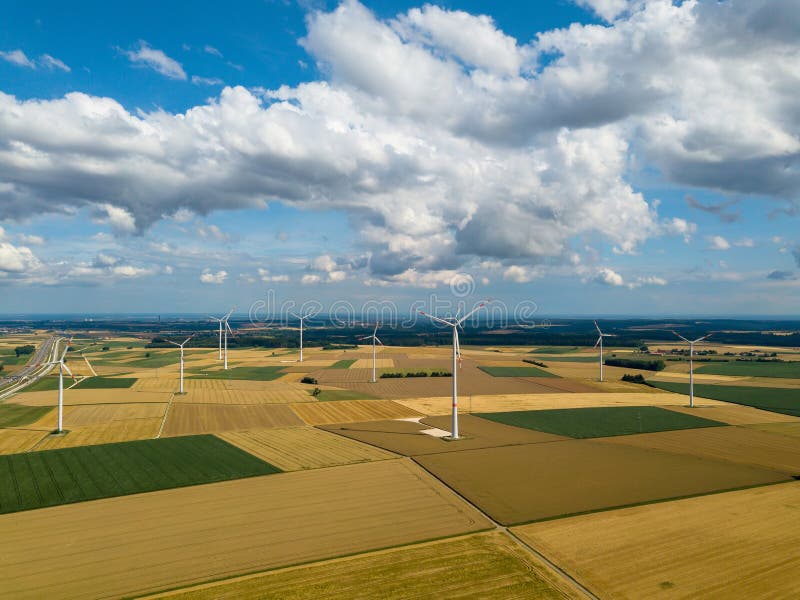
Winds density is off the charts as you can use the ground around it for crops or even solar panels. https://thumbs.dreamstime.com/b/wind-turbines-corn-fields-ae...

Re: Vertical farming does not save space

#206
post #82
post #74

Earlier quoted context omitted.

The other thing to remember is that there is a lot of land that isn't suitable for farming for one reason or another that can be used for solar.

It's such an important point that's the core value proposition of vertical farming. Arable.land is unlikely to keep up with the combination of population growth and climate change. That's the whole point of the exercise! Solving that problem!

doubtful, as little far back as a decade there was considered to be over 2.7 billion hectares of land available that would was considered usable, this is mostly in areas like South America, sub-Saharan Africa, and Central America.

Global Warming may actually open areas previously unsuited for certain crops; evidence pointed to much warmer climates in Europe with grapes further North in mans short existence, and the impact on existing uses is not fully understood.

The simple fact is, every time someone suggest were are running out of food or have too many people or water is not wet anymore we find out that it simply is because we don't look further than we are standing.

The biggest reason people starve today is repressive governments that respect neither the person or private property. that one percent, the ruling elite of the world, loses its grip in highly informed, rights driven parts of the world but they sure do fight to keep the pie to themselves even there.

Re: Vertical farming does not save space

#207

Earlier quoted context omitted.

In the short term nuclear energy is expensive, but in the long term nuclear energy is one the cheapest sources of energy available. Source - https://www.youtube.com/watch?v=cbeJIwF1pVY (this is even more true when you consider the cost of externalities)

I don't see how nuclear can win over the long term. Solar and wind are simple and very amenable to mass production. Many parts of them are usable for other purposes -- we need generators for things other than windmills, inverters for things other than solar powerplants, etc. This means we're not making things as a one off, but doing mass manufacturing, and the different users all reap benefits. They're easy to produc…

Nuclear's non-intermittency is why it wind in the long run. Once intermittent sources fulfill demand during peak production hours, the actual cost of adding each usable watt goes up dramatically. If your goal is to run a primarily fossil fuel grid, supplemented by renewables that's fine. That's what Germany is doing.

But if your goal is to actually eliminate carbon emissions, you need to factor in the cost of storage. And there really no feasible plan of storing the amount of energy required at the moment.

If your goal is to actually eliminate carbon emissions, nuclear presents a much more realistic option. We keep celebrating Germany, but in reality their carbon emissions per KWh of electricity is not actually very good. It is worse than Britain. And it's ~7x worse than it's neighborhood to the west, which we tend to ignore for some reason.

Re: Vertical farming does not save space

#208

Earlier quoted context omitted.

Have you written comprehensively about the system you've set up and how it works? I've thought about a Zipgrow system or similar: https://shop.zipgrow.com/products/small?variant=316809164227... , but, as you can see, it's fairly costly to set up. I don't think it'll be cheaper than the grocery store, but it also seems fun and like the final product may taste better.

I'm just using a 9-plant Aerogarden Bounty right now (think it was ~$175 on Black Friday). My wife says I can upgrade to an indoor Tower Garden or Lettucegrow if I do 3-4 cycles on this thing without getting bored. I also built six 4ftx4ft raised (dirt) beds in our back yard a few years back. I plant fairly densely (usually using 1x1 squares for most things, 2x2 for tomatoes) and I'm thinking about trying one of the…

Look at BA Kratky. My variant consists of 10Gal mixing tubs (Lowes $6) a bit of blue dow foam board, toothpicks, and rapid rooter growplugs Barina grow lights. Masterblend, CaCO3, and Epsom salt. Six trays (one per week. Pest pressure and growing season makes leafy greens not practical.

Re: Vertical farming does not save space

#209
post #205

Earlier quoted context omitted.

The difference with solar/wind space requirements is so big that it does not matter. If the land is reserved and left to nature that is still a positive thing because that helps the environment and biodiversity. But I'm sure that they could put solar panels on it if they wanted. The point is that this land is not required for production and in any case solar require much, much more land, so, no, it's not even close.

Winds density is off the charts as you can use the ground around it for crops or even solar panels. https://thumbs.dreamstime.com/b/wind-turbines-corn-fields-ae...

Wind still requires a huge area covered with wind turbines to match a single nuclear plant. Each of which takes space, needs to be accessible, and needs to be connected to the grid through some facility. I would not call that a density off the charts... (see link in my previous comment as well)

Re: Vertical farming does not save space

#210
post #155

Earlier quoted context omitted.

How exactly do you do that in say the desert? Solar is KISS in many situations.

Are greenhouses in deserts harder to build or maintain than PV farms and power lines in the same desert? Not a rhetorical question, I genuinely don’t know. I assume it varies by desert, but farming and power are both way out of my domain.

My understanding was that you put the solar in the desert, so that you can put the vertical farm somewhere else where soil, water, transport logistics is easier.

So the question is whether a greenhouse/farm in the desert is easier than solar in the desert connected through grid to vertical farm somewhere else.

I have no data. My guess is the ongoing logistics of piping electricity out of the desert is easier than fertiliser into the desert and produce out to where people live.

Post reply on HN