Live data from Hacker News

Europe Is Guaranteeing Citizens the Right to Repair

reasonstobecheerful.world

231–240 of 366 posts

Re: Europe Is Guaranteeing Citizens the Right to Repair

#231
post #40

Earlier quoted context omitted.

When repair labor costs more than automated production, then it's cheaper to replace whole units than mend parts. This is very much in line when what the Luddites understood. Fixation on "waste" is a by-product of unrelated worries which are fashionable today, but cheap production at a distance is what labor should worry about, instead.

>> When repair labor costs more than automated production.. When companies deliberately build products in unrepairable ways then repair labor costs more than automated production. Imagine if mac butterfly keyboards were replaceable. Or for example I recently fixed my dad's washing machine, but it took a couple hours of labor to replace the pump because you had to remove about 4 other things to get to it (when they co…

> When companies deliberately build products in unrepairable ways then repair labor costs more than automated production.

They don’t. They optimize for production costs, not repairability, that’s all.

And glueing 100,000 iPhones together is faster and cheaper than screwing them together.

Re: Europe Is Guaranteeing Citizens the Right to Repair

#232

I kind of wonder if we're looking at solving this the wrong way. Instead of mandating that manufacturers take specific steps to fix the waste problem, maybe it would be better to tag items at manufacture and charge device makers a percentage based on how long before it enters the waste stream. Manufacturers could solve this by either: - Making their things easy to repair - Creating in house recycling programs - Makin…

The problem here is with the time delay between manufacturing and the waste, especially as many manufacturers are abroad and short-lived. It's feasible to enforce repairability conditions and documentation requirements before a device is sold, at the point of manufacture or import - if you're not compliant, you get excluded from the market. It's not feasible to reliably and effectively enforce consequences for manufa…

> It's feasible to enforce repairability conditions and documentation requirements before a device is sold, at the point of manufacture or import - if you're not compliant, you get excluded from the market.

Yes.

Someone else pointed out just charging for waste at the time of manufacture/ import and that is an excellent way to resolve this.

Though companies which reclaim/ recycle old products should get credit for that effort as well.

Re: Europe Is Guaranteeing Citizens the Right to Repair

#233

I kind of wonder if we're looking at solving this the wrong way. Instead of mandating that manufacturers take specific steps to fix the waste problem, maybe it would be better to tag items at manufacture and charge device makers a percentage based on how long before it enters the waste stream. Manufacturers could solve this by either: - Making their things easy to repair - Creating in house recycling programs - Makin…

I suppose there would be some regulatory agency that takes samples and estimates the number of items disposed, and then levies the costs?

Incentivise consumers by giving them a cut of the charge to manufacturers when they report trashing an item. That is, if you recycle a phone within 5 years you get £5 (or some percentage or sale price) which is charged back to the manufacturer.

Re: Europe Is Guaranteeing Citizens the Right to Repair

#234

Earlier quoted context omitted.

> Local authorities should be able to collect up all Mcdonalds packaging and hand it back to them. Absolutely! It is far too easy to create disposable crap that ends up dumped all over the planet. I get so frustrated seeing garbage all over the place in natural places. I do think its a lot easier to focus on the higher ticket items first.

You guys are forgetting another part of the chain, which can make decisions - consumers. If cost of throwing something away increases - may be that will make consumers choose something more reliable and serviceable. As if right now residential trash pickup service probably covers just the labor and machinery to get trash to the landfill

Charging to dispose of waste is a bad idea. In my country they tried charging for non-separated waste. It just increased the number of illegal dumps and garbage disposed in the wrong container by a massive amount.

Re: Europe Is Guaranteeing Citizens the Right to Repair

#236

Earlier quoted context omitted.

Common things that existed 20, 30, or even 40 years like refrigerators, coffee machines, dishwashers, washers, and dryers, often lasted 10 or 20 years in some cases, and could be repaired. We have witnessed the steep decline of device reliability in my lifetime, and our expectations are so low that the latest appliance we buy we consider lucky if no problems develop in 2-3 years. Anything serious requires you to usua…

The situation is not so clear-cut with domestic appliances. Modern fridges are much more energy-efficient. So there is a tradeoff: either you buy a new fridge, thus polluting the environment with the old fridge, but saving energy. Or you let your good old 30 year old fridge run, saving the resources needed for a new fridge, but burning a lot more energy in the process.

It's a simple calculation. How much energy costs do I save compared to keeping the old one. Also I wouldn't expect any "modern" appliance to last more than 5 years.

Re: Europe Is Guaranteeing Citizens the Right to Repair

#237
post #220

Earlier quoted context omitted.

The amount of plastic and paper packaging/marketing that you are forced to accept and dispose of when you buy products is getting extreme. I recently bought a micro-sd card, and had to dispose of: 1. the large shipping package, 2. the enormous (in volume and mass) product plastic shell package, 3. the glossy paper marketing insert inside the package, 4. the user’s manual (!), 5. the unwanted microsd-to-sd adapter. Pr…

As a consumer though you could also have bought it in a store or waited until you needed something else as well. I never understood the mindset of buying only a usb-stick or similar online. Yes, the waste is obnoxious, but the consumer isn't always innocent either.

Buying in-store or via delivery service (as opposed to Amazon) is almost guaranteed to increase the amount of plastic packaging. Many stores have those stupid anti-consumer clamshell packages (mostly to reduce shoplifting, but at high environmental cost).

Let's not forget all the packaging in shipping the item to the destination as well (that you don't see because it's discarded in the shipping room floor).

It's gotten to the point where I simply don't buy unless I absolutely need it anymore.

Re: Europe Is Guaranteeing Citizens the Right to Repair

#238

Earlier quoted context omitted.

> Local authorities should be able to collect up all Mcdonalds packaging and hand it back to them. Absolutely! It is far too easy to create disposable crap that ends up dumped all over the planet. I get so frustrated seeing garbage all over the place in natural places. I do think its a lot easier to focus on the higher ticket items first.

You guys are forgetting another part of the chain, which can make decisions - consumers. If cost of throwing something away increases - may be that will make consumers choose something more reliable and serviceable. As if right now residential trash pickup service probably covers just the labor and machinery to get trash to the landfill

Some notes about how all this is handled in Switzerland:

1- electronics HW (HDD, TV, microSD-card, etc..) recycling costs are already embedded in the cost of any new stuff that is sold (there is a little bit of extra price to be paid when buying new HW, that in turn will cover the costs to recycle the old HW that is probably being replaced or that will be replaced in the future). People dump their old HW to collection centers for free, which is then partially recycled (current technology cannot yet recover all metals etc.. contained in HW).

2- Some specific trash (e.g. PET, metals, etc...) can be brought to recycling collection centers and dumped there for free, which is then recycled.

3- To "motivate" people to produce as less non-recyclable trash as possible and to get rid of recyclable stuff in the right way (points #1 & #2), anything that gets into the non-recyclable trash must be paid for - e.g. we have to pay ~2 USD for a 35-liters trash bag, big objects need a special "sticker" that must be bought (don't remember how much it costs) => normal trash bags and big stuff without sticker don't get collected, so you cannot just leave them on the street.

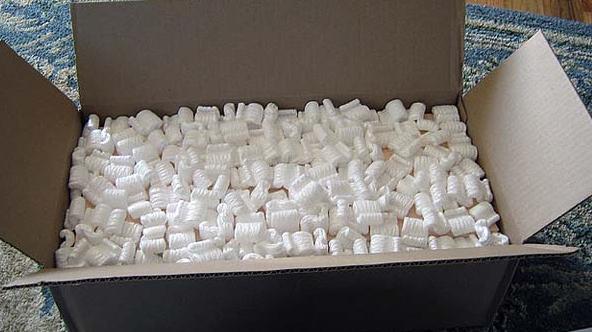
In general, during the last years this put quite some pressure as well on the retailers (meaning the final shops from which you buy stuff): in the past they used e.g. the many small chunks of polystyrene ( https://www.vertapak.co.uk/wp-content/uploads/2014/05/polyst... ) to cushion what was in their packages, but now they all almost always use small inflatable bags - in both cases still plastic, but the amount of material is like 1000 times lower. They did it because many people continuously complained a bit to them that on one hand polystyrene wasn't environmental, but as well or especially because they had to use a lot of space in the "special costly trash bag" to throw that stuff away.

I admit that I'm not the best recycler (PET+HW+batteries+lightbulbs+clothes always, but rarely stuff like metal and glass and paper), but in the end I think that I'm at least "ok".

Switzerland doesn't have a nation-wide law about it, and if I want I can still throw away stuff into the non-recyclable loop, but if I do it then I have to pay for it (by buying the special trash bag or sticker) as I usually do when I throw away cans and bottles mixed with other stuff => freedom, but at a price - that sentence does sound horrible but in this context of recycling it just makes sense, and for me it works absolutely well :)

https://en.wikipedia.org/wiki/Waste_management_in_Switzerlan...
Re: Europe Is Guaranteeing Citizens the Right to Repair

#239

Earlier quoted context omitted.

The problem here is with the time delay between manufacturing and the waste, especially as many manufacturers are abroad and short-lived. It's feasible to enforce repairability conditions and documentation requirements before a device is sold, at the point of manufacture or import - if you're not compliant, you get excluded from the market. It's not feasible to reliably and effectively enforce consequences for manufa…

> It's feasible to enforce repairability conditions and documentation requirements before a device is sold, at the point of manufacture or import - if you're not compliant, you get excluded from the market. Yes. Someone else pointed out just charging for waste at the time of manufacture/ import and that is an excellent way to resolve this. Though companies which reclaim/ recycle old products should get credit for tha…

In Germany, producers or importers of electric and electronic devices are already paying for collection and recycling or disposal. https://www.stiftung-ear.de/de/startseite

Didn't reduce the volume of the respective waste and didn't prolong lifetime of products in the slightest.

Re: Europe Is Guaranteeing Citizens the Right to Repair

#240

Earlier quoted context omitted.

Even LineageOS can only help so far. I've got a Galaxy S7 Edge, bought it dec. 2016. It's not even supported by Lineage OS any more.

You should switch to the official OS then - it just got an update. As it also did 3, 6 and 12 months ago.

What are you talking about? The last update for the "official" OS was for Android 8.0. That was two years ago.
Post reply on HN