Live data from Hacker News

The biology of dads

aeon.co

261–270 of 285 posts

Re: The biology of dads

#261
post #260
post #164

Earlier quoted context omitted.

One day it just hit me: "I could totally give my life for this child". It came out of nowhere and it was a chilling and somewhat unnerving feeling. I never felt that for anyone. But the conviction is there, almost like a peaceful resignation: if there is no other solution and that is the only possible alternative then so be it. Crazy.

It's funny, this was one of the reasons I always found Harry Potter so overrated. So Harry has super special invincibility from The Killing Curse because Lily sacrifices herself for him. This is described as "Ancient, Long Forgotten Magic" Wouldn't literally any parent do this? Why aren't they're dozens of boys/girls who lived?

Because only in this case did Voldemort even consider sparing a parent. Note that James is already dead and his love is not believed to have any extra power. It was only that Lily had a rare chance to flee and refused to take it that Harry was protected.

(Assuming I haven't mixed up canonical Harry Potter with Methods of Rationality.)
Re: The biology of dads

#262
post #58

"They seemed like ideal infant-caregivers: calm, gentle, patient and sensitive. They didn’t seem like men you would go to battle with. In fact, they were the very antithesis of the warriors and athletes – think Maximus, Achilles or Michael Jordan – often associated with a masculine ideal." I became a father quite a bit before most of my friends, and so was the butt of some jokes about masculinity for the way I parent…

> think Maximus, Achilles or Michael Jordan Maximus is a bit of a strange choice there. Marcus Aurelius of Meditations fame, is the titular grandfather figure in the film (right at the start). Meditations has a lot in it about child rearing and Marcus was something of a devoted father to his many children (for Roman men in those days). All that said, his son, Commodus, the first emperor to have the title passed down…

> Commodus, the first emperor to have the title passed down to him from his own father

I don't think that's right? Titus[0] succeeded Vespasian in 79 AD, father to son. Both were good rulers BTW, but Titus was succeeded by Domitian (younger brother) who was a disaster and assassinated for it.

[0] https://en.wikipedia.org/wiki/Titus

Re: The biology of dads

#263
post #222
post #151

Earlier quoted context omitted.

> "go to battle" I remember that in the first days after my kid was born, the thought that I would defend that child to the bitter end against any attacker suddenly seemed completely natural, even trivial. It was quite strange and included a sudden extreme awareness of (and aggressive feelings against) animals which came to close. This included dogs. The feelings were overwhelmingly archaic. I talked to my wife about…

This protection instinct can be utterly irrational: when my first son was just born, we were walking on a sidewalk and a car passed by, and I felt a slight urge to throw myself in front of that car to protect my family. Of course I didn't, but I did know right then that I would be able to fight and give my life for my family, if necessary. I try not to, but I know it's in there.

That urge is what I meant by "overwhelmingly archaic feelings". I hesitated to write this as I am a completely nonviolent person, but at one point, I felt the urge to take out my cheap Swiss pocket knife in preparation to kill a dog which approached the family, in case he attacked. As another commenter has mentioned, this is just something evolution has strongly selected for.

Re: The biology of dads

#264
post #263
post #222

Earlier quoted context omitted.

This protection instinct can be utterly irrational: when my first son was just born, we were walking on a sidewalk and a car passed by, and I felt a slight urge to throw myself in front of that car to protect my family. Of course I didn't, but I did know right then that I would be able to fight and give my life for my family, if necessary. I try not to, but I know it's in there.

That urge is what I meant by "overwhelmingly archaic feelings". I hesitated to write this as I am a completely nonviolent person, but at one point, I felt the urge to take out my cheap Swiss pocket knife in preparation to kill a dog which approached the family, in case he attacked. As another commenter has mentioned, this is just something evolution has strongly selected for.

It's definitely fascinating, feeling these outdated instincts in our modern world.

Re: The biology of dads

#265
The studies are certainly interesting but as Father myself, I would chime in my 2 cents worth:

- less sleep which causes elevated levels of stress which pushes you to eat unhealthy food more, combined with your Body's natural slowdown of digestive system as one ages (compounded by less sleep) will definitely hit Dad's biology quiet a lot for at least the first 3 years of a Child's life.

- Icing on the cake is the hit it takes on Dad's IT career (if Dad is in IT) as he is unable to dedicate meaningful number of after-hours for his skill upgrading.

- Modern Society (at least in Toronto Canada) places unreasonable expectations on Dads to partake in expensive/time-sink activities with their kids such as organized sports and other extracurricular activities as opposed to having kids in neighborhood naturally play at each other's house / local park. This to me is a problem because I am naturally inclined to work and focus on making money/getting promotion rather than extending my family time.

- Raising a Child, especially in a society that is comprised of nuclear family structure and where Grandparents (Wife's Parents) are not geographically near causes immense pressure on both Parents. No wonder, people, especially immigrants in Toronto Canada, rarely have more than 1-2 kids...

Re: The biology of dads

#266

Earlier quoted context omitted.

That has been found to be empirically not true. As always, there is a distribution (see Homicide by Daly and Wilson, for example). Now, if we know by instinct, smell, or just because we know...

An interesting study might be parents who later learn that their kids aren't actually theirs. Did they treat their kids differently than real biological children? All kinds of ethical issues, etc., but the data would be awesome.

We can assume that nobody treats them better and some will treat them worse. It follows that non-biological parents inevitably treat on average (and, very important, this is cross-sectional, not paired) their kids worse after they know they are not theirs. Directionally, there is little doubt.

Re: The biology of dads

#267

Earlier quoted context omitted.

> I think people would be nicer to one another if they could be a parent for a year, at least. Eh. I've seen other parents be just as shitty as anyone else. I don't think parenthood is an empathy-panacea.

I just figured the shitty people are already shitty now, but a lot of people become better after they have kids, so it might be a net gain if more people had kids earlier, since they might become better people earlier. You are right there are shitty parents, but I think parenthood generally makes for a more mature person, on the statistical whole. Either way, it would be nice if people had to think about the care and…

> it might be a net gain if more people had kids earlier, since they might become better people earlier.

Maybe. I was not ready to become a father early in life; I can't tell you if it would have taught me patience earlier, or would have made me resent the responsibility and poisoned my relationship with my kid.

And overall, I think that prescribing having a child to mature people faster fits into the same bucket as having a child to save a failing relationship.

> it would be nice if people had to think about the care and feeding of others more often

Perhaps we can get young people more dogs. Or a fish.

Re: The biology of dads

#268

>Paradoxically, we found that fathers who activate the anterior cingulate the most when listening to infant crying report the most negative emotional responses to those cries, in particular being more likely to label the cry as spoiled or manipulative. How can greater engagement of a brain region associated with empathy be linked with such negative subjective reactions to the cry? We suspect it relates to a phenomeno…

> The newborn phase was really hard for me So many people led me to believe that I would fall in love with my kid the instant I first laid eyes on her, and it simply wasn't the case. I love her so much now, but it definitely wasn't the immediate flip of a switch that some may believe

It's a really crazy time and it can feel like your life has been turned upside down at first. And there's no going back.

In addition you are very sleep deprived.

I know someone who said "I love him, but I don't like him" in relation to their new born.

It can take a while to come to terms and bond properly. You don't get anything back at the start. Once they start smiling, laughing, etc, it becomes even more magical.

Re: The biology of dads

#269

Earlier quoted context omitted.

Oh yeah it’s a very weird feeling when you finally get home from the hospital. It takes a moment, then you realize that nobody else is there to help. The baby is there, hugely needy, completely dependent, and it’s just up to you guys to handle it. Gulp.

The way I felt it, and the way my father described his feelings in the same situation was "can I really just take this home with me? No one's going to question or stop me?"

Yes 100%, I remember thinking how is this legal? I have a tiny human here and I've no idea how to keep them alive! You learn fairly fast though.

The first time you go to sleep is crazy too, "what if something happens while I'm asleep!"

Re: The biology of dads

#270

>Paradoxically, we found that fathers who activate the anterior cingulate the most when listening to infant crying report the most negative emotional responses to those cries, in particular being more likely to label the cry as spoiled or manipulative. How can greater engagement of a brain region associated with empathy be linked with such negative subjective reactions to the cry? We suspect it relates to a phenomeno…

> The newborn phase was really hard for me So many people led me to believe that I would fall in love with my kid the instant I first laid eyes on her, and it simply wasn't the case. I love her so much now, but it definitely wasn't the immediate flip of a switch that some may believe

I am a bit late, but I want to add my 2 cents, because I see a pattern here.

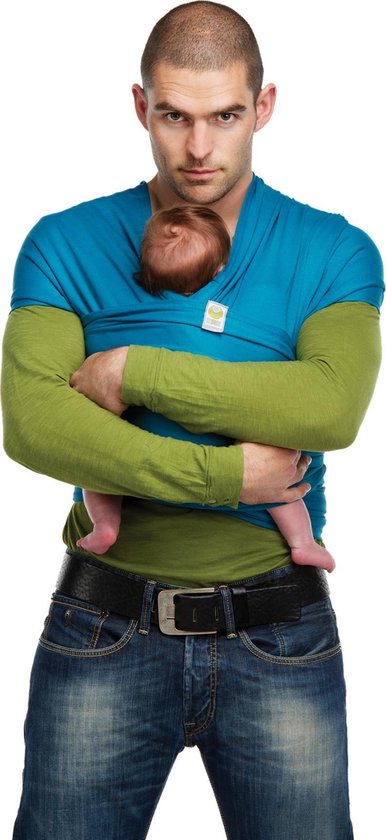
My wife had serious complications after birth, so she basically wasn't there for the first 4 months. We had help during work hours, but all the rest of the care fell on me. I woke up 4 times a night to feed our kid, took him with me almost everywhere (in one of these https://media.s-bol.com/RoDEQRlMPRYY/386x840.jpg ), sat with him when he couldn't sleep, etc.

We bonded hard. My wife reported similar feelings like those described in the other comments. It took her a few years to catch up.

Post reply on HN