Live data from Hacker News

16-inch MBP 2x slower than M1 MacBook Air in a real-world Rust compile

twitter.com

221–230 of 529 posts

Re: 16-inch MBP 2x slower than M1 MacBook Air in a real-world Rust compile

#221

I think Apple have screwed themselves over a bit here by sticking ARM-based Apple silicon in their lower-end/entry level devices first. I mean what's the point in spending £5k on a fully tricked out 16-inch MBP, as I'd been considering, when an entry level Macbook Air or Mac Mini is going to run rings around it? The reason I'm not going to buy one of these lower end Macs (the Mini would be the best fit) is that I can…

I don't think it matters. They get good margins on all their hardware. Some people will still need the pro hardware or can just switch, and then switch again when the 16" has ARM.
Re: 16-inch MBP 2x slower than M1 MacBook Air in a real-world Rust compile

#222

I think Apple have screwed themselves over a bit here by sticking ARM-based Apple silicon in their lower-end/entry level devices first. I mean what's the point in spending £5k on a fully tricked out 16-inch MBP, as I'd been considering, when an entry level Macbook Air or Mac Mini is going to run rings around it? The reason I'm not going to buy one of these lower end Macs (the Mini would be the best fit) is that I can…

IMO, the Mac Mini is the most peculiar purchase of the recent M1 upgrades as normally the tradeoff to the stationary form factor means much better performance; but here the M1 Mini has similar performance with the M1 Macbook Pro.

Re: 16-inch MBP 2x slower than M1 MacBook Air in a real-world Rust compile

#223

Earlier quoted context omitted.

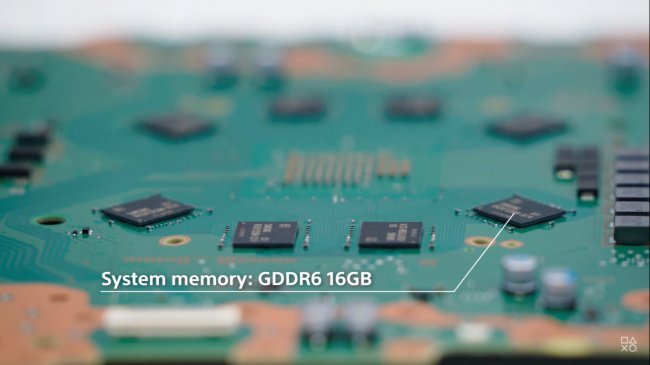
FWIW the latest-gen consoles supposedly have memory bandwidth in the hundreds of GB/s. The PS5 supposedly reaches 448GB/s, and the XBX 336 to 560 depending on the memory segment.

It's the year of system-on-chip. It does show great improvements at the trade-off cost of no expansions possible once the chip is made.

None of these systems seem to have on-die memory. Not sure about the XBS, but from the official teardown the PS5 doesn't even use on-package memory: https://www.gamereactor.eu/media/87/_3278703.png

And Apple certainly didn't wait for SoC to use soldered memory.

Re: 16-inch MBP 2x slower than M1 MacBook Air in a real-world Rust compile

#224

I think Apple have screwed themselves over a bit here by sticking ARM-based Apple silicon in their lower-end/entry level devices first. I mean what's the point in spending £5k on a fully tricked out 16-inch MBP, as I'd been considering, when an entry level Macbook Air or Mac Mini is going to run rings around it? The reason I'm not going to buy one of these lower end Macs (the Mini would be the best fit) is that I can…

16GB is enough memory

Re: 16-inch MBP 2x slower than M1 MacBook Air in a real-world Rust compile

#225

I love everything about the move to Apple Silicon with the exception of the decision to put memory on-die or in-package (not sure how it is configured). They call it 'Unified Memory'. It makes a lot of sense but I don't know if they are going to be able to pack enough memory in there. A lot of folks are fixated on CPU performance lately (which is rad) but I think that there is a tendency to ignore memory. I have 32gb…

According to anandtech the memory throughput is off the charts at 68.25GB/s [1]. That's twice as fast as high speed ddr4 memory (DDR4-4000 at 32GB/s). In other words: they totally trounced and took it to the next level with regards to memory, because they can. If anything, memory control is their biggest advantage. Scaling the amount of ram won't be an issue. Increasing the bandwidth perhaps, but it'll still be way q…

Tiger Lake appears to have the same bandwidth at the chip level but AnandTech is using inconsistent methodology so it's not clear.

Re: 16-inch MBP 2x slower than M1 MacBook Air in a real-world Rust compile

#226

Is anyone else thinking, what the f*ck? Are we in a new era of computing? It certainly feels that way when looking at these desktop class ARM chips, where performance doubled every year or so, just like back in the 80s and 90s.

The CPU gains on ARM have been increasing consistently year over year for the past decade. People have posted benchmarks of the A11/ A12/ A13 versus Intel for a while so this has been pretty obvious. It's just surfacing because suddenly we have a desktop CPU with desktop software like compilers and other things where it's more obvious outside of benchmark tools. Apple is just jumping onto their existing ARM track, on…

I think another shock here is that a lot of people discredited the ability of ARM cpus as well.

Back when the iPad Pro with the A10X came out, Apple claimed it was faster than half of all Laptops sold and people in the PC space were yamming on and on about how numbers don't show how much better x86 cpus are at 'desktop stuff' and that ARM cpus can't equal x86, even with the same thermal envelope and shouldn't ever be compared. Ironically, many are now stating that the reason why they are so good is because of ARM, which isn't true either lol.

Re: 16-inch MBP 2x slower than M1 MacBook Air in a real-world Rust compile

#227

Earlier quoted context omitted.

Normally this wouldn't feel so ground breaking, but the stars are in alignment and all these improvements are hitting at the same time. We're seeing years of work and investment paying off (AMD, Apple, ARM, Nvidia, Amazon), new process nodes (TSMC), and new tech (Ray Tracing, DLSS, machine learning) all hitting at the same time. And that's the big stuff! There's also the steady incremental improvements such as batter…

Ray Tracing I'm not someone into the inner-working of chips much, but is "ray tracing" a new term used for something in microprocessors now? Or is this the same graphic "ray tracing" we were doing back in the 80's on Amigas and Atari STs?

Realtime ray-tracing is a mix of hardware acceleration for ray intersections and de-noising. The de-noising approaches are certainly novel and not really analogous to previous methods, imho, though the accelerated bounding box hierarchies for accelerating intersections certainly appear in previous iterations.

Re: 16-inch MBP 2x slower than M1 MacBook Air in a real-world Rust compile

#228

Earlier quoted context omitted.

Normally this wouldn't feel so ground breaking, but the stars are in alignment and all these improvements are hitting at the same time. We're seeing years of work and investment paying off (AMD, Apple, ARM, Nvidia, Amazon), new process nodes (TSMC), and new tech (Ray Tracing, DLSS, machine learning) all hitting at the same time. And that's the big stuff! There's also the steady incremental improvements such as batter…

Ray Tracing I'm not someone into the inner-working of chips much, but is "ray tracing" a new term used for something in microprocessors now? Or is this the same graphic "ray tracing" we were doing back in the 80's on Amigas and Atari STs?

its a common enough workload that dedicated hardware for it has emerged, and software written to utilize that hardware is becoming more common place.
Post reply on HN