Live data from Hacker News

What Lucky People Do Different

jonathanfields.com

21–30 of 46 posts

Re: What Lucky People Do Different

#21

a subtle but important distinction has to be made. the experiment mentioned in the blog shows a correlation between people who claim they are lucky and the fact they found a text snippet. not people who are lucky (if that is even possible). it could very well be caused by the fact that a test subject just told people they were lucky so psychologically they behave differently. if the experiment had been setup with no…

Yes. They were not actually lucky. Because "lucky" means magic, and magic doesn't exist.

So of course the test was of people with different psychology. That was exactly the point.
Re: What Lucky People Do Different

#23
The problem with the cliche "look in the mirror and ask yourself if you are happy doing what you are doing today knowing you could die tomorrow", is that for any day I'm not spending the entire time with family & friends, the answer is NO. You can be sure if I was dieing tomorrow I'd not go to work and spend the whole day lieing on the beach. Unfortunately you can't do what you'd do on your last day on earth, because it doesn't pay the bills. And it is kind of a trivializing question for those who are facing their last day on earth, which I might be somewhat sensitive to because one of the engineers in my company lost his fight with cancer this morning.

So far better to ask the question: "is what I'm doing today getting me closer to my career goals?", becuase the conclusion to that (less melodramatic) question might actually yield actionable results.

Re: What Lucky People Do Different

#26
post #10

Whenever I see these kind of articles, two words run through my mind: survivor bias. I'm also unconvinced by the John Galt argument that if Steve Jobs had not taken calligraphy courses, we would not have nice typefaces on computers today. After all, typography predates the Mac and it would have been only a matter of time before someone else figured it out. If you don't believe this, look at practically every major di…

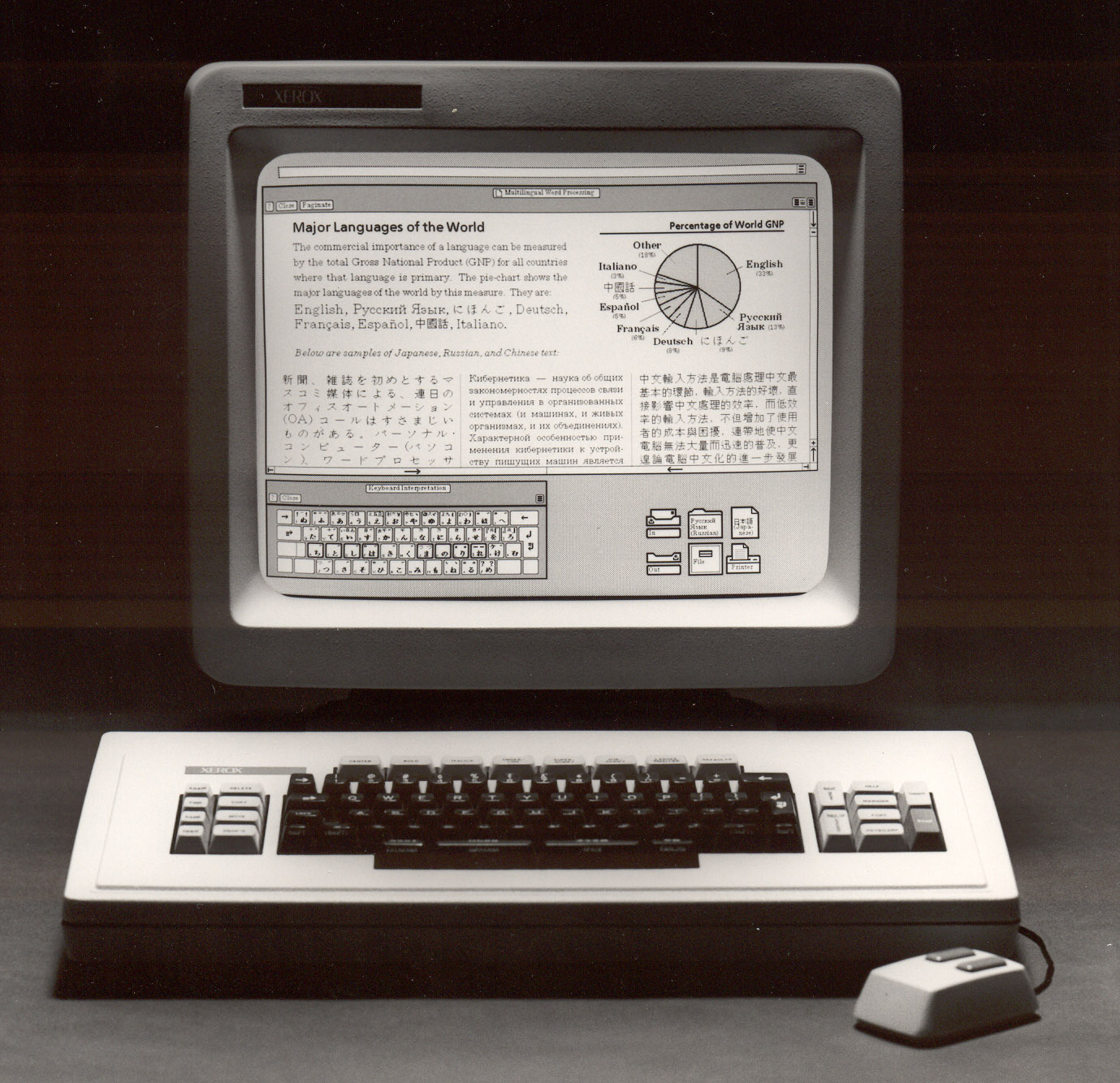
The Xerox Star had desktop publishing with multiple proportional typefaces in 1981. It seems likely that this feature would have been imitated by someone regardless of calligraphic experience.

http://www.digibarn.com/collections/screenshots/xerox-star-8...

Re: What Lucky People Do Different

#27
post #10

Whenever I see these kind of articles, two words run through my mind: survivor bias. I'm also unconvinced by the John Galt argument that if Steve Jobs had not taken calligraphy courses, we would not have nice typefaces on computers today. After all, typography predates the Mac and it would have been only a matter of time before someone else figured it out. If you don't believe this, look at practically every major di…

In fact, I'm certain the Mac would've had multiple fonts, because it was based on () the Xerox Star, and the Star had fonts:

http://toastytech.com/guis/star2.html

() "Based on" might be too strong...or too weak...but we all know the Mac engineers saw a demo of the Star.

Re: What Lucky People Do Different

#28

The problem with the cliche "look in the mirror and ask yourself if you are happy doing what you are doing today knowing you could die tomorrow", is that for any day I'm not spending the entire time with family & friends, the answer is NO. You can be sure if I was dieing tomorrow I'd not go to work and spend the whole day lieing on the beach. Unfortunately you can't do what you'd do on your last day on earth, because…

He's proposing this as a test, not as a recipe. He's not saying "do what you'd do if this day was your last," but rather "consider what you're about to do, and measure how close it is to what you'd do if this day were your last."

Re: What Lucky People Do Different

#29
post #10

Whenever I see these kind of articles, two words run through my mind: survivor bias. I'm also unconvinced by the John Galt argument that if Steve Jobs had not taken calligraphy courses, we would not have nice typefaces on computers today. After all, typography predates the Mac and it would have been only a matter of time before someone else figured it out. If you don't believe this, look at practically every major di…

Its only a matter of time before everything is figured out.

There have been major discoveries and inventions where more than one person or team were trying to solve a known problem. But is there proof that it is the case "practically every" time?

Re: What Lucky People Do Different

#30
post #13

"Of course it was impossible to connect the dots looking forward when I was in college. But it was very, very clear looking backwards ten years later." I've found this particularly true. As long as you're working on something interesting and difficult, you're probably not wasting your time, even if you can't see yet where it leads. It will be an ingredient in something.

And if you are doing it in collaboration with others, you'll be creating a network that will support you throughout your life.
Post reply on HN