Live data from Hacker News

Germany plans to dim lights at night to save insects

msn.com

411–420 of 481 posts

Re: Germany plans to dim lights at night to save insects

#411

I actually was sitting outside a few nights ago and realized that there was no more fireflies, and I couldn't remember the last time I had seen one. I used to go out all the time during summer as a kid to catch them, they would light up whole fields. That was just like 15 years ago. Pretty sobering realization

Driving through Europe one finds the front of the car covered in squashed insects. Drive through the UK and there are none. Depressing.

It depends where in the UK you are driving, I have to wash the car after every major journey > 1hr long because its covered in dead insects and the red, I guess blood, staining the paint. I would say there has been more sightings of wildlife and more insects this year because of lockdown, more hedgehogs seen walking on the roads, more deer, rabbits and plenty of insects especially at night at the moment. So I normally walk my dog with a headtorch at night as its cooler for him to run around off the lead but the insects getting attracted to my headtorch this year is a stupid amount to the point I've stopped taking him out at night. Germany may be onto something by reducing the light sources. Where I live we do have LED street lamps which cast a very definite circle of light on the road, but there is no "side leakage" of light so its darker walking between street lamps. You also dont get any orange glow into your house or bedroom window like the old style street lamps used to do which can keep you awake especially when stressed. The number of small birds nesting in the area has also gone up over the last two years but its nice watching them feeding on insects crawling up and down plants like rose bushes, or hanging onto the side of brick houses getting the odd bug.
Re: Germany plans to dim lights at night to save insects

#412

I actually was sitting outside a few nights ago and realized that there was no more fireflies, and I couldn't remember the last time I had seen one. I used to go out all the time during summer as a kid to catch them, they would light up whole fields. That was just like 15 years ago. Pretty sobering realization

Unless there is actual data it’s probably best to not trust your memory. Every time you remember something the reality of it changes. Memory is lossy. Bias and selection are favored over improvement or precision of recall. Every recollection is inferior to the previous one. I have a few memories of extensive fire fly experiences back in the day. But when I really think about it, I don’t remember all the days and year…

My grand-father lived through WW2. I’d say he was able to give a recollection of memories and experiences that are not found in any books and even though I agree that “good sources for truth” may vary for the use-case, we shouldn’t bee (pun intended) too insecure about believing some of our “past-memory-gut-feel”/“anecdotes”. There is ample evidence about research being “sponsored by the right people showing the right results” or media outlets shaping certain opinions. And even though it may be true that the HN reader has a diverse set of sources to form an opinion - this isn’t necessarily right for “average people”. E.g., the effect and the implications of inflation. For decades I have been hearing that “there is no inflation on Europe, the currency is stable”; yet, recalling “what money could buy back then” stories - I probably get a different vibe. History often repeats itself and “true objective data” may either be spotty and distorted; I have probably grown old and cynic enough to say things like “maybe it’s a good idea to look into the past and remember real good what people said or saw...”

Driving on a highway for 10h without any bugs on it - common sight in Europe nowadays. 10years ago, I would need to handwash it after 3h on the highway. Anecdotes can be a very powerful tool for critical thinking.

Re: Germany plans to dim lights at night to save insects

#413

Wow. I have to say that I have never considered the case where insects needed to be saved. It seems to me that as lifeforms go, they have been the most durable form of multi-cellular life on the planet. That said, that there are negative systemic effects on the planet's ecosystems that are directly related to the massive production and use of herbicides and pesticides is not as surprising. Light though? Even after re…

> The ratio of unlit/lit habitat seems wildly in favor of unlit.

Depends on where. Germany has a very different structure due to its population density than most parts of the US, for example, with comparably less unlit habitat.

So that may be a less important issue in some places but having enough suitable space for themselves in the US doesn't help insects in Germany.

Re: Germany plans to dim lights at night to save insects

#414

Earlier quoted context omitted.

I live in a fairly rural area in Germany and even if the nightsky is perfectly clear the cities in the distance cast a bright haze into the sky. They aren't that dark...

Yes. Light pollution leaks out pretty far away from the source. I don't know if there's any patch of land in Europe now where light pollution is zero. Maybe in a few places in Scandinavia. Death Valley in California has pristine night skies. I cannot even begin to describe how different it is. Think - fine diamond dust on black velvet. There are stars everywhere you look . Amazing.

Yes, in this part of Portugal[1] it's almost zero. It's really really beautiful at night, it feels like in a dream.

https://www.visitportugal.com/en/node/73796

Re: Germany plans to dim lights at night to save insects

#415
post #410

Earlier quoted context omitted.

How many bugs are on your car's windshield/grille, versus 20 years ago?

How much more aerodynamic is your car now versus then?

Actually average CdA (drag area) would certainly have gone up in most parts of the world due to SUVs becoming popular. Looking at values on Wikipedia [1] definitely does not show an obvious reduction over the the last 20 years.

[1] https://en.m.wikipedia.org/wiki/Automobile_drag_coefficient

Re: Germany plans to dim lights at night to save insects

#416

I wonder how many centuries it might take for the US to start to care about insects or the environment like some European countries do with the recent regress in policies overall that isn't about ONLY increasing overall GDP in the US. And I say this even not considering Trump, which is a big menace. But democrat candidates in the US also don't care about the environment, not showing much promise. So do the Americans…

The states of California and Alaska each individually have more wild forest lands than the entire European continent. The US created the concept of state-protected wilderness reserves and national parks. The US was the driving force behind the Kyoto Protocol, and the originating nation of solar power, wind power, and nuclear power. California leads the world in automobile fuel economy targets, and the US as a whole h…

> the US as a whole has cleaner-burning fuel than the EU, which for bizarre reasons settled on diesel as their standard even though it's far worse for the air than gasoline.

Careful here: the US optimises for low NOx for health reasons while the EU optimises for low CO2 for environmental reasons.

See for example https://theconversation.com/fact-check-are-diesel-cars-reall... (the first website I've found that doesn't look like an all car manufacturers propaganda site) which claims "In use, on average, this equates to around 200g CO₂/km for petrol and 120g CO₂/km for diesel."

They even refer to the Kyoto protocol as a reason for the push for Diesel and also point out the issues with optimizing for CO2 only. But still it's not as simple as "Diesels pollute, the EU must be mad".

Re: Germany plans to dim lights at night to save insects

#417
post #410

Earlier quoted context omitted.

How many bugs are on your car's windshield/grille, versus 20 years ago?

How much more aerodynamic is your car now versus then?

There's also memory. I remember when driving at night 35 years ago I saw a lot more insects in my headlights than I see these days. The difference is very noticeable. There definitely more to it than aerodynamics.

Re: Germany plans to dim lights at night to save insects

#418

Earlier quoted context omitted.

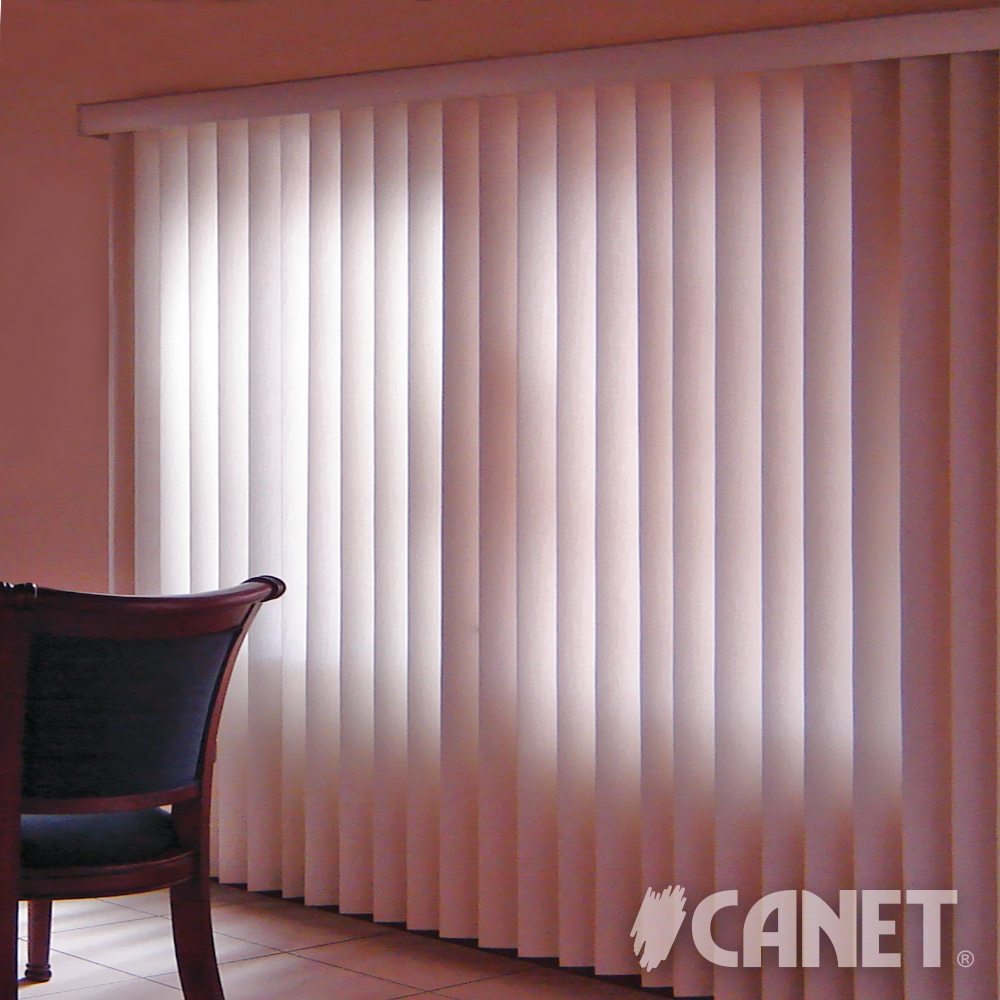
Don't houses in Germany, and western Europe, have blinds ? I only had this night light issue when living in the US

Where did you find a house in the US without blinds? I honestly don't think I've ever seen one without some sort of window covering. The solid exterior blinds that I slightly prefer are much less common in the US, but both still block light adequately in my experience.

Everywhere I slept in California, from SF to LA and a few places in between had these awful vertical blinds which can't even block moonlight: https://persianascanet.com/wp-content/uploads/Verticales-PVC...

Re: Germany plans to dim lights at night to save insects

#419
post #207

Earlier quoted context omitted.

Here's a quite good video about the pros and cons of LED vs high/low-pressure sodium street lamps: https://youtube.com/watch?v=wIC-iGDTU40 . It goes into lamp efficiency, how our eyes see differently at night, response time under different sorts of light, color temperature, circadian rhythm disruption, and light pollution.

It's a good video, but it's also a case study in being 'almost right'. The almost-correct interpretations cascade and result in a faulty conclusion: that blue-white LED streetlights are better than orange-white streetlights. Various comments object to the faulty conclusion ([1], for example). At the end he at least addresses his ignorance: > [18:39] You may have noticed that I didn't talk about the blue light from LE…

Thanks, I appreciate the thorough follow-up. :)

Re: Germany plans to dim lights at night to save insects

#420

This is one of those areas where I actually am in favor of some pretty tight regulation; photons spraying about leads to a tragedy of the commons rather quickly. Drive around -- billboards are lit up at night. Headlights might as well be pointed into the sky and are blinding. Stores are scarcely less well-lit when they are closed than during operating hours. I can go for a walk at night and read a paperback the whole…

Funny thing is that we mostly turn on the lights to keep burglars at bay. I don't have the link but there was some article pointing out that burglars also don't really like dark places. Like using flashlight inside of dark building can easier give out break in. Burglars are also people so they kind of scared of what might be in the dark, like you might miss something on the floor and break your leg or arm and then you would be stuck at the place you broke in.
Post reply on HN