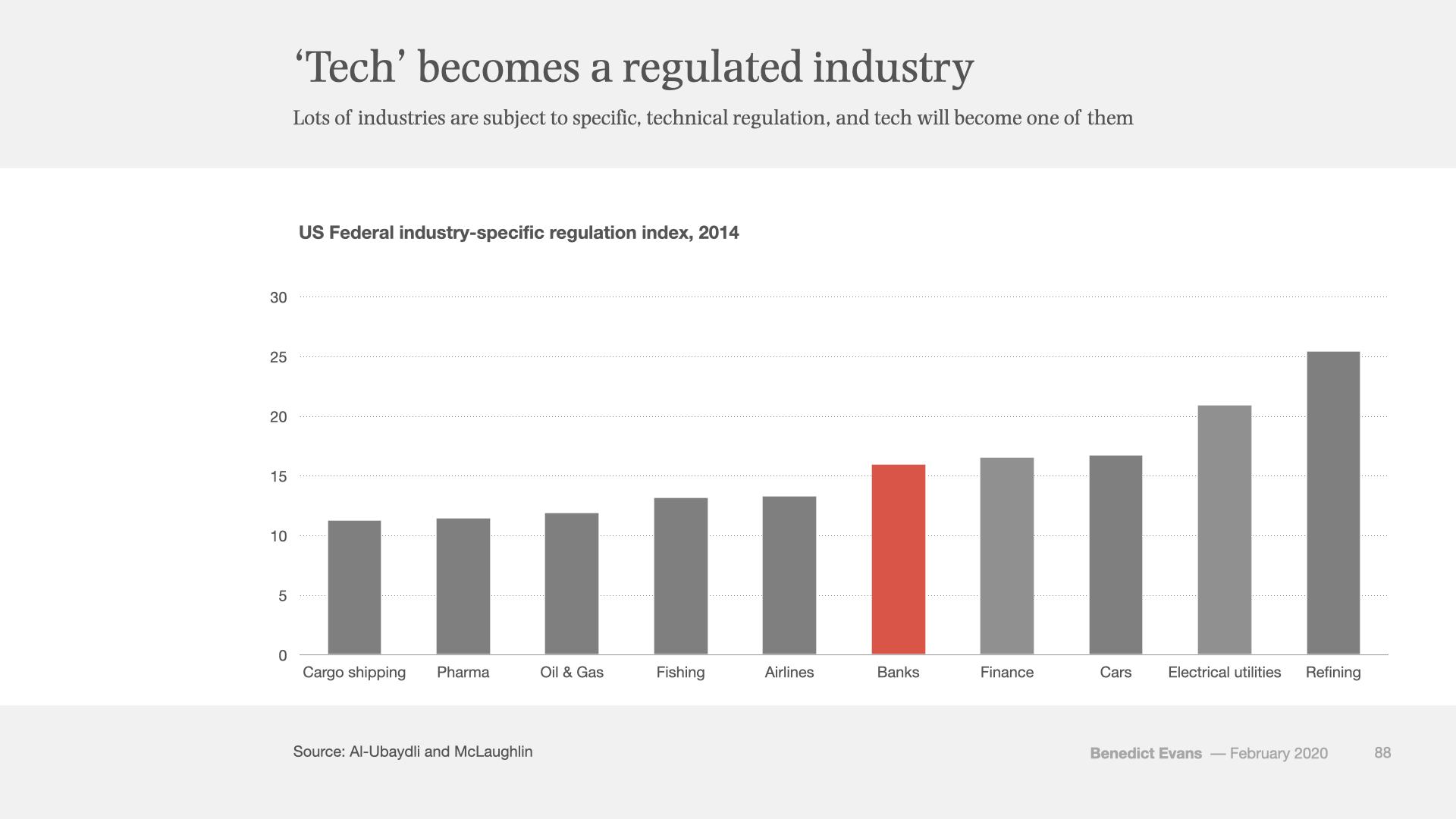
I've seen this piece a few times, and it's broadly good, but I think it glosses over the fact that just because politicians want regulation or try to pass regulation does not mean it actually happens.
As a good example, we're now at the 10th anniversary of the original Digital Economy Act in the UK, the legislation that was going to disconnect persistent pirates from the internet and send out warning letters. This legislation passed. There was much writing at the time about how this was the end of the open internet, and from politicians about how this was the end of the wild west internet.
And yet, ten years later, not a single action has ever been undertaken under those provisions. No letters were sent. No disconnections ever happened. And that's because politicians ignored the complexity, declared something must be done and passed law that didn't actually parse into any real world actions. Primarily it was just completely barmy costs wise for rights owners to send letters, so they didn't and the regulator just quietly forgot about it after several consultations.
Much of this regulation feels very similar. Laws may be passed, but the vast majority of them will never result in any changes because frankly the quality of lawmaking in most jurisdictions is extremely poor. One or two bits certainly will, but most of it will fail badly.
Evans sets out the UK's Online Harms act as an example, but the Online Harms regulation is doomed for one simple reason - everyone and their dog in politics and lobbying keeps trying to project their problems on to it as something that will be solved. It's suddenly got to do a million things, while not having any resource to do so. It will inevitably collapse under it's own weight because nobody involved is brave enough to say it's scope is already too big to work.