So Google takes a 30% cut? Meaning, Apple’s cut is the market rate?
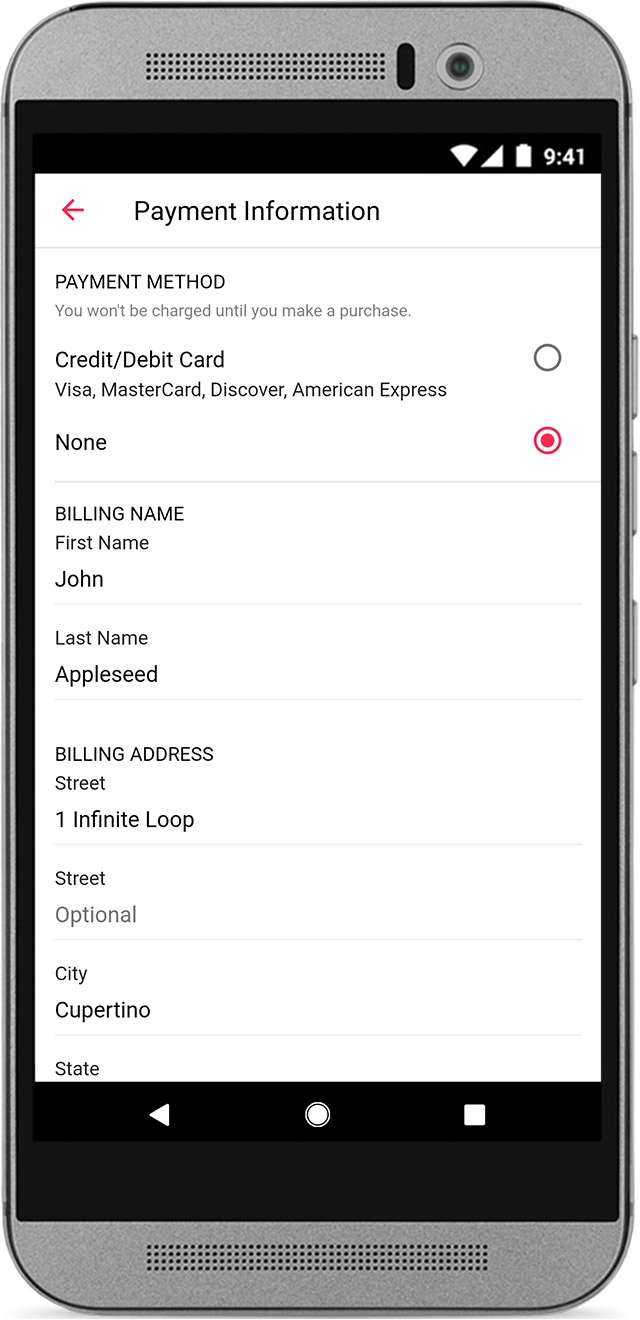
Apple Music on Android requires its own payment details to avoid Google 30% cut
231–240 of 408 posts
Re: Apple Music on Android requires its own payment details to avoid Google 30% cut
#232I really don't understand why people are defending Apple on this. It seems shameful of a $1.5 trillion company to do this to developers. Even more so when they themselves don't abide by their philosophy. They are extracting out a competitive advantage from this on other services like Spotify or Netflix( even without this they have a big one at app discovery and pre installs on iOS). Kudos to Google for allowing the developer to choose the app store/payment method.
Are you guys really fine with living in a world where one/two companies own everything you consume? This sounds like an antithesis to the hacker culture I would associate at least HN crowd with.
Re: Apple Music on Android requires its own payment details to avoid Google 30% cut
#233Earlier quoted context omitted.
Analogous != same. It means its very similar factually. The law does not require that Google and Apple run their online stores the same way, or that Apple interact with Google's store the same way they choose to run their own store. That's correct. But the law does require them to run the stores in a way that does not violate antitrust laws. Apple is violating antitrust laws by forcing companies to use Apple Pay as a…
> plus a 30% cut for doing nothing It's not nothing. Maybe not worth 30% but it is worth something. They run the store, buy the servers and pay for the bandwidth. Pay the engineers to develop and manage the infrastructure. Run the app certification process. Maintain the security of the platform. etc. If they can't charge their 30% cut, they will need a different business plan. Possibly charging app developers directl…
There should be a difference between a 30% cut of an app (of which apple can say their toolkits and os development are part of the product offering) and a 30% cut of a subscription, especially a multiplatform subscription. if you could buy netflix with applepay, but then 90% of your netflix usage is not on apple devices, apple collects on that entire subscription.
Subscriptions should be priced more like a credit card transaction fee. They could have marginal brackets that increase slightly at scales, to account for bigger apps possibly causing more backed development work.
Re: Apple Music on Android requires its own payment details to avoid Google 30% cut
#234Earlier quoted context omitted.
>That's correct. But the law does require them to run the stores in a way that does not violate antitrust laws. Apple is violating antitrust laws by forcing companies to use Apple Pay as a condition of using the App Store (i.e., leveraging dominant/monopolistic market position in one market in a non-competitive manner over another market). The reason why everyone has to narrowly define the market to "Apple has monopo…
Apple has control of the iOS App market. It is a pretty large barrier for a customer need to switch platforms to get an app that Apple has denied access. I am not a lawyer, but that sure smells like the potential for monopolistic control.
This is like saying 7-11 has a monopoly on what is sold in 7-11 stores.
If I want a copy of the King James Bible and 7-11 chooses not to sell that, I have to leave 7-11 and go find another store that does. Yes, that's a barrier I have to go through to get my Bible. Should the government make it 7-11's responsibility to solve that for me?
Re: Apple Music on Android requires its own payment details to avoid Google 30% cut
#235Earlier quoted context omitted.
I think the difference here is that Apple is the only retailer for someone to install an app onto an iOS device. It prohibits anyone else from setting up a retailer, through policy-based (not technical) restrictions. You cannot install an app on an iOS device, except from their store. Apple won't let you install an alternative store. Therefore their app store is a monopoly store, and should be regulated as such. (Is…
Well, Walmart is the only retailer in a Walmart store. Only Walmart is permitted to retail in a Walmart store.
Walmart actually does allow multiple retailers in Walmart stores.
Such as Coca-cola (who even has to stock their own inventory), and those shops and restaurants that are at the front of every superstore location.
Re: Apple Music on Android requires its own payment details to avoid Google 30% cut
#236This looks like the free market at work to me.
Google policy explicitly permits apps like Apple Music to charge for subscriptions outside the App Store and for them to not allow taking subscription payment through the App Store.
Apple has a similar policy for “Reader” apps on their own App Store for apps which are used to access content that you subscribe to, which Apple reasons that “Hey” does not qualify for. That’s why Spotify and Netflix don’t pay 30% to Apple for their subscribers.
So I find this “gotcha” wrong on two levels. First, it isn’t inconsistent because Apple and Google are perfectly free to set policies on their own stores, and secondly, in fact they have similar policies for music subscription apps on both stores.
If app makers find the Android policy preferable, more app makers will choose to develop for Android and their ecosystem could be better of for it. In fact it doesn’t work that way because due to a combination of demographics and possibly software usability factors, users spend about 50% more money on the Apple’s store than on Google’s.
Re: Apple Music on Android requires its own payment details to avoid Google 30% cut
#237Cant everyone do the Netflix "trick"? Or will small players get banned for it?
https://www.pcmag.com/news/netflix-doesnt-pay-apples-ios-tax...
Re: Apple Music on Android requires its own payment details to avoid Google 30% cut
#238Earlier quoted context omitted.
Apple is a minority player in every single market in the world, including the US. You can't have monopolistic behavior without a monopoly. You can't be a monopoly if you are not the market leader. People want this to be a legal issue but it's just a market issue. If people don't like these policies they shouldn't buy Apple products or release apps on Apple devices.
>You can't have monopolistic behavior without a monopoly This is wrong. Monopolistic behavior is anti-competitive behavior that doesn't require having a market monopoly. Think of it as a pattern of behavior that moves you towards having a monopoly.
That's literally every company trying to increase their marketshare.
Re: Apple Music on Android requires its own payment details to avoid Google 30% cut
#239So Google takes a 30% cut? Meaning, Apple’s cut is the market rate?
Google gives you choice. You're not locked into their app store.
Re: Apple Music on Android requires its own payment details to avoid Google 30% cut
#240Earlier quoted context omitted.
Well, Walmart is the only retailer in a Walmart store. Only Walmart is permitted to retail in a Walmart store.
But Walmart isn't the only store to go to in meatspace. If you have an iOS device, you get the Walmart of apps and only the Walmart of apps. This is the problem.
It can be very difficult for someone to switch between iOS and Android. They're called ecosystems for that reason.
There's the obvious problem around apps and protocols. If you've been using them for a long time, your apps, their connectivity to each other, personal data etc is likely to be locked into Apple services & devices, or Google services & devices, in a way that is difficult or even impossible to move over (I know people with data they can only access now if they buy a license to apps they can no longer run).
More subtly, for example there was a recent article about how people in some places experience a social penalty if they aren't using iOS, because the difference is visible to others in terms of protocols used for instant messaging.
In my view, the great difficulty of switching and the penalties of switching mean that both Apple and Android ecosystems are, more or less, separate marketplaces, and each one has a strongly dominant player that should be subject to anti-trust measures.
Basically if you build a platform ecosystem, expressly design to lock-in users especially in ways that hugely affect their lives, that comes with responsibilities you don't have in a free and competitive marketplace where your users can switch with low friction.