Live data from Hacker News

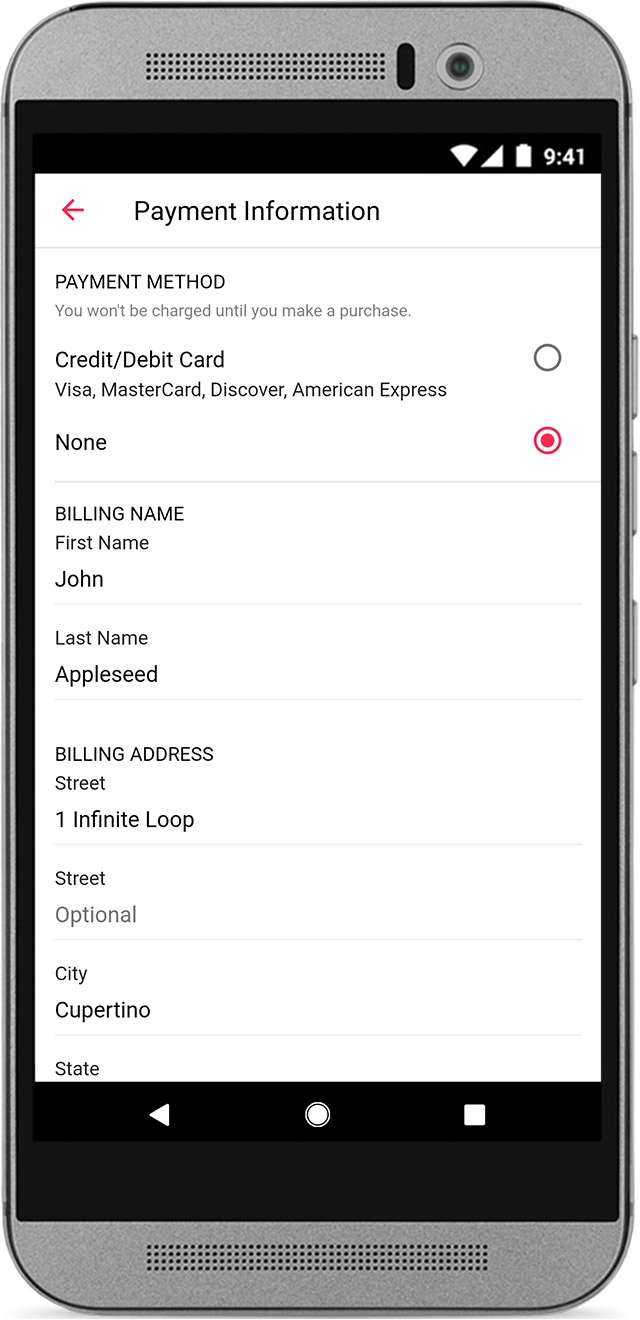
Apple Music on Android requires its own payment details to avoid Google 30% cut

support.apple.com

141–150 of 408 posts

Re: Apple Music on Android requires its own payment details to avoid Google 30% cut

#141

Earlier quoted context omitted.

Analogous != same. It means its very similar factually. The law does not require that Google and Apple run their online stores the same way, or that Apple interact with Google's store the same way they choose to run their own store. That's correct. But the law does require them to run the stores in a way that does not violate antitrust laws. Apple is violating antitrust laws by forcing companies to use Apple Pay as a…

>That's correct. But the law does require them to run the stores in a way that does not violate antitrust laws. Apple is violating antitrust laws by forcing companies to use Apple Pay as a condition of using the App Store (i.e., leveraging dominant/monopolistic market position in one market in a non-competitive manner over another market). The reason why everyone has to narrowly define the market to "Apple has monopo…

Defining Apple as a monopolist on iOS is like calling Ford a monopolist in selling radios in Ford vehicles. No one thinks it’s a violation for Ford to include their own radio (built by a 3rd party like Bose - same as an app) in a Ford truck, and offer you an expensive upgrade to that radio (say also by Olufsen - also like a better App) if you want it. No one demands that Ford allow a different vendor to sell you a compatible radio through a Ford dealer and for Ford to not take a cut of the purchase price. And if Ford says that installing a third party radio without their authorization voids your warranty or otherwise makes it impossible to do so, it’s generally accepted to be OK. This analogy is at the core of Apple’s defense and it was brought up in previous anti trust cases like AA v. Sabre.

Re: Apple Music on Android requires its own payment details to avoid Google 30% cut

#142
post #128

Earlier quoted context omitted.

I'm interested in whether allowing Google Play In-app Billing is sufficient to meet the requirements (while also allowing external payment), or if the requirements are supposed to mandate Google Play In-app Billing as the sole possible method of payment. It's not clear from the policy page.

Some apps were temporarily delisted from the Google Play store because they dared adding a donation button that doesn't go through IAPs. https://www.pcmag.com/news/google-pulls-open-source-android-...

Other apps offer in-app purchases where you have the choice of in-app or external payment.

Re: Apple Music on Android requires its own payment details to avoid Google 30% cut

#143
post #86

Earlier quoted context omitted.

But Walmart isn't the only store to go to in meatspace. If you have an iOS device, you get the Walmart of apps and only the Walmart of apps. This is the problem.

But you're choosing a definition of the world that's too narrow -- "if you've already decided to go to Walmart then Walmart is the only store that can sell at Walmart." Why isn't "the world" the smartphone market where there are plenty of options?

I think the underlying sentiment is that you've bought the device, so you should be able to do whatever you want with it. And there's no technical reason that your choice of device should preclude other stores.

For a more meatspace example let's say you own a car with full self-driving capabilities. Now, the manufacturer of that car also runs a chain of grocery stores. It would be problematic if the car refused to drive too a different store. "If you've already to decided to buy a Walmart car then Walmart is the only store that you can go to."

Re: Apple Music on Android requires its own payment details to avoid Google 30% cut

#144

Earlier quoted context omitted.

If Spotify is charging 30% fees to artists do we discount their argument?

Spotify doesn't 'charge fees to artists', they charge fees to listeners and advertisers, to create a revenue pool, to pay out to artists. And while that payout pool is roughly 70% of revenue, meaning they keep roughly 30%, the other point to be made there is that in the US the Copyright Royalties Board sets the repayment %'s, not Spotify, and they are increasing.

Doesn't Spotify pay the labels/rights holders, who then in return pay the artists (discounting self-published stuff)?

Re: Apple Music on Android requires its own payment details to avoid Google 30% cut

#145
post #25

The roles of arrogance and loophole finding has changed recently. Apple (2020) has become Microsoft (1998) and Microsoft (2020) has become Apple (1998).

There are similarities but Apple never had a ~90% lock on computing infrastructure.

Microsoft never had a 90% lock on computing infrastructure. They had it on desktop and laptop computers, which is a subset.

Re: Apple Music on Android requires its own payment details to avoid Google 30% cut

#146

It's very relevant to note that Google Play's terms around in-app billing[1] are far more liberal than Apple's. > Developers offering products within a game downloaded on Google Play or providing access to game content must use Google Play In-app Billing as the method of payment. Developers offering products within another category of app downloaded on Google Play must use Google Play In-app Billing as the method of…

I'm interested in whether allowing Google Play In-app Billing is sufficient to meet the requirements (while also allowing external payment), or if the requirements are supposed to mandate Google Play In-app Billing as the sole possible method of payment. It's not clear from the policy page.

From the policy, emphasis mine: "MUST use Google Play In-app Billing as THE method of payment."

They could be clearer that those words are significant, but in practice this is what the policy is.

Which is what you'd expect because the whole point of mandating that form of payments is to take the 30% cut (for digital goods meant to be used primarily on Android devices within apps downloaded from the Android app store).

Re: Apple Music on Android requires its own payment details to avoid Google 30% cut

#147

It's very relevant to note that Google Play's terms around in-app billing[1] are far more liberal than Apple's. > Developers offering products within a game downloaded on Google Play or providing access to game content must use Google Play In-app Billing as the method of payment. Developers offering products within another category of app downloaded on Google Play must use Google Play In-app Billing as the method of…

But it says "on other music players". It doesn't really specify, but I would say that "Spotify" is the music player, and you still need to use it whether it is on the browser or other platform, but it is still "the same music player". I guess that the second case is more related to buying digital content, say an image, music, video, where you get the actual right to use that image, music, video on any platform. But I…

I will say it does seem a bit ambiguous, but I believe their intention is similar with how they view physical products.

I believe their intention is that once you download an asset (e.g. song/video/movie), it's a tangible, portable copy that's yours to do freely as you will regardless of device.

You wouldn't be able to play music downloaded via Apple Music directly on just any generic music player (like a car stereo or a CD player) due to DRM and other various restrictions, so I don't believe that this would be exempt from that condition.

Re: Apple Music on Android requires its own payment details to avoid Google 30% cut

#148

People keep writing about businesses like they are surprised they aren't moral entities with consistent moral logic. Businesses take whatever action or position they can to maximize their results. The more power the business has, the more they can leverage that power to get what they want. This should just be the default assumption at this point and we should talk about if that is ok for society, not keep feigning su…

Indeed they are compelled to maximise profit (the business leadership), else the shareholders will replace them. In fact I believe there’s even a US law to this effect.

>In fact I believe there’s even a US law to this effect.

No law in the United States of America compels businesses and their leaderships to maximise profit for shareholders.

Re: Apple Music on Android requires its own payment details to avoid Google 30% cut

#149
post #72

I'm really having a hard time wrapping my head around why this is such a huge deal to people. Opinions are fine, everyone can have one but I always see Apple's payment options as a massive win as a consumer. 1. Subscriptions are easily monitored from a single page. 2. Before subscriptions renew I get emailed, not all services do this, shame on those that do not and a magic renewal transaction goes through without not…

For services like Netflix and hey.com they're not primarily iOS apps. They're services usable from multiple platforms and devices. I shouldn't have to use iOS to manage my Netflix subscript just because I downloaded the iOS first.

Re: Apple Music on Android requires its own payment details to avoid Google 30% cut

#150
post #141

Earlier quoted context omitted.

>That's correct. But the law does require them to run the stores in a way that does not violate antitrust laws. Apple is violating antitrust laws by forcing companies to use Apple Pay as a condition of using the App Store (i.e., leveraging dominant/monopolistic market position in one market in a non-competitive manner over another market). The reason why everyone has to narrowly define the market to "Apple has monopo…

Defining Apple as a monopolist on iOS is like calling Ford a monopolist in selling radios in Ford vehicles. No one thinks it’s a violation for Ford to include their own radio (built by a 3rd party like Bose - same as an app) in a Ford truck, and offer you an expensive upgrade to that radio (say also by Olufsen - also like a better App) if you want it. No one demands that Ford allow a different vendor to sell you a co…

> And if Ford says that installing a third party radio without their authorization voids your warranty or otherwise makes it impossible to do so, it’s generally accepted to be OK.

No, not really. In the EU for example, a unauthorized change to one part can legally never void the warranty to an unrelated part.

Post reply on HN