Live data from Hacker News

Potential organized fraud in ACM/IEEE computer architecture conferences

medium.com

11–20 of 203 posts

Re: Potential organized fraud in ACM/IEEE computer architecture conferences

#11
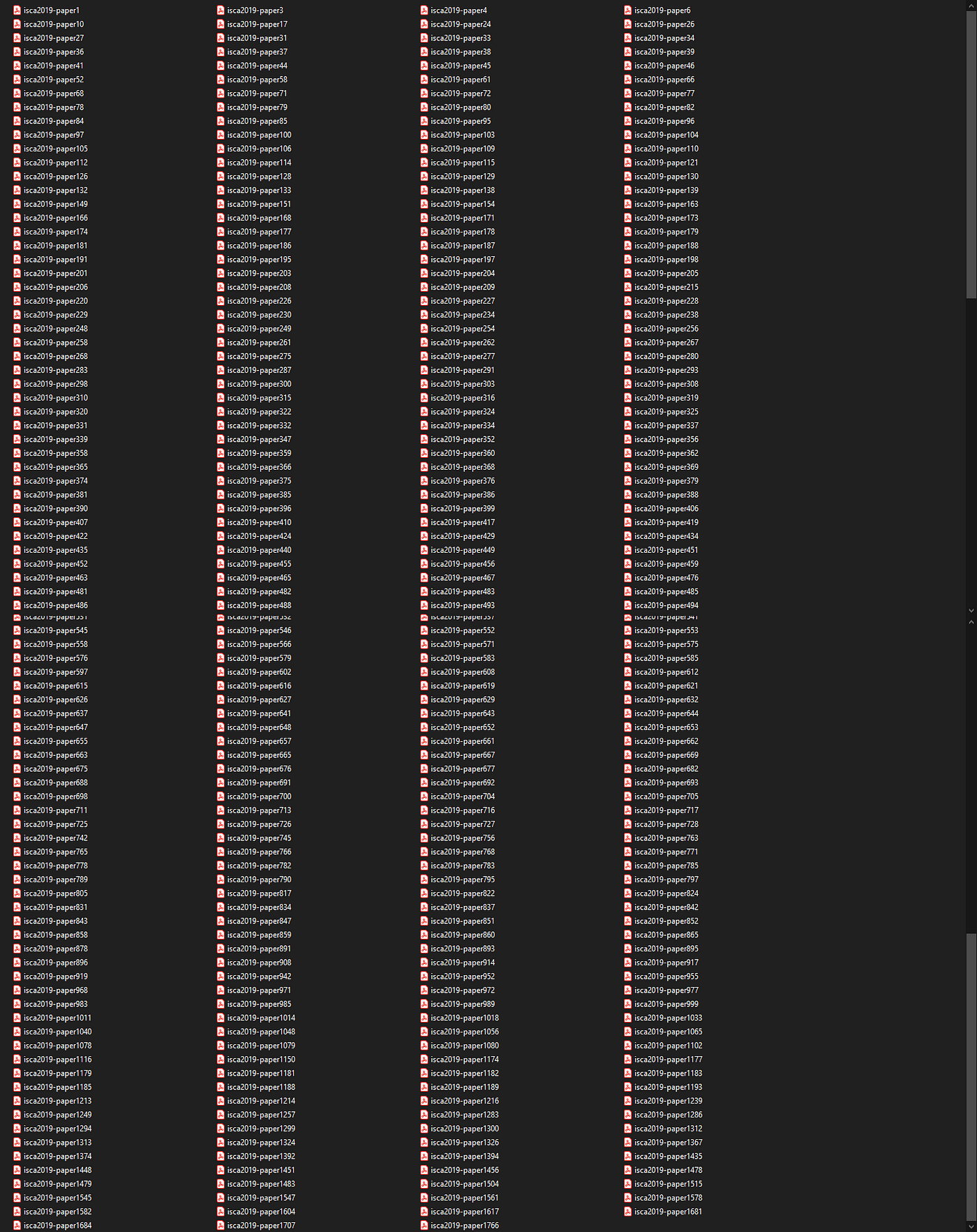
The paper file listing [1] from the PC in question shows predictable [conference][year]-paper[incrementing-number] file name pattern. Rather than "insider help" [2], could this be explained via a "leaky endpoint/api" that got scraped?

I hope I'm missing something.

[1] https://miro.medium.com/max/1400/1*sNC6SuC1v8peYmw6KEcz3g.pn...
[2] Quote: "HotCRP does not show you your own submission even if you are a PC member, so how did the de-anonymized reviews and PC comments for Huixiang’s paper end up in his laptop? An insider help seems likely."

Re: Potential organized fraud in ACM/IEEE computer architecture conferences

#12
post #9

Fraud? Are you kidding me? I have publication in MICRO with a very famous institution in US. (Top 20). You know how my professor published his paper in MICRO? Relationship! Relationship! Relationship! As a graduate student coming from a third world country, I totally lost my hope on the system when I saw a venue as famous as MICRO, is only based on relationship. Don’t judge me, who can I report it? I am graduate stud…

That's a huge bummer. When I was doing research in physics, I found it easy to get published, even without having a PhD - though it didn't hurt, I think, to be working at a university with a group that had already published in that publication before.

With that said, my PIs didn't assist me at all in preparing, submitting, or defending my research, except to inform me of what to prepare for.

I was really pleased with that whole experience because it felt like there were very distinctly not gatekeepers in that field. It could very easily be that there are not really any professional stakes in the field I studied in, so maybe that makes a difference.

My team was all researchers, not tenured faculty, and we funded ourselves with government grants.

With all that said, it's really helpful to get a different point of view - thanks for sharing this, and sorry for the trouble you experienced, nobody should be put in such an awkward position.

Re: Potential organized fraud in ACM/IEEE computer architecture conferences

#13
post #5

They seem to summarize it in paragraph four, though I am not clear on what this really means - I think it is that certain authors are able to be "top ranked" and get limited review from colluding peers who may also be co-authors on the paper, but removed themselves to squeeze through review faster and avoid future flags for "conflict of interest" "There is a chat group of a few dozen authors who in subsets work on co…

peer review at CS conferences is normally anonymous and double-blind to reviewers and authors. however, the conference organizers themselves know who the reviewers and authors are, and the conference management websites are set up to avoid assigning reviewers to papers where they have a conflict of interest with the author.

this is usually something like: anyone whose email address has the same domain as yours, plus anyone you have coauthored any paper with, both of these going back a few years. If you are ethical you will report any additional conflicts that this doesn't catch.

so if a cabal wants to make sure they can positively review each others papers, they have to make sure they don't trip those automated filters. this means they must have been at separate institutions for a while, and must avoid publishing any papers together.

then, during the review process, they can "bid on" (put themselves forward as a reviewer for) each other's papers and ensure they give only positive reviews.

Re: Potential organized fraud in ACM/IEEE computer architecture conferences

#14
post #9

Fraud? Are you kidding me? I have publication in MICRO with a very famous institution in US. (Top 20). You know how my professor published his paper in MICRO? Relationship! Relationship! Relationship! As a graduate student coming from a third world country, I totally lost my hope on the system when I saw a venue as famous as MICRO, is only based on relationship. Don’t judge me, who can I report it? I am graduate stud…

In your opinion was your paper good enough to be in MICRO?

It's kind of sad, but I think even good science needs help to be seen.

Re: Potential organized fraud in ACM/IEEE computer architecture conferences

#16
post #14
post #9

Fraud? Are you kidding me? I have publication in MICRO with a very famous institution in US. (Top 20). You know how my professor published his paper in MICRO? Relationship! Relationship! Relationship! As a graduate student coming from a third world country, I totally lost my hope on the system when I saw a venue as famous as MICRO, is only based on relationship. Don’t judge me, who can I report it? I am graduate stud…

In your opinion was your paper good enough to be in MICRO? It's kind of sad, but I think even good science needs help to be seen.

Not at all. The idea maybe was good (in long term with solid work). But none of our code were working, or works right now for that matter. Nothing works. And I am not saying they does not work as research codes tend to be ugly. I am saying that in literal sense of the word.

It was totally wishful story glued together with beautiful sentences, published via a serious relationship in MICRO.

There are sentences in that paper which even I don’t or my professor understand. It has been written in that way!

1) Write in a way that nobody understands,

2) use big words, (put them in beautiful sentences, so nobody would have any doubts, particularly in introduction and beginning of the paper and in conclusion).

3) a relationship inside MICRO.

Wow you have published a paper in MICRO now.

Re: Potential organized fraud in ACM/IEEE computer architecture conferences

#17
post #13
post #5

They seem to summarize it in paragraph four, though I am not clear on what this really means - I think it is that certain authors are able to be "top ranked" and get limited review from colluding peers who may also be co-authors on the paper, but removed themselves to squeeze through review faster and avoid future flags for "conflict of interest" "There is a chat group of a few dozen authors who in subsets work on co…

peer review at CS conferences is normally anonymous and double-blind to reviewers and authors. however, the conference organizers themselves know who the reviewers and authors are, and the conference management websites are set up to avoid assigning reviewers to papers where they have a conflict of interest with the author. this is usually something like: anyone whose email address has the same domain as yours, plus…

In small fields, it's sometimes really not very hard to guess who are the authors, just given the topic and what papers they cite. Even with double blind.

Re: Potential organized fraud in ACM/IEEE computer architecture conferences

#18
post #9

Fraud? Are you kidding me? I have publication in MICRO with a very famous institution in US. (Top 20). You know how my professor published his paper in MICRO? Relationship! Relationship! Relationship! As a graduate student coming from a third world country, I totally lost my hope on the system when I saw a venue as famous as MICRO, is only based on relationship. Don’t judge me, who can I report it? I am graduate stud…

That's a huge bummer. When I was doing research in physics, I found it easy to get published, even without having a PhD - though it didn't hurt, I think, to be working at a university with a group that had already published in that publication before. With that said, my PIs didn't assist me at all in preparing, submitting, or defending my research, except to inform me of what to prepare for. I was really pleased with…

I am thinking about applying again from the beginning and start Ph.D. all over. Since I am in love with science.

And the only reason I left my home country was because I wanted pursue science. (Science is what makes my love beautiful)

But I am afraid maybe my next supervisor will be same (let alone if I leave middle way my current supervisor will not give me letter of recommendation).

Re: Potential organized fraud in ACM/IEEE computer architecture conferences

#19
This was a long time coming. A quick look at the historical DNS records for IEEE.org shows there have been strange things going on for some time.

Recently, OpenSSL unveiled a new "notification" policy that gave massive preference to Huawei and Smartisans [1]. They are OpenSSL's largest donors. The process by how this was done was kind of laughably deceptive, which of course aroused further suspicion.

Many things have yet to be revealed likely. I hope more individuals come forward.

[1] - https://blog.12security.com/openssl-expands-partnership-with...

Post reply on HN