It's amazing and wonderful how much environmental damage seems to be recovering. Air pollution is down, carbon emissions are down as much as 17%, fish and sharks are repopulating shorelines and beaches - and to think, all it took was the most severe public health crisis in 100 years, a catastrophic global recession, and an overpowering wave of human misery and death
Imagine - what will happen when next big virus/bacteria pandemic hits the earth...Other species will stand a chance when human population makes some room ...it probably sounds bad but unfortunately the humans are the problem - not the CO2 or something else (they are just consequence) - proof is how nature thrives around Chernobyl
Mount Everest is visible from Kathmandu for first time in living memory
201–210 of 283 posts
Re: Mount Everest is visible from Kathmandu for first time in living memory
#202Earlier quoted context omitted.
> protecting the environment and mitigating the climate crisis are two different, and only partially aligned efforts I wish more people understood this. Too many times conversation are hijacked by the CO2 discussion when really in the short term we should be focusing 99% of our efforts on bio-diversity preservation.
I sort of meant the reverse. You make a good point about importance of biodiversity downthread, but wrt. things like plastic pollution vs. CO₂, I'd argue we should just ignore the former. The reasoning is: - We know the ecosystem is thoroughly polluted by microplastics, but there is no evidence that it's in any way harmful. It may be, but we haven't seen it so far. - We know that without mitigation, climate change is…
1. "no evidence of microplastics being harmful" sounds very much like WHO's "no evidence of human transmission". Personally, I'd say that in both scenarios, the outcome we should be most worried about is tail risks - what if we suddenly realize the situation is much worse than we imagined, but it's already too late...
2. Is "climate change" so bad? I mean, would it be really so bad if the Earth warmed up a bit, and all of Siberia, Greenland and the Antartic became livable (and arable) land? More food, more space for new humans, ... all good! Except, obviously, 2 things - biodiversity (which you want to ignore) and tail risks - what if the Earth warms up too much, and we "trigger" some unexpected process (e.g. thawing of permafrost releases vast quantities of extremely potent greenhouse gases).
I think most people are simply really confused about their reasoning process. Microplastics? Ignore tail risks. Global warming? Tail risks! GMOs? Ignore tail risks. 5G? Tail risks! Vaccines? Ignore tail risks. Endocrine disruptors? Tail risks! (Of course, the exact configuration of positions is highly correlated with one's political orientation.)
Re: Mount Everest is visible from Kathmandu for first time in living memory
#203Earlier quoted context omitted.
I sort of meant the reverse. You make a good point about importance of biodiversity downthread, but wrt. things like plastic pollution vs. CO₂, I'd argue we should just ignore the former. The reasoning is: - We know the ecosystem is thoroughly polluted by microplastics, but there is no evidence that it's in any way harmful. It may be, but we haven't seen it so far. - We know that without mitigation, climate change is…
Really interesting reasoning. I'm almost tempted to say "extremely unscientific". 1. "no evidence of microplastics being harmful" sounds very much like WHO's "no evidence of human transmission". Personally, I'd say that in both scenarios, the outcome we should be most worried about is tail risks - what if we suddenly realize the situation is much worse than we imagined, but it's already too late... 2. Is "climate cha…
It is definitely a very concerning prospective.
Re: Mount Everest is visible from Kathmandu for first time in living memory
#204Earlier quoted context omitted.
> protecting the environment and mitigating the climate crisis are two different, and only partially aligned efforts I wish more people understood this. Too many times conversation are hijacked by the CO2 discussion when really in the short term we should be focusing 99% of our efforts on bio-diversity preservation.
What are the benefits of focusing on biodiversity preservation? I can think of some things like food security but would global warming not also impact on those?
Re: Mount Everest is visible from Kathmandu for first time in living memory
#205This is why we need less humans on this planet. No one says that, because having as many kids as you like seems to be considered a basic human right. But imagine Earth with a stable 10% of our current population. Clean, abundant, and without the catastrophic extinction event already underway.
Re: Mount Everest is visible from Kathmandu for first time in living memory
#206Longer term Covid19 is very bad for public transport. People are gravitating back to owning their own germ free vehicles Time to buy a car? Industry hopes for coronavirus silver lining | Free to read https://www.ft.com/content/488d5886-c6af-4e80-a479-36aca26ed...
I like how the car industry is hoping based on a once-in-a-hundred-year pandemic response. Gives me no confidence for their long term future. If people are getting by without a car now, I wouldn't think this situation would make them rush back into owning one. For one thing, if you don't have a job to go to, then you don't need one and probably have better things to spend your money on. And for another, and as a memb…
We are just starting up nonessential procedures again, but are limited by the low blood reserves (~3days of use only).
Re: Mount Everest is visible from Kathmandu for first time in living memory
#207Earlier quoted context omitted.
Been to Kathmandu several times and I wouldn't say Nepal is industrialised in general, but not even remotely at the level of China. What makes the air really bad in Kathmandu is the amount of old trucks and buses on the very dusty streets of the city. It's a different kind of air pollution to what you might experience in an industrialised nation. When I'm there I always wear a mask, otherwise a cough will develop alm…
Were there many of these old trucks and buses around in Kathmandu in the 1920s?
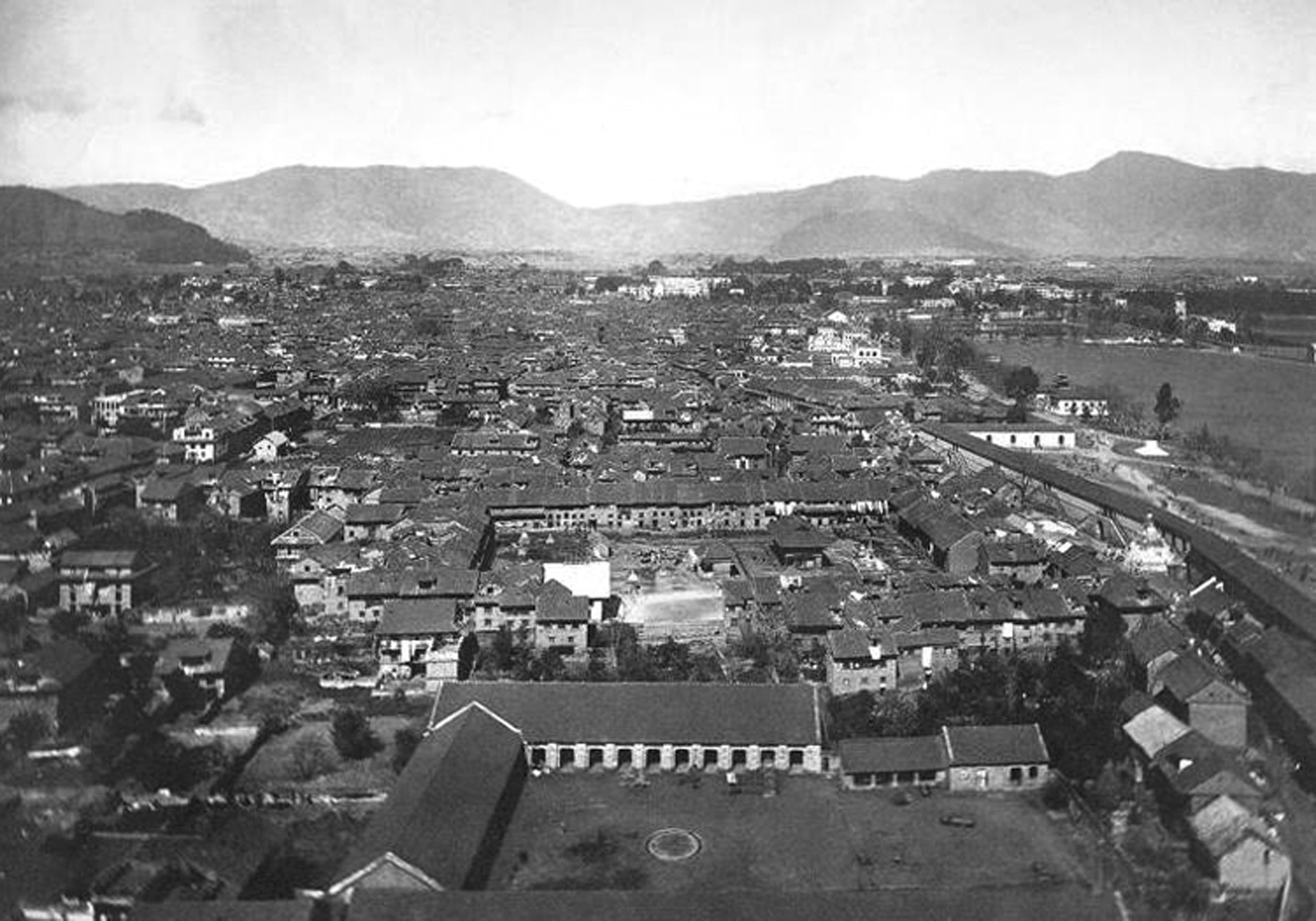
Here's a picture from Kathmandu in 1920. It appears to have poor visibility, but it's unclear from the picture whether or not that is pollution or weather.
https://en.m.wikipedia.org/wiki/File:Kathmandu_Basantapur_Du...
here's another near the same period that shows similar levels of visibility:
https://upload.wikimedia.org/wikipedia/commons/8/83/Kathmand...
Re: Mount Everest is visible from Kathmandu for first time in living memory
#208Earlier quoted context omitted.
And there it is. A sudden torrent of downvotes. Dropped from 4 to zero in seconds. Like is said, having kids is considered a basic human right. We’re so arrogant, yet so basic as a species.
Yeah. Some folks need to grow another mouth to tell themselves what they wanna hear. Not being status quo is probably a bit too much for them. The exchange of opinions concept does work well for most though.
Re: Mount Everest is visible from Kathmandu for first time in living memory
#209Earlier quoted context omitted.
Is it, or are you confusing population growth with immigration?
Do you not see line go up? [0] [0] https://en.wikipedia.org/wiki/World_population
Re: Mount Everest is visible from Kathmandu for first time in living memory
#210Earlier quoted context omitted.
Last study I read put a 99% correlation on vitamin d deficiency and getting a severe case of covid19. Which was significantly more than age correlated on the same dataset.
Vitamin-D deficiency may cause severe covid-19, or severe covid-19 may cause vitamin-D deficiency (covid-19 affects the kidneys second worst after lungs it seems, and you need kidneys for vitamin-D processing), or a little bit of both. Which one it is, is not yet known.