Live data from Hacker News

Europe’s cities are making less room for cars after coronavirus

citylab.com

171–180 of 246 posts

Re: Europe’s cities are making less room for cars after coronavirus

#171

Earlier quoted context omitted.

Milan plans to reduce metro capacity to about 1/3 permanently. Talk about learning the wrong lessons here, oof. This feels like one of those near-sighted decisions that leads to tons of negative knock-on effects.

No, it’s temporary. They’re planning reduced capacity for the metro as part of phase 2 of Italy’s coronavirus response - a careful reopening of the economy with some significant restrictions remaining in place. Eventually it’ll be safe to stand in packed train carriages again, but not yet.

Hm the article didn't make that particularly clear, and on re-reading I'm still not seeing anything to indicate they plan to revert their capacity reductions in time, but I do hope you're right.

Re: Europe’s cities are making less room for cars after coronavirus

#172
post #11

I'm perplexed by the comments here. Some cities have seen greater business increases on pedestrian and bike converted through-ways because people in cars weren't just passing by. Bikers and pedestrians stopped and shopped in the areas they were traveling through. I, for one, look forward to making a choice to move to a place where I can live car-free and hope more cities accelerate plans like this.

I think some people are commenting from a perspective of a society/environment where a car is basically mandatory, where you cannot really go anywhere or do anything without a car, or where it is at least hopelessly cumbersome to use public transit and dangerous to ride a bicycle. Not just in this discussion, but whenever the subject of transportation and public transit come up. If you asked me ~10 years ago, I could…

I think some people are commenting from a perspective of a society/environment where a car is basically mandatory, where you cannot really go anywhere or do anything without a car, or where it is at least hopelessly cumbersome to use public transit and dangerous to ride a bicycle.

I suspect some of it is political, if you are right leaning then you may well view cycling and public transport as a step towards socialism. It probably doesn't have much to do with the practicalities.

Re: Europe’s cities are making less room for cars after coronavirus

#173

Earlier quoted context omitted.

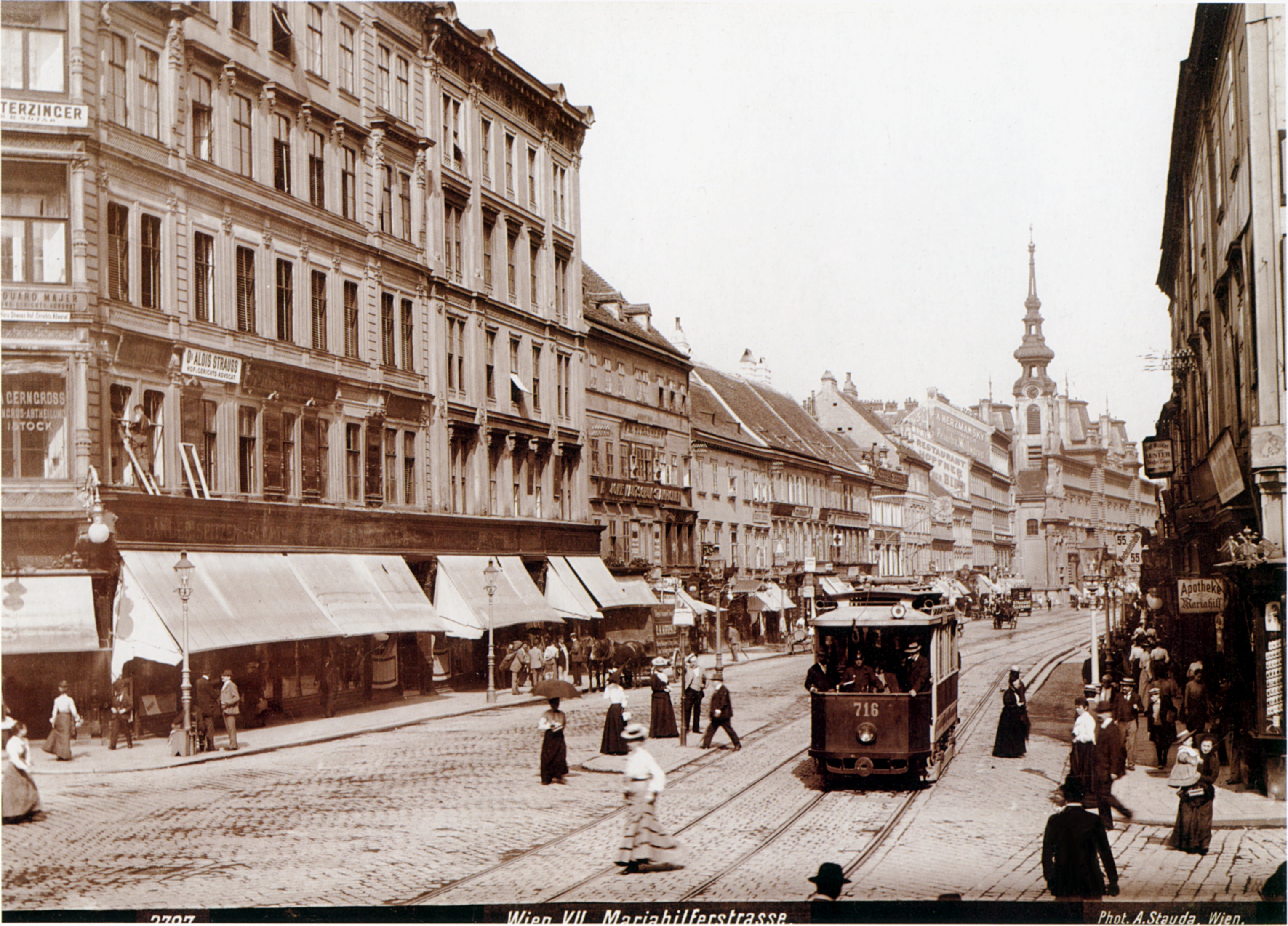
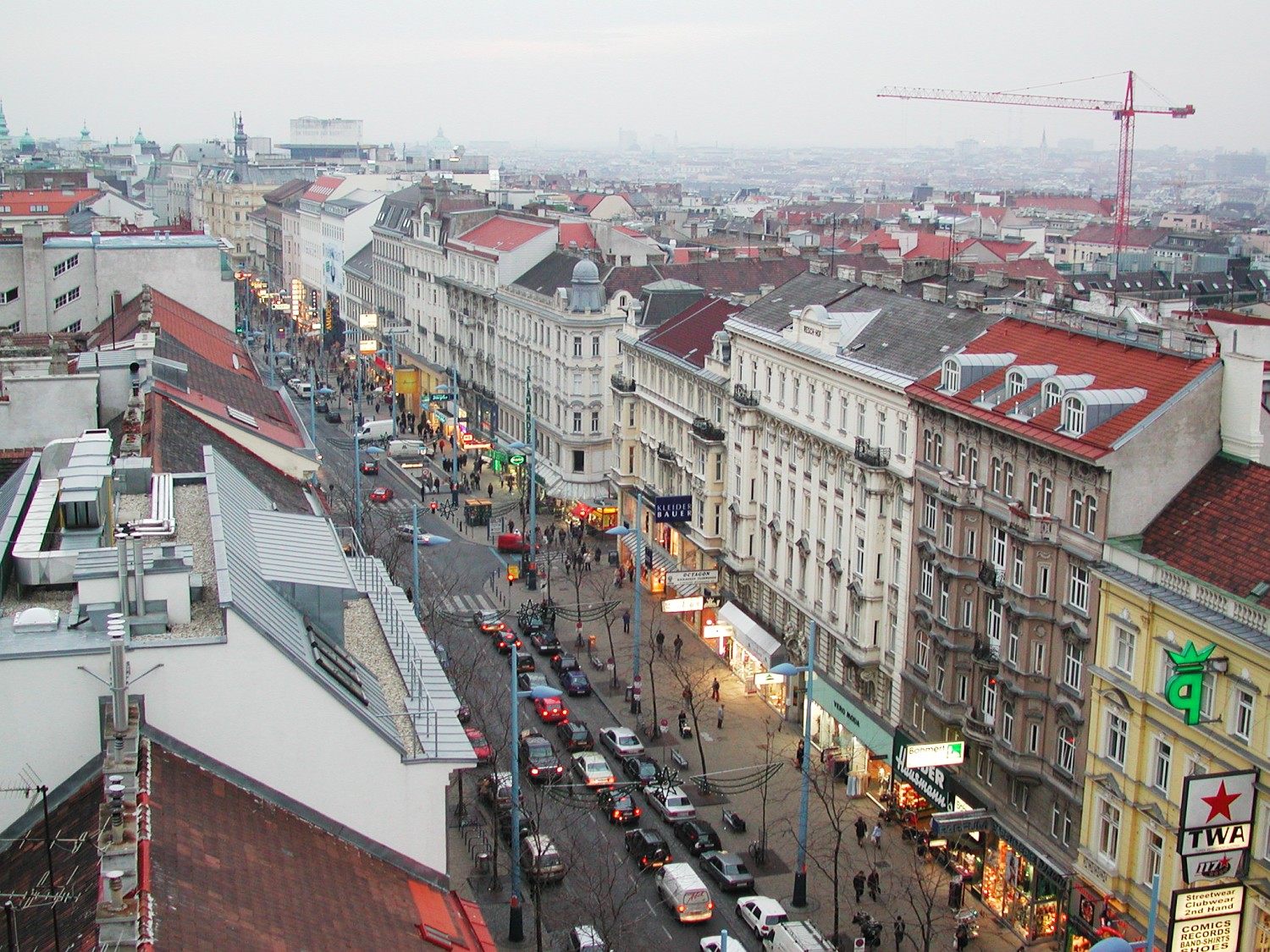
There was so much fear-making in Vienna when they pushed for a pedestrian-first shopping mile in the city center. It would destroy economy.. People wouldn't come anymore with there car to buy stuff.. And what happened? A lot more people came, people going just for walks etc. Business increased substantially and now the chamber of commerce (which was heavily lobbying against it) wants even more "Begegnungszonen" as th…

Are you talking about Mariahilferstraße? If yes it's really good now, can't believe there was resistance to make it pedestrian-first. Hard to imagine how much less livable was the area with regular car traffic. One thing that puzzles me, living in Vienna as an expat, is how much the average Austrian cared about banning smoke in bars/restaurants/etc (which is fine, don't get me wrong) but how little they do about car…

Yes, I meant the Mahü.

1908 - https://upload.wikimedia.org/wikipedia/commons/5/5c/Mariahil...

2006 - https://upload.wikimedia.org/wikipedia/commons/8/81/Mariahil...

Today - https://upload.wikimedia.org/wikipedia/commons/9/96/Wien_07_...

Smoking was definitely the much bigger problem. The average Austrian, if he doesn't life in Vienna, is simply not confronted with smog. I guess what helps tremendously to cover up the smog problem is they constant wind we have. Honestly I only realized that it could be a lot better after my London visit. Until then I only have seen cities which were much worse then Vienna w.r.t smog.

Re: Europe’s cities are making less room for cars after coronavirus

#174
post #147
post #93

Earlier quoted context omitted.

> I live in Tokyo and I can assure you that living car-free is lovely So you really enjoy packed subways that make you feel like cattle pretty much every time of the day? Sorry but Tokyo is the best example of "best in class public transport" being completely over capacity for the amount of people they have to transport every day.

Living in Tokyo as well and yeah, the subway is a nightmare. It's GOOD, gets you everywhere pretty fast but for daily morning commuting - nah. Taking an overcrowded train every day squeezed into heaps of people that all don't want to be there gets very depressing with enough repetition cycles. A good reminder of how insignificant everything is. I am glad I have flex time and can avoid peak-time trains. But Tokyo is a…

Tokyo is the opposite of what i would call bicycle friendly. People there are probably much more careful than in other cities, but i was amazed at the lack of infrastructure for bikes when i visited the city a few months ago.

Bikes are either merged with car traffic, or simply go on the sidewalk, but i haven’t seen a single bicycle lane..

Re: Europe’s cities are making less room for cars after coronavirus

#175

Earlier quoted context omitted.

> I'd love to drive to a city centre and then have a walk without the traffic noise There's a huge inherent contradiction here though: You are creating the very problem you want to escape from for everyone along your path of travel. land tends to be quite expensive in the city center, and parking is not a good use of it. Are you willing to spend $50 to park your car there to drive to the city center?

Kinda agree but thats a model that works for many places that switched to car free centre. In many cases parking lots already exist in outskirts of the centre. Completely car free city is a pipe dream. Diversity is good.

In my nearest city quite a lot of the problem is traffic travelling via the centre. If someone wants to go West to East they will travel through the centre rather than around the outside.

What you really need is a shift so the closer to the centre you get the more you are forced out of the car and onto public transport and ultimately cycling or walking. Cars should be for when you want to leave towards the highway.

Re: Europe’s cities are making less room for cars after coronavirus

#176
post #155

The current city doesn't work anyway. A lot of our development patterns were born of seeds planted in the 1950s during an era when the nuclear family -- with a male breadwinner, female homemaker and 2.5 kids -- was the assumed standard basic "economic unit" and one male breadwinner provided adequate money, healthcare benefits, etc for multiple other people. Suburbs grew out of the idea of a separation of the public a…

> Suburbs grew out of the idea of a separation of the public and private spheres. Please note the assumption there is that it separates them for the male breadwinner. This is US-centric though. The notion of downtown vs. suburbia is the complete opposite in Europe for example, and in many other parts of the world as well. I remember as a kid learning English and learning about the US that it was amazing to me that "d…

This is US-centric though.

As noted elsewhere, I'm pretty short of sleep, so I no doubt could have said some things better.

Yes, some of what I'm describing is very US-centric. But not all of it.

When I was growing up, most of the world lived and worked on farms. Within my lifetime -- in fact, within the lifetime of my children -- that changed and we now have more people living in cities worldwide than on farms.

The world has changed, but we still cleave to certain mental models that no longer serve us well. That's the super short version.

But anyway, since these suburbs are already built, couldn't this be resolved relatively easily by building public transport to the biggest suburbs?

Mostly, no. The suburbs actually built in the 1950s aren't so bad. A larger problem is the policies that era fostered in the US and the direction things have gone since then.

Average new homes in the 1950s were about 1200 square feet and held about 3.5 people. Today, the average new home is more than 2400 square feet and holds about 2.5 people.

There have been a lot of other changes as well in what is typical for a new home, but those details right there are enough to let you know that our homes have grown larger on average while our families have grown smaller. Meanwhile, we have a growing homeless problem (which people on the internet routinely want to claim is unrelated to housing supply issues and the high cost of rent, but the data doesn't support that conclusion).

Our family size has shrunk. Our homes need to also shrink and we need to return to patterns of development compatible with fostering walkable neighborhoods and transit-oriented design. Adding public transit to existing suburbs won't really achieve that.

The general assumption in the US is that young people should rent a place designed for a nuclear family and get a bunch of roommates to fill the extra rooms and split the rent. Then we make horror movies, like Single White Female, about basically what a nightmare this is. The internet is filled with horror stories of the roommate from hell and questions about "How on earth can I survive this or get out of this???"

We have eliminated about a million SROs. People object to SROs a "slum" housing. They are literally more comfortable with having people out in the street than with building housing that isn't upper middle class as our baseline expectation without providing jobs and incomes to support that as our baseline expectation.

While eliminating small homes that people could potentially live in as a single adult or childless couple, our millionaires are actively planning to eliminate jobs and create permanent unemployment. After eliminating jobs that paid on average $20k to $50k annually, our rich people here would like to institute UBI paying between $10k and $18k annually with an expectation that we will have 80 percent permanent unemployment.

Given that we have eliminated most housing across the US that costs less than $500/month to rent, there are a lot of places where $10k won't even pay your rent for the year, much less feed you. Without resolving our housing issues, there is no hope that some ridiculous scheme like UBI will do anything but shaft most Americans.

I mostly can't get people to really listen to me. They are too busy listening to multimillionaires and failing to see that those people are actively and intentionally planning to create a permanent underclass that will have no hope of accessing wealth ever again.

I was homeless for nearly six years while active on Hacker News. Simply being allowed to run my damn mouth in the same space as all kinds of millionaire businessmen absolutely didn't fix my life and lift me out of poverty and so forth. So I'm quite convinced that the entire point of wanting to create UBI is so that asshole rich people can wash their hands of poor people.

It's quite horrifying and I don't know how to stop it.

On the upside, the pandemic seems to have fostered some of the changes the world has been talking about for years and not accomplishing, such as reducing our carbon footprint and reducing pollution. So maybe we will find solutions anyway, in spite of bulling our way intentionally and on purpose towards a dystopian vision of intentionally shafting most Americans and telling them to fuck the hell off and forget about ever having any kind of a life.

SROs are going the way of the dinosaur and a lot of people no longer know what they are, so here is the obligatory link: https://en.wikipedia.org/wiki/Single_room_occupancy

This comment is a little more on the ranty side than I really like. I'm just really short of sleep and tired of trying to be polite to people who literally don't care if their callous BS results in my death. So it's probably time for me just stop talking and attempt to go get some sleep.
Re: Europe’s cities are making less room for cars after coronavirus

#177

Earlier quoted context omitted.

First, there is a lot of development that falls under what I call "Fuck you pedestrian" development. It's not uncommon for intersections in big cities to require a pedestrian to cross all three ways to get to the other side or walk a block to cross at all. I've been to strip malls where fencing forced pedestrians to walk the long way around, following the same route and going through the same entrance as a car, inste…

Amsterdam promoted cars and was very bike-unfriendly from the 1920s to the 1970s. It took a lot of concerted campaigning to get Dutch politicians and urban designers to start prioritising bikes again. Here is a newspaper story about the changes: https://www.theguardian.com/cities/2015/may/05/amsterdam-bic...

Yes, I'm aware -- though many people are not. So thanks for adding that info to the conversation.

Re: Europe’s cities are making less room for cars after coronavirus

#178

Earlier quoted context omitted.

Also, what happens if it rains? That is a cultural dislike. Seriously. I was born in the states - Indiana. NO one walked when it rained unless you were poor. When you did walk, you probably had an umbrella. Being female meant that sometimes, people would offer me rides randomly. I moved to Trondheim, Norway. There is a saying here - "There is no bad weather, only bad clothes". Which, you know, is only half correct. I…

Some back of envelope estimates: 75 minutes of walking to get to the workplace. Approximately 50 minutes if I go via bicycle (directions are not straightforward for many reasons). This is regardless of weather and/or traffic if on the road. 30-40 minutes if I go via metro + train (the actual trips take 10ish minutes each). Unless forced to do differently, the most efficient choice is evident. I'm also lucky enough to…

Sure, that's out of reasonable walking distance: Depending on your day, the occasional bicycle isn't out of question. Even in rain. (To be fair, I'll walk daily anywhere that is 30-45minutes most days).

But honestly, the bicycle is cultural as it would be better to prioritize bikes so it is faster. Same for public transportation. Car-first infrastructure and lack of pedestrian/bicycle/mass transit are political decisions.

Re: Europe’s cities are making less room for cars after coronavirus

#180
post #170

Earlier quoted context omitted.

Ie the small particle pollution from cars is making pedestrians and cyclist sick. It's making car drivers sick as well, they have to breath the same air and often air intakes are close to the exhaust of the car in front.

That's why most cars have a cabin air filter though.

Somewhat surprisingly, studies ([1] in French, sorry) show that on average drivers breath worse air than cyclists actually. The main reason they bring up is that the relatively airtight cabin accumulates particles, whereas people traveling in open air can get short high peaks but lower pollution on average.

[1] https://www.lemonde.fr/planete/article/2014/03/13/auto-metro...

Post reply on HN