Live data from Hacker News

In 4 US state prisons, 3,300 inmates test positive, 96% without symptoms

reuters.com

391–400 of 649 posts

Re: In 4 US state prisons, 3,300 inmates test positive, 96% without symptoms

#391

Earlier quoted context omitted.

Is this the new narrative/talking point to continue shutdowns? Because pretty sure the average time to symptoms was reported to be much (10X) lower

There's no need to be snarky. It may take years for a person to know if covid will kill them. There is growing evidence that every person who has tested positive will eventually die. I wouldn't be surprised if we discover asymptomatic victims finally succombing to the disease 10, 15, maybe 20 years down the road.

There is definitely a lot of evidence that people who test positive will eventually die. It might take 50-100 years, and they might die of something else, but yes they will definitely die. Plenty of evidence of that.

But seriously, what is this evidence you speak of?
Re: In 4 US state prisons, 3,300 inmates test positive, 96% without symptoms

#392

Earlier quoted context omitted.

A prison is very much like a cruise ship from a viral perspective. We know from the cruise ship data like the Diamond Princess that most people had no symptoms initially, but overtime most people became symptomatic [1]. Of course if we are really lucky and the prison was infected with a naturally attenuated strain we should make use of it [2]. 1. https://www.ncbi.nlm.nih.gov/pmc/articles/PMC7078829/ 2. https://www.ti…

I think that. depending on the air conditioning system, it might be quite a bit worse. The density of people is huge, air flows freely between cells, prisoners eat packed together at communal tables. I bet R is like 10-20.

On the Diamond Princess it was about around 14. I would expect prisons to be much the same.

Re: In 4 US state prisons, 3,300 inmates test positive, 96% without symptoms

#393

Earlier quoted context omitted.

Is this the new narrative/talking point to continue shutdowns? Because pretty sure the average time to symptoms was reported to be much (10X) lower

There's no need to be snarky. It may take years for a person to know if covid will kill them. There is growing evidence that every person who has tested positive will eventually die. I wouldn't be surprised if we discover asymptomatic victims finally succombing to the disease 10, 15, maybe 20 years down the road.

Wow. Just wow.

Re: In 4 US state prisons, 3,300 inmates test positive, 96% without symptoms

#394

Earlier quoted context omitted.

Is this the new narrative/talking point to continue shutdowns? Because pretty sure the average time to symptoms was reported to be much (10X) lower

There's no need to be snarky. It may take years for a person to know if covid will kill them. There is growing evidence that every person who has tested positive will eventually die. I wouldn't be surprised if we discover asymptomatic victims finally succombing to the disease 10, 15, maybe 20 years down the road.

[deleted]

Re: In 4 US state prisons, 3,300 inmates test positive, 96% without symptoms

#395
post #218

Earlier quoted context omitted.

I am confused as can be about all of it now. First it was stay locked in, then heard immunity, now they say heard immunity may not happen.

If you're confused by this, you may need to check your news sources. Experts have been explaining all of this for months. First, people need to stay locked in and keep distance in order to slow down the spreading so health care systems don't get overwhelmed. Second, the disease itself can only be stopped once herd immunity is reached. Ideally, herd immunity is achieved by vaccination, once there is one. Until then, s…

It's a sign of the times that this, one of the most level-headed and factually-accurate comments on this post, is being downvoted so heavily.

Re: In 4 US state prisons, 3,300 inmates test positive, 96% without symptoms

#396
post #316
post #211

Earlier quoted context omitted.

Covid-19 fatalities takes up to 2 months after infection, symptoms have a median of just over 5 days from first exposure.

Keyword "up to". The most common fatal case seems to be roughly: 1 week without symptoms, 1 week of mild symptoms, 1 week of severe symptoms, death. That's 3 weeks. In rare (1/10000) cases, incubation time can reach 14 days, that's where the 14 days quarantine recommendation comes from. But the median is closer to 5 days. Time to death can be much longer, the virus can cause all sorts of damage to the body, including…

> In rare (1/10000) cases, incubation time can reach 14 days

What's the cite for that number? I'd be very suspicious of anything claiming a 5-significant-figure result in a disease that has only (heh) 3M known cases.

In fact there's significant supposition that the incubation time and asymptomatic contagious state can last much longer than originally guessed. This would go a long way to explaining the difficulty of detecting early outbreaks (basically nowhere in the world was able to contain before community spread was happening) and the anomalously low rate of new case decline post-peak. But there's no good science on this, and probably won't be in time for it to be useful.

Re: In 4 US state prisons, 3,300 inmates test positive, 96% without symptoms

#397
post #137

One of the super-interesting things here, is that apparently everyone was in the specific window where they test positive for the virus. This implies the population was recently infected, had not been previously infected, and it spread almost completely within a tight window. This implies a shocking high R(effective) for that population. In 2 weeks we'll have super interesting data one way of the other on the CFR.

I'm looking for this in the article and not seeing mention of a specific window. Can you help me find what you're referring to?

Do not know if it is in the article or not but I guess the reasoning from GP goes like this: huge percentage of people are pre-symptomatic. The median time for symptoms to appear is 4-5 days from infection time, so they were probably infected in a very short period of time recently.

Re: In 4 US state prisons, 3,300 inmates test positive, 96% without symptoms

#398

Earlier quoted context omitted.

A very important thing is that % is concentrated among old and people with preexisting health conditions. Not every death is the same - a 80 year old with weak immune system could have lived 5 years longer without corona, but a healthy 20 year-old dying from cytokine storm caused by influenza has lost potentially 60 years of healthy life - the loss is much worse.

I agree we should consider years of life lost but the figures are a bit higher than they ones you're using. 14 years on average for men and 12 for women. Not 60 years but more than 5. https://wellcomeopenresearch.org/articles/5-75

Thank you for this link - this is the reason I come here :)

Seeing those numbers makes me more supportive of the isolation measures.

Re: In 4 US state prisons, 3,300 inmates test positive, 96% without symptoms

#399

Earlier quoted context omitted.

Ah my old friend greedo. That's how it normally works, this time could be different, but we have no reason to believe that. Generally for as long as you show antibody response you won't be re-infected because that's what antibodies do . The link I provided to the study I referenced was specifically for the purpose of, and I quote: "to assess SARS patients’ risk for future reinfection." "To be clear, most experts do t…

https://www.aljazeera.com/news/2020/04/warns-coronavirus-imm...

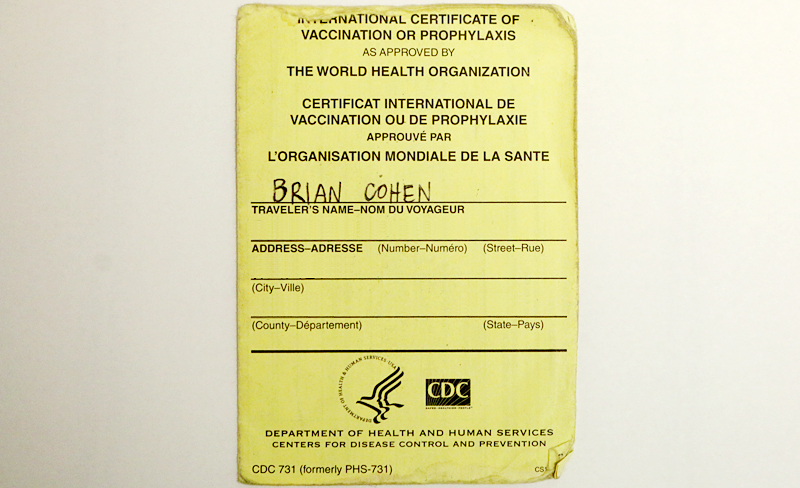
Nothing there is at all incompatible with what I had to say. In context, the WHO is saying that getting the disease once may not be a lifetime immunity to COVID guarantee and shouldn't be used as the basis for issuance of something along the lines of yellow fever prophylaxis certifications like these [1].

I agree. In fact, its highly unlikely, as with coronaviridae we've seen that the milder the disease the less likely you are to obtain long-term immunity. Even SARS, a much, much more serious disease, gives you 2-3 years as per my reference.

However, that's not what GP was arguing. GP argued broadly that "people who test for antibodies [may not be] immune to future infections." That's extremely unlikely. The question is how many people, and for how long, and then how do we utilize that information. Broadly speaking a positive test for antibodies means you're pretty likely immune at the time the test is taken. Of course the question is how that antibody response changes over time.

I was pretty clear about that: "Generally for as long as you show antibody response you won't be re-infected because that's what antibodies do."

The WHO is saying don't issue one-off certificates of immunity for life on the basis of testing positive for antibodies at one point in time before we know more. I agree.

I suspect a round of infection is likely to tide us over to a broad vaccination program, but we need a study.

[1] https://thegate.boardingarea.com/wp-content/uploads/2016/04/...

Re: In 4 US state prisons, 3,300 inmates test positive, 96% without symptoms

#400

Earlier quoted context omitted.

A very important thing is that % is concentrated among old and people with preexisting health conditions. Not every death is the same - a 80 year old with weak immune system could have lived 5 years longer without corona, but a healthy 20 year-old dying from cytokine storm caused by influenza has lost potentially 60 years of healthy life - the loss is much worse.

Not every death is the same - a 80 year old with weak immune system could have lived 5 years longer without corona, but a healthy 20 year-old dying from cytokine storm caused by influenza has lost potentially 60 years of healthy life - the loss is much worse. In a triage situation, where you have to decide between different people dying, such choices are unavoidable or necessary. But I want highlight that you are tal…

But those discussions happen all the time. If there is a drug that can extend the life of this person for 5 years but it costs X - should it be covered by society ? At what X does it become unacceptable ? The highest numbers I've seen argued are in the 200k/year but realistically it's much lower depending on the country.
Post reply on HN