Live data from Hacker News

What Are Spomeniks?

spomenikdatabase.org

41–50 of 60 posts

Re: What Are Spomeniks?

#41
post #26

Earlier quoted context omitted.

No. The locally-used name here, "Spomeniks", more precisely groups and identifies these structures than the foreign word "Memorial" would. Calling them by another name would make it difficult to communicate usefully about them, while simultaneously stripping away a piece of their cultural heritage: their native-language name. Additionally, as the article notes, Spomenik translates to Monument in english, not Memorial…

> the more precise name "Spomeniks" uniquely refers to them This is wrong. As a native Slovenian speaker and fluent in English I can say that "spomenik" is as specific in our language as "monument" is in English. This page is the first time I ever saw anybody attribute the word to specifically mean these old socialist monuments.

I think his invented English word "Spomeniks" is supposed to uniquely refer to the particular monuments, not our general word "spomenik".
Re: What Are Spomeniks?

#42
Funny trivia guitarists Vlatko Stefanovski and Miroslav Tadic recorded the album Krushevo in one of the monuments. Check it out, album and the monument, both are great!

I am trying to visit them all through time...

Re: What Are Spomeniks?

#43

Earlier quoted context omitted.

If there were hundreds or thousands of very closely related in time and purpose monuments all over England, there would be a more specific name to group those, too. Calling Spomeniki "monuments" is like calling a tractor a "vehicle" -- it's correct, but it's a loss of useful grouping information.

"very closely related in time and purpose" One example of this are "war memorials" - of which there are about 80 thousand in the UK (villages, towns, districts in cities, some schools). https://www.iwm.org.uk/memorials

Huh! As i was pondering this after posting, war memorials were exactly the example i thought of.

It's an interesting comparison, because the simple meaning of the phrase is just a memorial to people who died in war. So, for example, the bomber command memorial [1] is, in that sense, a war memorial.

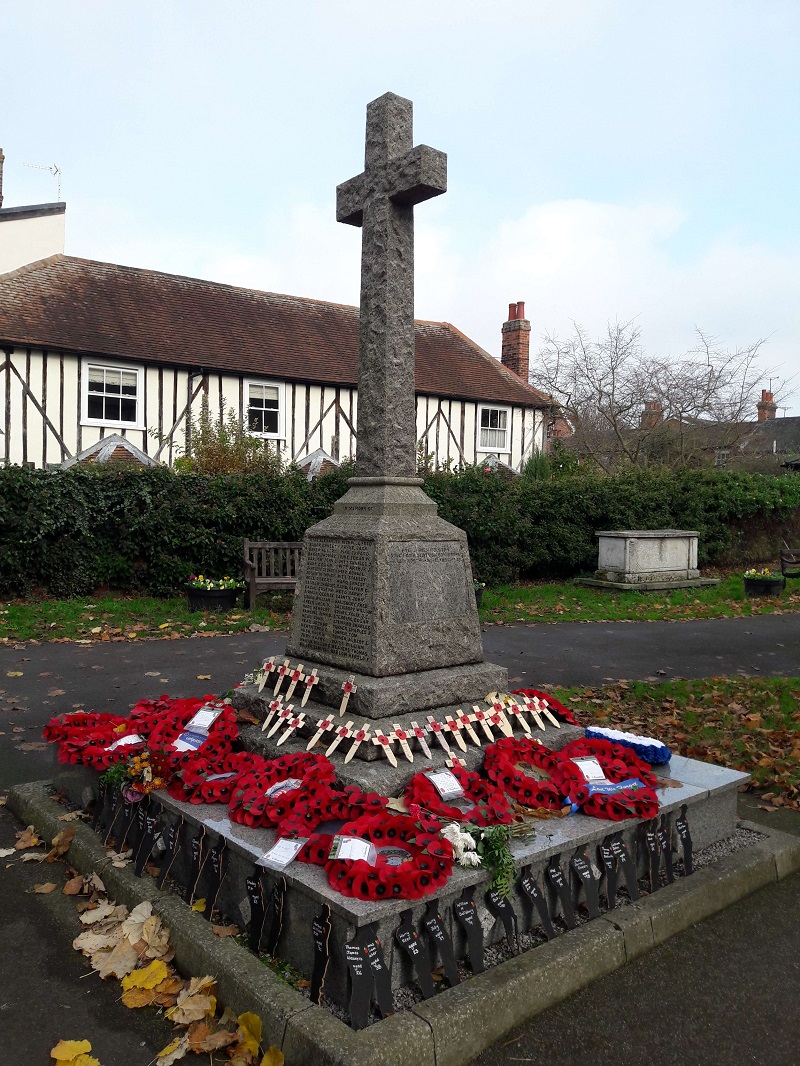
But if you say "war memorial" to a British person, it means something much more specific: a pillar, cross, or obelisk, about ten to twenty feet tall, located at a road junction near the centre of a village or small town, erected after the first or second world war:

https://www.wivenhoehistory.org.uk/wp-content/uploads/2018/1...

[1] https://en.wikipedia.org/wiki/RAF_Bomber_Command_Memorial

Re: What Are Spomeniks?

#44
To really understand many of these sculptures/monuments it's important to familiarize with the background stories of events that they were built to mark - mostly WWII battles and places of horrible pogroms.

A few links to add more context to some of the best known monuments:

Jasenovac https://www.yadvashem.org/odot_pdf/Microsoft%20Word%20-%2063... , https://en.wikipedia.org/wiki/Jasenovac_concentration_camp

Bubanj Memorial park https://en.wikipedia.org/wiki/Bubanj_Memorial_Park

Battle of Sutjeska (aka Tjentište) https://en.wikipedia.org/wiki/Case_Black

Re: What Are Spomeniks?

#45
Just like you have "chai" tea, or "naan" bread, so you now have "spomeniks" monuments.

What you have to remember is that these structures were erected to commemorate sacrifices that communists wished to be seen, but from a skewed, one sided perspective.

For example, during the WWII, in the whole of Germany occupied Europe, all the concentration camps were opened at the behest of of Germany. But not so in the Independent State of Croatia, which covered most of the territory of Croatia, Bosnia and Herzegovina, parts of Serbia and Slovenia. The monuments commemorating the camps are done in such a generic manner that you wouldn't know the victims from the perpetrators.

And while in Germany you have sites like Yolocaust[1] which ridicule those who don't know what the Holocaust was. You have companies like Valley Eyewear making their marketing campaigns using the Holocaust monuments.

1. https://www.bbc.co.uk/news/world-europe-38675835 2. https://www.smh.com.au/business/companies/australian-sunglas...

Re: What Are Spomeniks?

#46
post #43

Earlier quoted context omitted.

"very closely related in time and purpose" One example of this are "war memorials" - of which there are about 80 thousand in the UK (villages, towns, districts in cities, some schools). https://www.iwm.org.uk/memorials

Huh! As i was pondering this after posting, war memorials were exactly the example i thought of. It's an interesting comparison, because the simple meaning of the phrase is just a memorial to people who died in war. So, for example, the bomber command memorial [1] is, in that sense, a war memorial. But if you say "war memorial" to a British person, it means something much more specific: a pillar, cross, or obelisk, a…

Yeah - did wonder about that very precise meaning - there are quite a few other memorials to wars but they are usually qualified in some way "Korean War Memorial" or even for particular units in WW2 such as the superb Commando Memorial near Spean Bridge in the Highlands:

https://en.wikipedia.org/wiki/Commando_Memorial

Re: What Are Spomeniks?

#47
See, without caring about its looks, I like this website. It gives some context, some explanations and helps me to know why I should care about this. It also provides some nice content to explore, some pointers to find out more. I just love it and I wish there were more websites with content like this.

Re: What Are Spomeniks?

#48
post #38
post #9

Earlier quoted context omitted.

"Spomenik" is literally the word for "monument", right? Here's an article from 1849 mentioning building a Napoleonic monument, calling it a spomenik: https://books.google.co.uk/books?id=rz8_AQAAMAAJ&dq=%22spome... If you mentioned to another former Yugoslavian that you had drawn a picture of a spomenik, would it be implicitly clear that you meant one of these postwar memorials, or could they reasonably assume you mea…

Croatian here. You're correct, if you only said the word "spomenik" to anybody from former Yugoslavia, they wouldn't be able to distinguish whether you're talking about precisely those monuments built after WW2, or any other monument built before or after the communist era. Or even, say, Washington monument (In Croatian it's literally called "Washingtonov spomenik"). The word "spomenik" means "a monument" and just th…

Well, there are other examples - to me, Bohemians are my nation, to English people, "bohemian" describes behavior that used to be seen here (and way overblown in catholic-driven news sources at the time - Prague people were protestant) during the Middle Ages

Re: What Are Spomeniks?

#49

HN is the last place I expected to find this, but thanks! The anglicised use of the word "spomenik" really caught me off guard (I'm from Slovenia), but it makes enough sense after reading the article. I'll definitely try to check this map whenever I travel around the region - the design and sheer scale of some of these was always fascinating to me and I'd love to see more if I happen to be around.

Is it Anglicized, or is it just using that Latin alphabet that some parts of former Yugoslavia employ (including Serbia and Croatia)?

Re: What Are Spomeniks?

#50
post #13

Earlier quoted context omitted.

Keep in mind that Yugoslavia was a completely different thing during the cold war. It was a communist country that was not part of the Comintern, or the Warsaw pact. It, in fact, had open borders with the west. This caused it to be in a much better place economically than the rest of the communist world. There's an old nostalgic american tourist piece about it: https://www.youtube.com/watch?v=0RRnCnO1Y2c&has_verified…

I travelled from Italy into Yugoslavia in 1988 by train and I wouldn't exactly describe it as a pleasant experience - train stopped in the middle of nowhere and was surrounded by soldiers and everyone had to endure a very thorough check of our travel documents. Travelling from Yugoslavia into Hungary on the same trip I don't think the train even stopped.

Interesting. I have no way of knowing, but my guess would be that your experience is a consequence of Yugoslavia starting to break apart. All out war started just 2 years after your trip.

A big part of Yugoslavia's budget came from tourism, so I don't think your experience was common in the years before the breakup.

Thanks for sharing though. I love hearing stories from Yugo history.

Post reply on HN