Live data from Hacker News

Time to Ban Wet Markets

spectator.us

101–110 of 222 posts

Re: Time to Ban Wet Markets

#101
post #43

I think it’s a disgrace that the Chinese government hasn’t apologized for 1.) keeping wet market open 2.) silencing whistleblower doctor that would have stopped a pandemic 3.) letting 5 million people leave Wuhan 4.) pressuring WHO to not recommend border shutdown against China - Conjecture 5.) silencing whistleblowers inside China and around the world 6.) at one point, was surfacing propagandas that the virus didn’t…

Do you really want them to write a politely worded apology to the UN?

No the UN should get serious and start pointing out the human rights violations for which they are guilty. The Chinese people deserve better than this.
Re: Time to Ban Wet Markets

#102
post #62

Earlier quoted context omitted.

I agree, demonizing the Chinese people is the worst thing anyone can do. They didn't want this virus either, but they taught us how we can contain it, and they paid the price with countless human lives. The CCP is the one that needs to be made responsible. However, they will label any attempt from the west as racism towards the Chinese, to avoid having to take up that responsibility. Change will only happen when it d…

Should we be sanctioned for creating mad cow?

I am not sure how this is comparable. There is a concept called degree of risk. Bats are known for being reservoir of zootonic viruses unlike common farm animals like chickens, cows etc. Moreover, eating bats is easier to give up provided that we already have lots of other safer alternatives of meats.

Re: Time to Ban Wet Markets

#103
post #67
post #15

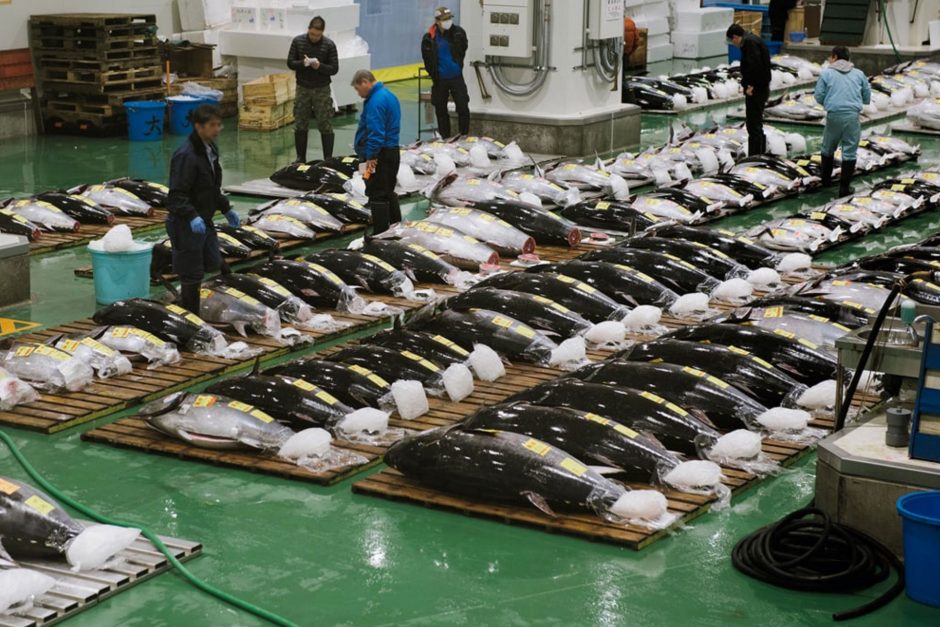
So, what’s the difference between a “wet market” and the sort of familiar farmer’s market of butchers/fishmongers/etc. that five-star restaurants source from all over the world? This article seems to be doing a motte-and-bailey of grossing you out with things that are just “regular meat wholesaler things” (e.g. fresh meat sitting out on ice without refrigeration) and then moralizing about the specific kinds of meats…

> So, what’s the difference between a “wet market” and the sort of familiar farmer’s market of butchers/fishmongers/etc. that five-star restaurants source from all over the world? That's exactly the question I have. How are these Chinese markets fundamentally different from, say, the Japanese Tsukiji fish market? Taking a look at pictures like https://commons.m.wikimedia.org/wiki/File:Vendors_begin_sell... it doesn't…

In a wet market, animals are alive: https://www.businessinsider.com/wuhan-coronavirus-chinese-we...

Re: Time to Ban Wet Markets

#104
post #62

Earlier quoted context omitted.

I agree, demonizing the Chinese people is the worst thing anyone can do. They didn't want this virus either, but they taught us how we can contain it, and they paid the price with countless human lives. The CCP is the one that needs to be made responsible. However, they will label any attempt from the west as racism towards the Chinese, to avoid having to take up that responsibility. Change will only happen when it d…

Should we be sanctioned for creating mad cow?

Let me think about it... Some people in the food industry fed dead sheep to cows and thus created a whole new form of transmissible, deadly desease. Hmmm... Yes I think that falls into the same category.

Re: Time to Ban Wet Markets

#105

Why does anyone think these markets are okay?

This is such a weak comment. It introduces no new data or arguments and simply casts emotion about from a biased viewpoint.

Comments like these are cratering any value the HN forums used to have. Please stop for the good of the community.

Re: Time to Ban Wet Markets

#106
post #6

It's important not to demonize Chinese people here. However, it's at the very least equally important to ensure that their agricultural practices stop producing these pandemic viruses. This is not the first one. Not even close. This is not one of those things that could have happened anywhere and the Chinese were simply unlucky. This is a direct consequence of their agricultural practices and it is extremely importan…

Traditional Medicine is a disgrace. As is any other kind of “alternative” medicine regardless of which culture it springs from. It’s either medicine or it’s not medicine; there is no third category.

The people peddling this stuff either either know it doesn’t work or they have no idea if it works or even harms their patients.

They’re charlatans and it’s one driver for extinction worldwide.

It’s the same kind of pernicious, regressive meme as the western “wellness” industry and we should all be scared of it.

Re: Time to Ban Wet Markets

#107
post #67
post #15

So, what’s the difference between a “wet market” and the sort of familiar farmer’s market of butchers/fishmongers/etc. that five-star restaurants source from all over the world? This article seems to be doing a motte-and-bailey of grossing you out with things that are just “regular meat wholesaler things” (e.g. fresh meat sitting out on ice without refrigeration) and then moralizing about the specific kinds of meats…

> So, what’s the difference between a “wet market” and the sort of familiar farmer’s market of butchers/fishmongers/etc. that five-star restaurants source from all over the world? That's exactly the question I have. How are these Chinese markets fundamentally different from, say, the Japanese Tsukiji fish market? Taking a look at pictures like https://commons.m.wikimedia.org/wiki/File:Vendors_begin_sell... it doesn't…

Just to address that specific example, Tsukiji closed a year and a half ago and relocated to Toyosu, which looks like this: https://asianinspirations.com.au/wp-content/uploads/2019/12/...

Re: Time to Ban Wet Markets

#108
post #82

Earlier quoted context omitted.

> So, what’s the difference between a “wet market” and the sort of familiar farmer’s market 1) The wet market is full of live animals in close proximity and very unsanitary conditions. So pathogens are more likely to still be alive, and can jump between diverse hosts, not just to humans. 2) The wet market is full of non-domesticated , exotic animals which carry pathogens humans are not acquainted to.

Re 1: you’re probably picturing your local butcher shop. Don’t. Picture a pier in a coastal town. The lobsters? Alive. The oysters? Alive. In close proximity? Certainly. Sitting right beside a bunch of gutted fish and processed chum? Yup. That’s a wet market. You can’t name one thing going on in Wuhan that doesn’t happen on such a pier. Even the general approach of “whatever we catch, we sell” is the same. And yet, n…

I haven't read the article, but it seems much more likely that a virus be able to jump from a mammal to a human than a mollusk to a human

Re: Time to Ban Wet Markets

#109
post #6

It's important not to demonize Chinese people here. However, it's at the very least equally important to ensure that their agricultural practices stop producing these pandemic viruses. This is not the first one. Not even close. This is not one of those things that could have happened anywhere and the Chinese were simply unlucky. This is a direct consequence of their agricultural practices and it is extremely importan…

> This is a direct consequence of their agricultural practices It's also a result of people, around the world (but mostly in China), buying into Traditional Chinese Medicine (TCM). It creates a market for products based on wild animals like bats and pangolins, which this virus originated from.

This would also tamp down on poaching and general animal abuse. The challenge is unless you reduce the actual demand for TCM you will just shift to black/gray markets which is likely net worse. I don’t know how to reduce that demand except through education and generational change.

Re: Time to Ban Wet Markets

#110
post #82

Earlier quoted context omitted.

> So, what’s the difference between a “wet market” and the sort of familiar farmer’s market 1) The wet market is full of live animals in close proximity and very unsanitary conditions. So pathogens are more likely to still be alive, and can jump between diverse hosts, not just to humans. 2) The wet market is full of non-domesticated , exotic animals which carry pathogens humans are not acquainted to.

Re 1: you’re probably picturing your local butcher shop. Don’t. Picture a pier in a coastal town. The lobsters? Alive. The oysters? Alive. In close proximity? Certainly. Sitting right beside a bunch of gutted fish and processed chum? Yup. That’s a wet market. You can’t name one thing going on in Wuhan that doesn’t happen on such a pier. Even the general approach of “whatever we catch, we sell” is the same. And yet, n…

The risk to human health from gutted mammals is much higher than from lobsters, because viruses are more often compatible between more closely related species.

A reasonable restriction would be on wet markets for mammals, excepting a few where the safety properties are well known like cows.

Post reply on HN