Nope. No fucking way. Whatever temporary powers granted are akin to a drug dealers 'first one is free'.
U.S. govt, tech industry discuss using location data to combat coronavirus
91–100 of 186 posts
Re: U.S. govt, tech industry discuss using location data to combat coronavirus
#92Israel started using cellphone tracking as of today. An in stable (transitional) government got an approval from the justice department. The tracking is based on location / cell data stored at the mobile operators and should be used for tracking people around a positive covid person to send text messages asking them to get into their home to a lock down for 14 days. Cellphone data is retrospective of course. However,…
They already had a law that allowed Shin Bet to collect that data without any warrants, though. And to use it for many purposes - just not an epidemic.
Re: U.S. govt, tech industry discuss using location data to combat coronavirus
#93Another sad +1: Italy is already using phone location data to track people and measure the effectiveness of the quarantine: https://archive.is/6xXNu (archived from https://www.corriere.it/cronache/20_marzo_17/coronavirus-cos...)
Re: U.S. govt, tech industry discuss using location data to combat coronavirus
#94What if every coronavirus victim voluntarily uploads their location data publically (their identity kept anonymous). Now you can, without uploading your own data anywhere, check if you have ever been in vicinity of any of them. If you have been, you can get tested and then upload your own data if that comes out positive. This way not eveyone has to share their data, only a few who have been infected.
> their identity kept anonymous
If I have your location data, you are not anonymous anymore. Especially these days where you likely spent most hours of the day in your home.
Re: U.S. govt, tech industry discuss using location data to combat coronavirus
#95Well, buckle up folks. Android's GLS service has an absolute insane data ingestion pipeline consisting of sensor fusion from GPS, Wifi, accelerometer, barometric data, and cell tower locations. It's accurate to within meters, can locate you inside buildings, can count your footsteps, and even knows what floor you've been on. It's been used by Google to tune its indoor WiFi maps and improve location accuracy for years…
A more hopeful interpretation. This can be a tool for good. It's not necessary for the state to have access. We already have access. This capability is precisely what we need to generate data that can be used to resolve this crisis and allow us to safely exit from quarantine. The GDPR allows individuals to request access to their own data. They can voluntarily share this with their health systems, communities, and go…
> A more hopeful interpretation. This can be a tool for good. It's not necessary for the state to have access. We already have access.
The state has had realtime, direct access to the data without a warrant or meaningful oversight on a query-by-query basis since the 14th of January, 2009, when Google joined the PRISM collection program.
It would be a very simple matter to expand that access to send wider selections of data. It may already have the capability to perform such queries.
Re: U.S. govt, tech industry discuss using location data to combat coronavirus
#96First person to make a phone with hardware switches for gps, bluetooth, wifi, cellular and microphone gets my money.
Also pinephone. https://www.pine64.org/pinephone/
Unfortunately the GNSS (GPS) is on one chip with modem, but otherwise great feature to have killswitches for cameras and comms.
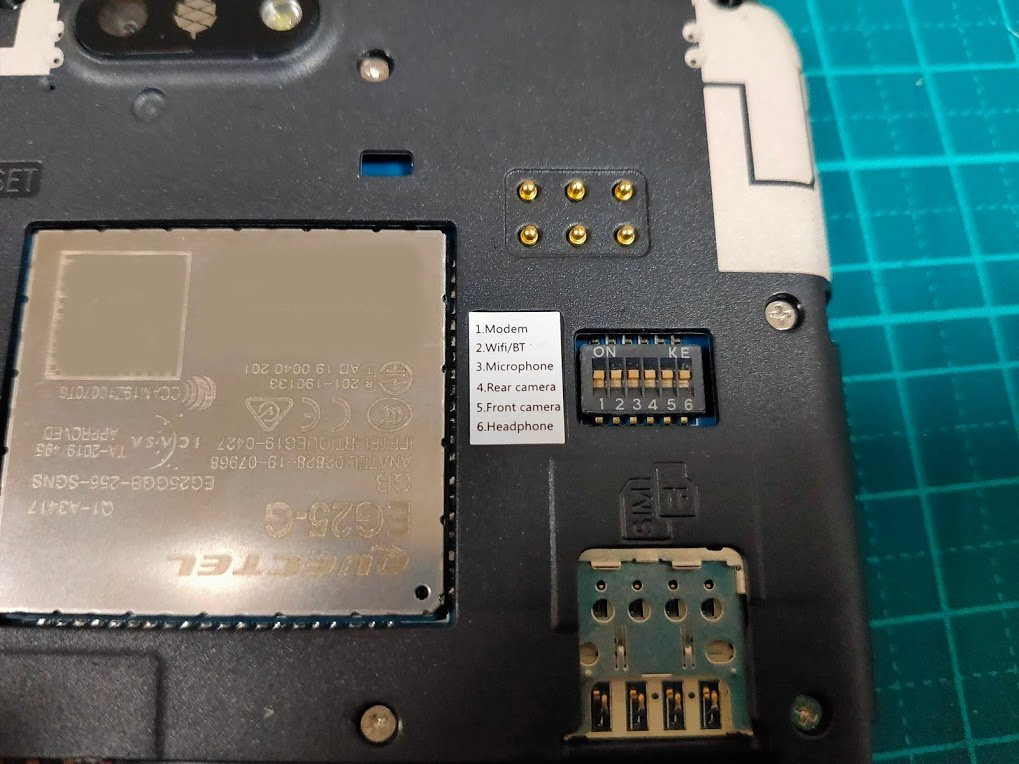
Re: U.S. govt, tech industry discuss using location data to combat coronavirus
#97Already happening in Austria: (link in German) https://futurezone.at/netzpolitik/ausgangsbeschraenkung-a1-l...
That sounds rather like the traffic feature of Google/Apple Maps than what's discussed in the comments here. The article you linked is very clear that it's aggregated and only segments with at least 20 people on them are reported.
If I understand the Hill article correctly, the US discussion is about the same kind of data ('An unnamed OSTP official told The Washington Post that they were “encouraged by American technology companies looking to leverage, aggregate, anonymized data to glean key insights for COVID-19 modeling efforts.”'), yet the majority of the comments seem to be assuming that it's about tracking individuals' locations to enable contact tracing. I don't get that impression from the Hill article at all.
What's actually being proposed, while not unproblematic, sounds rather more palatable than the authoritarian nightmare that's being discussed here.
Re: U.S. govt, tech industry discuss using location data to combat coronavirus
#98Earlier quoted context omitted.
I don't know, maybe it is. Maybe the politics of our world simply are that cynical and won't allow for such a thing to exist. But I guess I'm hoping it isn't. I'm trying to imagine how a non-authoritarian institution would work; it wouldn't have the "authority" to compel anyone to turn over their data, but just about everyone would have enough trust in the community and its decision making process to be okay with it.…
What if information could be revoked? Imagine the government suspects me in some investigation. I give them a key that gives them all information about me and my recent activities. Then once some period elapses, I revoke that key and they no longer have any of that information. Nor, of course, were they able to copy or independently distribute it in any way when they had it. This is probably pure fantasy, but if ther…
I maintain that copying is fine in some or a lot of cases because stale data has a diminishing ROi and eventually becomes useless. Doesn’t mean the govt couldn’t amass data from multiple sources to provide a complete picture of you. But you just proposed DRM for your personal data and we all know about the analog loophole...
Re: U.S. govt, tech industry discuss using location data to combat coronavirus
#99The interesting thing about ideas like this is that they reveal how authoritarianism during times of stability does a terrible amount of damage during times of crisis. This is the sort of problem that could be solved in a better world; collecting location data to find interactions between people would allow you to get them tested faster and prevent a disease from spreading. But it simply can't be done in this country…
I’ve regressed to my cynical default in the past few days, but “a large institution that I would trust with this authority” sounds like pure fantasy.
I would trust the CCC or the EFF with this I think, and the other paranoid fighters for privacy. But only as long as it takes for the to rotate their members enough for takeover by others.
We've seen that wit smaller political parties as well. When membership suddenly become a viable path to power things change in the structure and people.
Re: U.S. govt, tech industry discuss using location data to combat coronavirus
#100Looks like they wish to follow in the footsteps of South Korea:
https://www.lawfareblog.com/lessons-america-how-south-korean...