Live data from Hacker News

Coin washer keeps Westin St. Francis' change shiny (2010)

sfgate.com

111–119 of 119 posts

Re: Coin washer keeps Westin St. Francis' change shiny (2010)

#111
post #98

Earlier quoted context omitted.

How does a chain of second hand bookshops succeed in this day and age? Is it because manga are more like magazines in size and regularity of purchase than novels? I'd love it if there was something like that in my country.

They seem to be doing very well - they have huge multi floor stores in big cities and smaller more modest stores about everywhere else - we even saw one at the edge of pretty rural Izumo during a bus ride! In general I think there are three main reasons for their success: 1) Price - older books are dirt cheap in Book Off. You can get artbooks, drawing books, manga, fiction, non fictin, even games, cds, dvds for often…

If Alitalia means thay you also live in Italy, maybe Libraccio? I don't know how selling to them works, but I often get (random) hard-to-find books at a decent price there.
Re: Coin washer keeps Westin St. Francis' change shiny (2010)

#112
post #5

How many pay with cash at a hotel? I'd expect it to be very low — large bills, often paid for by a company credit card or in advance online.

When I'm travelling overseas, I'll often use the hotel bill as a way to cash out my remaining local currency. I still get a receipt, just two lines under paid/reconciliation, one for cash and one for anything remaining on a card.

Your hotel bill is often the last large bill before you leave the country.

Same goes for splitting off the incidentals. It's not anything nefarious, I just would rather not have my food/drink on my corporate card. For one, it makes for cleaner accounting back at the office, which is always nice when doing lots of expense reports.

Re: Coin washer keeps Westin St. Francis' change shiny (2010)

#113

Earlier quoted context omitted.

Yes it totally doesn't make sense. The coins are worth so little now. Also making pennies adds $2m a year to our trade deficit with China.

Huh? Are pennies sourced from China?

As the other commentor noted, most of the zinc for pennies comes from China (I'm not sure about the copper).

Re: Coin washer keeps Westin St. Francis' change shiny (2010)

#114

Earlier quoted context omitted.

Modification isn't "defacement", though.

Modification that doesn't alter the denomination or attempt to decieve is legal. A crucial difference.

I'd argue cleaning notes and coins isn't even "modification" it's just that, cleaning

Modification would be writing with a ball-point pen on it.

Re: Coin washer keeps Westin St. Francis' change shiny (2010)

#115

Earlier quoted context omitted.

That trick with the edges is a pretty good value add, since a lot of people don't really care about the actual age or history of the book, they just want their bookshelves to appear neat.

Theoretically I think it could actually extend the life of books, assuming a clean fresh edge is less likely to propagate tears than a rough battered edge which might have stress-concentrating nicks. Then again, pages tearing doesn't really seem like a particularly common failure mode for books.

What you're saying applies to materials under stress, not paper

Re: Coin washer keeps Westin St. Francis' change shiny (2010)

#116
post #98

Earlier quoted context omitted.

They seem to be doing very well - they have huge multi floor stores in big cities and smaller more modest stores about everywhere else - we even saw one at the edge of pretty rural Izumo during a bus ride! In general I think there are three main reasons for their success: 1) Price - older books are dirt cheap in Book Off. You can get artbooks, drawing books, manga, fiction, non fictin, even games, cds, dvds for often…

If Alitalia means thay you also live in Italy, maybe Libraccio? I don't know how selling to them works, but I often get (random) hard-to-find books at a decent price there.

Actually not, in another european country. They just have been always the most cost effective. :)

Re: Coin washer keeps Westin St. Francis' change shiny (2010)

#117

Earlier quoted context omitted.

Theoretically I think it could actually extend the life of books, assuming a clean fresh edge is less likely to propagate tears than a rough battered edge which might have stress-concentrating nicks. Then again, pages tearing doesn't really seem like a particularly common failure mode for books.

What you're saying applies to materials under stress, not paper

Right, tears usually happen when you're turning a page.

Re: Coin washer keeps Westin St. Francis' change shiny (2010)

#118

Earlier quoted context omitted.

Modification that doesn't alter the denomination or attempt to decieve is legal. A crucial difference.

I'd argue cleaning notes and coins isn't even "modification" it's just that, cleaning Modification would be writing with a ball-point pen on it.

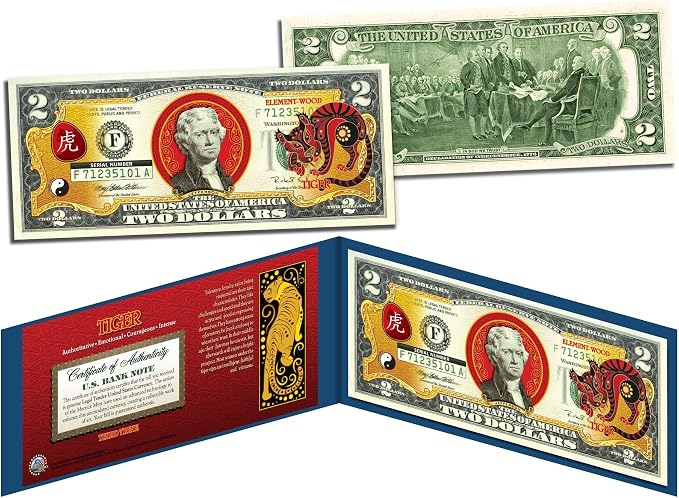
My wife recently got me a colored & decorated $2 bill. It's decorated with Chinese graphics to celebrate the year of the tiger.

https://images-na.ssl-images-amazon.com/images/I/91hUwSD3ImL...

I was very surprised to learn that this is not only legal, but apparently is still considered legal tender. They're produced by a company called "The Merrick Mint" - which is not actually a mint, just a company with "mint" in the name. They specialize in taking real U.S. currently and decorating/coloring it.

https://www.merrickmint.com/

Re: Coin washer keeps Westin St. Francis' change shiny (2010)

#119

Earlier quoted context omitted.

Sounds like money laundering but I guess it’s legal in his case.

Defacing US currency isn't legal.

While wheresgeorge hasn't been entirely "cleared," they have been directly investigated by the secret service and the only fallout was that they were prohibited from selling stamps directly. It is not permitted to advertise on currency, and they considered this to be promoting the practice.

Individuals marking their own bills for the purpose of tracking them however was considered a separate and fully permissible action. The legal standard for defacing or destroying requires that the banknote be made unfit for circulation -- though that is about as clear as mud, it has been a pretty tall standard to meet.

Post reply on HN