Didn't they opened a new coal plant? https://climatechangenews.com/2020/01/09/wont-let-germany-bu...
[deleted]
51–60 of 77 posts
Didn't they opened a new coal plant? https://climatechangenews.com/2020/01/09/wont-let-germany-bu...
Looks like they'll still be on coal when most of the world will be moving off it. Just because there's a timetable for it still makes it backward (including the self-decided avoidance of Nuclear) to hang on so long.
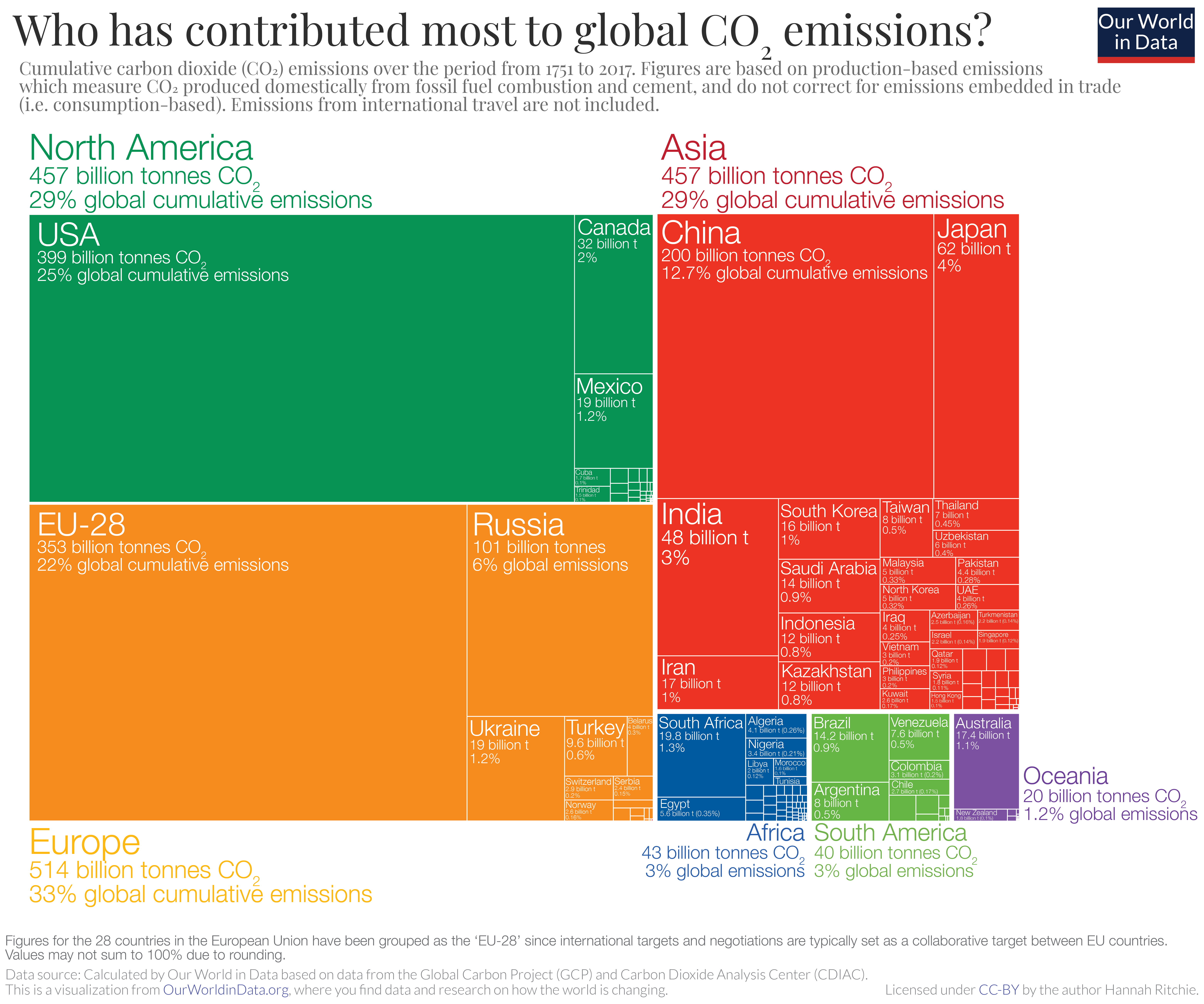
> Looks like they'll still be on coal when most of the world will be moving off it. That's only true if most of the coal-using world excludes the 2.7 billion people living in China and India, neither of which have any plans to phase out coal at all. The US is also only gradually phasing out coal, it'll still be a major coal energy producer 20 years from now (probably 15% of its power base at that point). China is ver…
That's today, given the pace China works at they could easily commit to phasing out coal by 2037 and mean it too. They've already started planning for moving on from it. It's also entirely likely they could have less coal use (excluding steel and industrial uses) than from power stations than Germany in 2037 (1 year before Germany commits to phase it out)
Earlier quoted context omitted.
I know this isn't a very popular opinion, but I've always thought that was a hugely stupid idea in the first place. Instead of shutting down nuclear power plants, we should have doubled down on them and spent more money on research to make them safer (as I understand it, there's still many unexplored concepts to make nuclear power much safer and reduce nuclear waste) and more efficient. The sad truth is, that decisio…
Atomausstieg started in 2000, long before the Fukushima disaster.
Fukushima changed the perception of exit plans from "yeah, right, I'll believe it when I see it" to "yeah, definitely". Fukushima hit hard because before that, Chernobyl was quite successfully framed as a failure not of nuclear technology but of Sovietism. But Fukushima happened, of all countries, in Japan, famed for accuracy and reliability (they can even run trains on a schedule!) and full of respect for the limited land-mass they have (compare Shintoism to American "exploit and move on"). If they can't handle it, nobody can. A lot of people were reevaluating their perception of Chernobyl and so their personal "disasters in my lifetime because nuclear is hard" counter did in effect not double from one to two, it, jumped to two straight from zero. Opinion shifted from almost a tie to almost unanimous.
Earlier quoted context omitted.
The amount of money spent on nuclear reactor research is insane. It's very expensive, it takes very long, it requires so much security. The whole private nuclear sector was heavily subsidized. And nobody wants a reactor or storage facility in their backyard. Keep in mind Germany has a higher population density than France. And even France has problems to find locations for their new plants. In the end after Fukushima…
I was under the impression that nuclear plants needed to be close to population centers anyway, or at least that it was ideal. The plant closest to my city is about 40km away, easily sighted from one of the city hills here in town.
It's the same as for every other power plant. They don't need to be close to their consumers, power can be transmitted for long distances. Of course, there's the cost of building the long transmission lines, and a small amount of power loss (using higher voltages reduces this loss, while increasing the cost of the transmission lines and equipment).
Earlier quoted context omitted.
> The sad truth is, that decision was largely driven by uninformed and emotional reactions to a single event on the other side of the world. Actually it's completely the other way: in Germany an informed population discussed this topic for two decades and eventually a consensus in society emerged to slowly phase out nuclear first and to create a new, renewable and market-oriented energy landscape. In Japan an uniform…
That's not quite correct, politics and electability of stances on the topic play a big role, even in Germany. In 2001 socdem-green coalition agreed on an "Atomaustieg" that would not allow new plants to be greenlighted and the old ones would be phased out by some time 2015–2020. In 2010 when Merkel first had a sole conservative-liberal coalition, those plants got an extension for another 8 years and even an unpopular…
After two decades of discussion and political struggle.
> Merkel's stance changed
Merkel knew already that there was not enough support for nuclear. The Fukushima event caused the collapse of the nuclear support in her own party and in the industry.
> Saying that Germany's handling of the energy sector is purely rational, simply doesn't hold up to the political realities, which can be quite messy.
No human decisions are 'rational'. Energy politics is never rational. Every decision in energy politics is guided by current level of knowledge, political influence, influence by industry (their are billions of dollars involved), various preferences, etc.
The German population was never asked if they wanted a monopolistic and centralized electricity system - the one which emerged after WWII. Some politicians even thought that nuclear technology was a step into military power. This was for example the plan of Franz Josef Strauss, a very influential politician at that time.
Earlier quoted context omitted.
Chernobyl or Fukushima, or the numerous minor incidents But yes um also all for nuclear until fusion reactors are better, especially salt /thorium reactors And more focus to turn usable waste to RTGs etc
Germany did have a thorium based reactor, it had multiple incidents and was never profitable. It was only online for two years and was eventually torn down. Well, the cooling tower was, they still have to wait for the reactor to lose it's radioactivity. Check out https://en.wikipedia.org/wiki/THTR-300
Looks like they'll still be on coal when most of the world will be moving off it. Just because there's a timetable for it still makes it backward (including the self-decided avoidance of Nuclear) to hang on so long.
> Looks like they'll still be on coal when most of the world will be moving off it. That's only true if most of the coal-using world excludes the 2.7 billion people living in China and India, neither of which have any plans to phase out coal at all. The US is also only gradually phasing out coal, it'll still be a major coal energy producer 20 years from now (probably 15% of its power base at that point). China is ver…
[0] https://ourworldindata.org/uploads/2019/10/Cumulative-CO2-tr...
Do they have a reliable and renewable replacement for baseload generation? Nuclear would be ideal but that has been ruled out for political reasons.
Do they have a reliable and renewable replacement for baseload generation? Nuclear would be ideal but that has been ruled out for political reasons.
Gas from Russia maybe? Big pipelines being built in the Baltic Sea.
Earlier quoted context omitted.
Chernobyl or Fukushima, or the numerous minor incidents But yes um also all for nuclear until fusion reactors are better, especially salt /thorium reactors And more focus to turn usable waste to RTGs etc
Germany did have a thorium based reactor, it had multiple incidents and was never profitable. It was only online for two years and was eventually torn down. Well, the cooling tower was, they still have to wait for the reactor to lose it's radioactivity. Check out https://en.wikipedia.org/wiki/THTR-300