Live data from Hacker News

The transit of Mercury starts at 7:35 am ET and will last for 5.5 hours

solarsystem.nasa.gov

21–30 of 66 posts

Re: The transit of Mercury starts at 7:35 am ET and will last for 5.5 hours

#21
post #14

Interesting to think about where we'll be when this happens again in 2049. It's a difference of only 30 years. 30 years ago was 1989. Yet life today compared to then is simply alien - technology has impacted the way everyone and every thing exists. The first self-powered flight was in 1903. Man landed on the Moon just 66 years later. In one lifetime you went from being perpetually constrained to the surface to litera…

It may happen, certainly will happen eventually, but every generation for the last 60 years has said the same (eg Space 1999, 2001 Space Odyssey, Blade Runner, etc) and as we inch ever closer we realise we are even further away than we first estimated. I guess it’s a bit like the Dunning-Kruger effect.

That all said, the advent of the the web and “smart” devices have changed the world more significantly and in a shorter space of time than any other technological leap in human history. It’s been exciting working through that revolution.
Re: The transit of Mercury starts at 7:35 am ET and will last for 5.5 hours

#22
post #18
post #14

Interesting to think about where we'll be when this happens again in 2049. It's a difference of only 30 years. 30 years ago was 1989. Yet life today compared to then is simply alien - technology has impacted the way everyone and every thing exists. The first self-powered flight was in 1903. Man landed on the Moon just 66 years later. In one lifetime you went from being perpetually constrained to the surface to litera…

Prediction: When we watch the transit of Earth from Mars, it will be remotely--there just isn't much advantage to humans physically living on Mars. We can see/understand what's going on, without pointless expense, tragedies, and indignities that would go with human presence. https://en.wikipedia.org/wiki/Transit_of_Earth_from_Mars

Depends on whether one's priorities lie in being comfortable or maximizing the chance of surviving as a species.

Re: The transit of Mercury starts at 7:35 am ET and will last for 5.5 hours

#23
For the last transit of Venus I rigged up a pair of binoculars to project one sight onto some posterboard a few feet away for the entire duration. It was great, Venus was about the size of a dime on the image.

That was with a crappy old pair of binoculars I didn’t care about one way or another. Now I have a nice pair, do I risk damaging them by doing this?

Re: The transit of Mercury starts at 7:35 am ET and will last for 5.5 hours

#24
post #18
post #14

Interesting to think about where we'll be when this happens again in 2049. It's a difference of only 30 years. 30 years ago was 1989. Yet life today compared to then is simply alien - technology has impacted the way everyone and every thing exists. The first self-powered flight was in 1903. Man landed on the Moon just 66 years later. In one lifetime you went from being perpetually constrained to the surface to litera…

Prediction: When we watch the transit of Earth from Mars, it will be remotely--there just isn't much advantage to humans physically living on Mars. We can see/understand what's going on, without pointless expense, tragedies, and indignities that would go with human presence. https://en.wikipedia.org/wiki/Transit_of_Earth_from_Mars

We can't even repair shit on the ISS with robots. I don't rate our chances to do arbitrary repair work.

Re: The transit of Mercury starts at 7:35 am ET and will last for 5.5 hours

#25

For the last transit of Venus I rigged up a pair of binoculars to project one sight onto some posterboard a few feet away for the entire duration. It was great, Venus was about the size of a dime on the image. That was with a crappy old pair of binoculars I didn’t care about one way or another. Now I have a nice pair, do I risk damaging them by doing this?

Yes. You risk overheating the adhesive that bonds the glass components internally, unless you use a solar filter on the front (sun end) of one tube of the binoculars, and complelely cap the other tube with its lens cap.

My advice is to skip the binoculars. Instead use a simple magnifying glass like you can buy at an office supply store -- a round one, not a square one -- and a piece of poster board just like you did last time. It will work fine. The image will be upside down but who cares?

If you can't get a magnifying glass, use a second piece of poster board and put a whole in the middle with a pin, or tack. The image on the other poster board will be very dim but almost as good.

Re: The transit of Mercury starts at 7:35 am ET and will last for 5.5 hours

#26

Will a welding mask work?

If it's around #15 or greater, but unlike the eclipse you won't be able to see anything interesting with just the welding mask. Mercury is too small. You need magnification, but if you use binoculars and you put the welding mask between the binocs and your eyes you will permanently damage your eyes and the binocs.

Make a pinhole in a playing card and put a large piece of white cardboard a meter behind it. This will work well. It will be dim so you might need to arrange a large sheet of poster board around the playing card for shade.

Re: The transit of Mercury starts at 7:35 am ET and will last for 5.5 hours

#27
post #15
post #14

Interesting to think about where we'll be when this happens again in 2049. It's a difference of only 30 years. 30 years ago was 1989. Yet life today compared to then is simply alien - technology has impacted the way everyone and every thing exists. The first self-powered flight was in 1903. Man landed on the Moon just 66 years later. In one lifetime you went from being perpetually constrained to the surface to litera…

I remember a world without the internet, without personal computers, without ATM machines. I am a member of the last generation (until the apocalypse) who will know what life was like without these things. Traveling was more of an adventure back then because you were pretty much cut off from home. Nowadays, being away is not so different from being at home. We may be living on the moon in 2049. Whether that represent…

Why not just turn off your phone while traveling, or leave it at home?

Re: The transit of Mercury starts at 7:35 am ET and will last for 5.5 hours

#28
post #15
post #14

Interesting to think about where we'll be when this happens again in 2049. It's a difference of only 30 years. 30 years ago was 1989. Yet life today compared to then is simply alien - technology has impacted the way everyone and every thing exists. The first self-powered flight was in 1903. Man landed on the Moon just 66 years later. In one lifetime you went from being perpetually constrained to the surface to litera…

I remember a world without the internet, without personal computers, without ATM machines. I am a member of the last generation (until the apocalypse) who will know what life was like without these things. Traveling was more of an adventure back then because you were pretty much cut off from home. Nowadays, being away is not so different from being at home. We may be living on the moon in 2049. Whether that represent…

I moved to Germany from the US, and I’d say that traveling is still very different from being at home in 2019.

With regard to connection reducing the adventure when traveling, how connected you are at any time can be a choice. Sure, back in the day you had no life line. But to me it’s a bit like free solo climbing (no ropes) vs lead climbing. Free solo is max adventure but the consequences are higher. It’s your choice in what you want the challenge to be. But if you really only care about challenging yourself on the climb itself and you don’t fall in either, was there really much of a difference? Having the safety net let’s you push harder and avoid being too conservative

Re: The transit of Mercury starts at 7:35 am ET and will last for 5.5 hours

#29

For the last transit of Venus I rigged up a pair of binoculars to project one sight onto some posterboard a few feet away for the entire duration. It was great, Venus was about the size of a dime on the image. That was with a crappy old pair of binoculars I didn’t care about one way or another. Now I have a nice pair, do I risk damaging them by doing this?

Make a couple of cardboard disks that cover the front lens with smaller circular cutouts, effectively reducing the diameter of the front elements. If you make the holes say half the radius, you'll reduce the light by a factor of 4 (telescopes often comes with a front lens cover that have this sort of arrangement built in, either for solar projection or for observing the mount).

Shouldn't need to say it here, but never, ever, look at the sun through binoculars or a telescope (even with filters or reducers). You won't get a second chance.

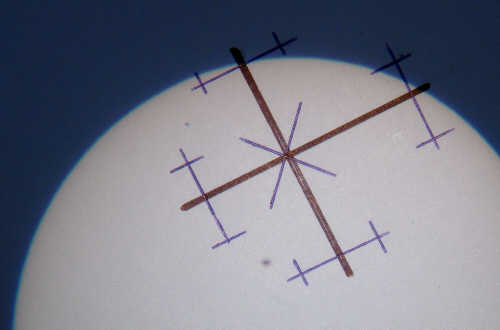
[edit] Here's a pic from the 2003 transit, taken by projecting an image of the sun onto an A4 sheet of paper, using a 90mm refractor stopped down to about 25mm (Mercury at mid-upper left, the lower blob is a sunspot).

http://hazeii.net/images/mercury_transit_2003.jpg

Re: The transit of Mercury starts at 7:35 am ET and will last for 5.5 hours

#30
post #14

Interesting to think about where we'll be when this happens again in 2049. It's a difference of only 30 years. 30 years ago was 1989. Yet life today compared to then is simply alien - technology has impacted the way everyone and every thing exists. The first self-powered flight was in 1903. Man landed on the Moon just 66 years later. In one lifetime you went from being perpetually constrained to the surface to litera…

The next transit is in 2032 though. The next transit that will be visible from the US will be in 2049.

13 years is long, but it's not as long as 30 years you specified.

Post reply on HN