Live data from Hacker News

The next big thing will start out looking like a toy (2010)

cdixon.org

191–200 of 209 posts

Re: The next big thing will start out looking like a toy (2010)

#191
post #117

Earlier quoted context omitted.

I was working on software in the 3D printing space back in 2012, and I too thought it was going to be something big that looked like a toy. However, I got out once I realized that speed of prints mattered a lot of consumers. And the current methods of consumer 3D printers were FDM (fused deposition modeling) and Stereolithography, which both had asymptotic limitation on how fast you can get a print to go. For FDM, th…

PDAs fit this IMO. We had newtons, palm pilots (Clie), Windows CE, devices (iPaq, Axim, ...), all of them were for geeks/hobbyists only until iPhone. Anyone carrying one was considered a geek out of the norm. Now you couldn't pry a smartphone from a non-geek's hands.

I had palm pilots, Psions, a Newton (wow that thing was huge) and some Windows CE devices (HP all of them); I was considered a geek at first for that sure, but I didn't have to lug around an agenda and notebook (esp Psion replaced that in 1 device which was nice to use) and when 2g became a thing, I had Windows CE HP 'phones' (bulky, with keyboard and very fragile) but when on vacation I did all my company business on there (buying, selling, talking to developers, setting meetings, sending/receiving emails) while my colleagues had to go to internet cafe's or lug around laptops. But yeah, they were things for geeks, mostly impractical unless you really wanted to use them (which I did; I hate carrying crap around); iPhone changed that to making it easy to use. Ofcourse I bought that the moment it came out in my country (iphone 3g) and never looked back. That one is also still working by the way, not that I have any real use for it :)
Re: The next big thing will start out looking like a toy (2010)

#192
post #160
post #117

Earlier quoted context omitted.

I was working on software in the 3D printing space back in 2012, and I too thought it was going to be something big that looked like a toy. However, I got out once I realized that speed of prints mattered a lot of consumers. And the current methods of consumer 3D printers were FDM (fused deposition modeling) and Stereolithography, which both had asymptotic limitation on how fast you can get a print to go. For FDM, th…

It's far too early for most consumers... despite what the promoters claimed.[1] Most of the same issues existed with paper printers in the 80's: they could be fiddly, slow, noisy, power hungry, prone to jam and messy. If you had to print something too much longer than a book report, you had to keep your eyes on it while it printed and cross your fingers. There was no Moore's law for paper printers, just years of incr…

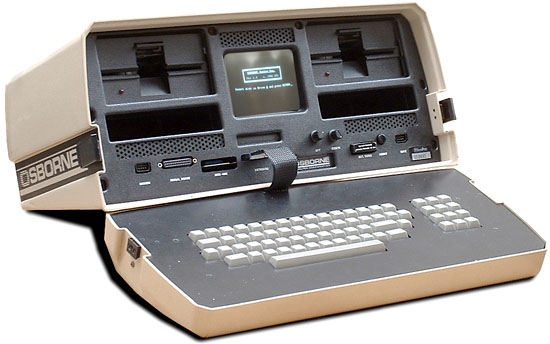
But for paper printers you had no alternatives... So you just focused and printed. You could not take your luggable[0] out in the train and read off screen. Or take it to the couche or sit in your college bench.

For 3d printers etc we have alternatives that are fine; we don't actually need them for anything urgent.

[0] https://oldcomputers.net/pics/osborne1.jpg

Re: The next big thing will start out looking like a toy (2010)

#193

This made me think of disparaging comments from ESA about SpaceX: 'Asked about how the Ariane 5 compares to lower-cost alternatives on the market today, such as SpaceX's Falcon 9 rocket, Stefano Bianchi, Head of ESA Launchers Development Department, responded with a question of his own. “Are you buying a Mercedes because it is cheap?” Ranzo, sitting nearby, chimed in and referenced the India-based maker of the world’…

But whoever makes that Fiat Ducato or equivalent for space will make big bank. Different markets warrant different solutions, including custom.

Re: The next big thing will start out looking like a toy (2010)

#194
post #33

I think most participants in the Internet circa 1996 and personal computers in the early 1980s would understand this idea. The Internet was being widely written off as a toy that many couldn't ever imagine having practical applications. Case in point, this widely-cited piece from 1998: > The growth of the Internet will slow drastically, as the flaw in "Metcalfe's law"--which states that the number of potential connec…

I was certainly a "participant in the Internet circa 1996" (and before) and besides the inevitable quote from Krugman pretending not to understand what is happening here [Network effects don't care that "most people have nothing to say to each other" and we should laugh at a supposed "economist" who didn't understand that in 1998] I don't see a connection to the Internet as a "toy". I guess there are two and a half p…

It might not have been a toy in the Fisher-Price sense of the word, but in 1998 it was only a couple of years into the mainstream, and had a long history of being the preserve of geeks and hobbyists. Big business was only just starting to take it seriously, and even then, not particularly so.

Re: The next big thing will start out looking like a toy (2010)

#195

This made me think of disparaging comments from ESA about SpaceX: 'Asked about how the Ariane 5 compares to lower-cost alternatives on the market today, such as SpaceX's Falcon 9 rocket, Stefano Bianchi, Head of ESA Launchers Development Department, responded with a question of his own. “Are you buying a Mercedes because it is cheap?” Ranzo, sitting nearby, chimed in and referenced the India-based maker of the world’…

But whoever makes that Fiat Ducato or equivalent for space will make big bank. Different markets warrant different solutions, including custom.

Agreed, but lower cost access to space could also change the game itself. If launch costs are 1/10 or 1/100 what they are now, your bespoke $100m absolutely-cannot-fail-at-all-costs satellite can similarly be blown away by satellites that can be built without the super-expensive verification required to make them infallible. Just build them cheap and good enough and if/when they fail, throw up another.

Re: The next big thing will start out looking like a toy (2010)

#196
post #186
post #176

Earlier quoted context omitted.

US EU is a corridor with huge volume the legacy systems are therefore very very optimized for this. Inside EU Tx are basically inside the same system which is centralized and updating balances is super simple cheap and fast. Try to send some USD to Mexico or something instead. Also a Tx taking hours and costing 25 bucks is absolutely not going to allow the Internet of Value to show it's possibilities. It may be accep…

Like millions of people, I buy instant services on the Internet all the time using those nasty legacy "dumpster fire" systems. They even provide a nice built-in feature called "chargeback" in case the service isn't what I expected. Cryptocurrencies don't seem to care about that part of customer experience at all. (Btw, when you say "just watch this YouTube video about an amazing business opportunity", what I hear is:…

If you don't want to watch the video I suggested but then argue with semi valid arguments because you have not seen the video, I kinda feel like I should just not reply anymore which is exactly what I will do after this post.

>Cryptocurrencies don't seem to care about that part of customer experience at all.

The idea which again is described in the video which you don't want to watch makes "chargebacks" something you do not need in many cases. The data/value streaming just stops if one side stops hence you don't need any agreement or contract. You pay for what you get and if you stop paying the other will stop as well. Some services obviously don't work that way and there will always be use for a third party middleman who takes the risk, guaranties service/money for both sides. The idea isn't to destroy all the business agreements that exists and then start them all again but use some fancy new way to pay each-other that does the exact same thing just differently. The idea is that a whole new sector of services will become possible because of that new tech.

I don't feel the need to convince you into anything I just think you aren't aware of the fundamental changes the new tech can bring because all you saw is Bitcoin. I suggested the video purely because he explains the vision of the IoV very accurate. He's not gonna tell you to buy shitcoin XY or trow money into companies that try to build stuff with that new tech. If you watch it and think that this all will never happen, that's fine who knows. At least we talk about the same Idea then.

Here is the link again https://youtu.be/Lxqz_NlX3GI Should be quite interesting for anyone in the tech/IT space even if one completely disagrees with his vision.

Re: The next big thing will start out looking like a toy (2010)

#197
post #171
post #149

Earlier quoted context omitted.

> 1994 Internet let you talk to people and exchange information around the world — things that you couldn’t do before. You could. There were phones and snail mail after all, weren't there? They were slow an expensive just like wire transfers between US and EU bank accounts are: 2-3 workdays and a $35-45 fee to move around a few bytes in existing financial messaging systems. Pure madness.

Wire transfers between US and EU take a few hours to clear and cost $25. I send them all the time. In Europe, transfers between all banks are becoming instantaneous starting Jan 2020: https://www.europeanpaymentscouncil.eu/what-we-do/sepa-insta... The cost is pennies. No need for a crypto-anything solution.

> Wire transfers between US and EU take a few hours to clear and cost $25. I send them all the time.

I receive a lot of payments from the US and I have never seen a wire transfer that takes less than a few days to arrive. This is consistent with the info given on Bank of America's website: the fee is $35 when sending foreign currency, $45 when sending USD, time 1-2 workdays. https://www.bankofamerica.com/foreign-exchange/wire-transfer... Chase: fee $40, time 3-5 workdays. https://www.chase.com/digital/wire-transfer

Even $25 for that is absolutely insane price, as instantaneous and free transfers within the European SEPA system demonstrate. Nothing comparable to SEPA exists for dealing with rest of the world. Express delivery services like Fedex deliver physical items faster from the US to Europe than payments move over digital channels.

The situation is even worse for businesses that deal internationally with larger sums of money and may have to take significant hits from currency fluctuations during slow transactions. There are billions to be saved annually with systems like RippleNet (xRapid).

Re: The next big thing will start out looking like a toy (2010)

#198
Video games will always show what's next. Gaming companies are developing the expertise at constructing virtual worlds, with rules that engage and immerse users, that will be essential to the popularization of VR. VR will go mainstream under the umbrella of gaming before it's used in any practical sense. It's the same way computers went mainstream, and I bet video games will spawn whatever comes after VR as well.

Re: The next big thing will start out looking like a toy (2010)

#199
post #161

Earlier quoted context omitted.

I think there’s a very good chance the smartphone will be the dominant form factor essentially forever. Anything smaller won’t be good for presenting visual information, and when you don’t need it, it isn’t stuck to your face. Alternatively taking a long view, how many times do you think the dominant form factor of personal computers (in the general sense, including smart phones) will change? Another 3 times, another…

> You could use glasses, but not everyone wants to wear them. What about contact lenses?

You can't readily "disengage" from contact lenses. Imagine getting hacked and somebody beaming shockporn onto your vision.

Re: The next big thing will start out looking like a toy (2010)

#200

Earlier quoted context omitted.

Cars started out as ridiculous luxury toys for rich people. Sometimes you gotta wait a few decades to see where things go.

That doesn't appear to be true, Duryea and Benz vehicles (ICE burning petrol/gasoline in the late 1800s) appear to have replaced bicycles and horse-drawn carriages and acted as functional means of transportation, rather than "toys". Earlier electric and hydrogen powered vehicles I've seen appear similarly to have been created as functional replacements for horse-drawn vehicles. Maybe you could expand your comment to…

I don't know about horse-drawn carriages, but bicycles of the late 1800s were luxuries for, well, not rich people but certainly for the well-to-do. It's one of the reasons that child-sized highwheel bicycles are rare: they were ridiculously expensive, and most certainly not a child's toy. And they did arguably serve a utilitarian purpose; at least a bicycle doesn't eat if you don't ride it. But how were bicycles, specifically highwheelers, portrayed by the press of the day? As ridiculous toys for wealthy people. Source: grew up around antique bicycle collectors, and have an 1886 Columbia Standard myself.

I remain unconvinced, however, that an early ICE-powered automobile was nothing but a temperamental toy that the owner really, really wanted to be practical. I've hung around with enough people with Ford Model Ts (my parents also had a Ford A for a while) to suspect that something built twenty years prior to the Ford T had to be laughably unreliable. Because I only rely on a T to get me to work if my boss were pretty laid back. :-)

Post reply on HN