HamWAN: A modern, multi-megabit, IP-based, digital network for amateur radio use
1–10 of 11 posts
Re: HamWAN: A modern, multi-megabit, IP-based, digital network for amateur radio use
#2[deleted]
Re: HamWAN: A modern, multi-megabit, IP-based, digital network for amateur radio use
#3Very cool I live in the Seattle area, looks like a fun thing to dink around with.
The web site has some broken links however:
Poynting 5.9 GHz 30 dBi grid or 2 ft solid dish antenna Mikrotik RouterBOARD Metal 5SHPn wifi radio
do not work
but over all really neat.
Re: HamWAN: A modern, multi-megabit, IP-based, digital network for amateur radio use
#4Since the site isn't that clear, the protocol is narrow-channel 802.11n on the amateur 5.9 GHz band. I wonder if the net throughput or range are any better than using the unlicensed 5.8 GHz band.
Re: HamWAN: A modern, multi-megabit, IP-based, digital network for amateur radio use
#5Since the site isn't that clear, the protocol is narrow-channel 802.11n on the amateur 5.9 GHz band. I wonder if the net throughput or range are any better than using the unlicensed 5.8 GHz band.
HamWAN founder here. The protocol is this:
https://wiki.mikrotik.com/wiki/Manual:Nv2
And the sectorized spectrum plan is this:
http://hamwan.org/Standards/Radio%20Frequency%20Engineering/...
When choosing a protocol for cheap long-range point-to-multipoint microwave, I wanted something that was TDMA'd and not CSMA'd like 802.11. That left me with WiMAX/airMAX/NV2 to choose from. WiMAX gear was overpriced, Ubiquiti's airMAX gear was very basic, and Mikrotik's NV2 was just right. Their $100 modems could run VRRP+OSPF+BGP+MPLS out of the box, offered more RF power than the competition, and could operate in the amateur part of the spectrum. HamWAN launched with 1.3W "Metal 5SHPn" modems on the air.
The speed advantage we get from these choices is not blocking on carrier sense, avoiding hidden-node collisions/retransmits, and operating in clean (high SNR) spectrum that allows for higher order modulations.
Re: HamWAN: A modern, multi-megabit, IP-based, digital network for amateur radio use
#6Since the site isn't that clear, the protocol is narrow-channel 802.11n on the amateur 5.9 GHz band. I wonder if the net throughput or range are any better than using the unlicensed 5.8 GHz band.
HamWAN founder here. The protocol is this: https://wiki.mikrotik.com/wiki/Manual:Nv2 And the sectorized spectrum plan is this: http://hamwan.org/Standards/Radio%20Frequency%20Engineering/... When choosing a protocol for cheap long-range point-to-multipoint microwave, I wanted something that was TDMA'd and not CSMA'd like 802.11. That left me with WiMAX/airMAX/NV2 to choose from. WiMAX gear was overpriced, Ubiquiti's…
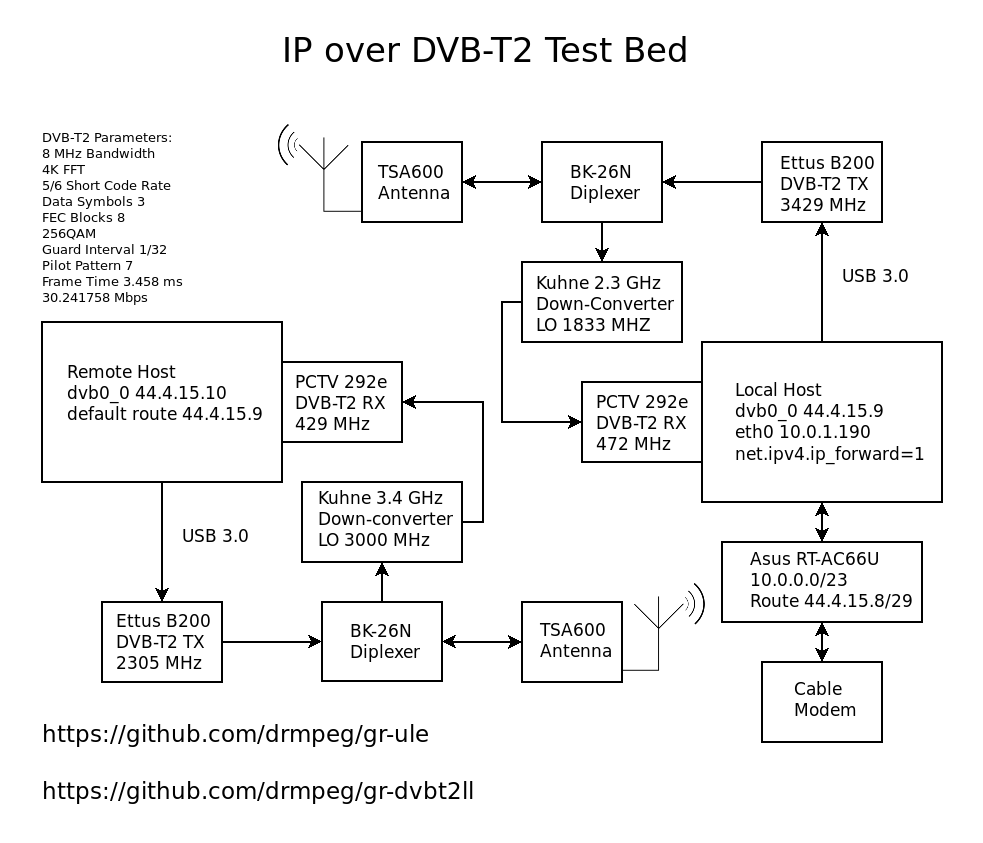
I have a full duplex system that I've developed. Advantages are:
1) Easy to add power amplifiers and preamps.
2) Works on any ham band.
Disadvantages:
1) Cost. Even the cheapest transmit capable SDR can't compete with consumer hardware.
2) Limited selection of bandwidths. 1.7, 5, 6, 7, and 8 MHz.
Re: HamWAN: A modern, multi-megabit, IP-based, digital network for amateur radio use
#7Since the site isn't that clear, the protocol is narrow-channel 802.11n on the amateur 5.9 GHz band. I wonder if the net throughput or range are any better than using the unlicensed 5.8 GHz band.
HamWAN founder here. The protocol is this: https://wiki.mikrotik.com/wiki/Manual:Nv2 And the sectorized spectrum plan is this: http://hamwan.org/Standards/Radio%20Frequency%20Engineering/... When choosing a protocol for cheap long-range point-to-multipoint microwave, I wanted something that was TDMA'd and not CSMA'd like 802.11. That left me with WiMAX/airMAX/NV2 to choose from. WiMAX gear was overpriced, Ubiquiti's…
How are you getting tower access for your relay sites? Is it donated by ham clubs?
Re: HamWAN: A modern, multi-megabit, IP-based, digital network for amateur radio use
#8Is it legal to use encryption over HAM in the US?
Re: HamWAN: A modern, multi-megabit, IP-based, digital network for amateur radio use
#9Is it legal to use encryption over HAM in the US?
Re: HamWAN: A modern, multi-megabit, IP-based, digital network for amateur radio use
#10Since the site isn't that clear, the protocol is narrow-channel 802.11n on the amateur 5.9 GHz band. I wonder if the net throughput or range are any better than using the unlicensed 5.8 GHz band.
HamWAN founder here. The protocol is this: https://wiki.mikrotik.com/wiki/Manual:Nv2 And the sectorized spectrum plan is this: http://hamwan.org/Standards/Radio%20Frequency%20Engineering/... When choosing a protocol for cheap long-range point-to-multipoint microwave, I wanted something that was TDMA'd and not CSMA'd like 802.11. That left me with WiMAX/airMAX/NV2 to choose from. WiMAX gear was overpriced, Ubiquiti's…
What kind of range can one expect at what power usage?
Are you looking at adding mesh so that uptime can be better?