Earlier quoted context omitted.
> You can't leave through my (brand new, to-code) front door from inside without a key to unlock it first. I'm sure I'm just ignorant, but it sounds like your lock is on backward. Every front door I've ever seen can be unlocked from the inside without a key. Example: https://www.lowes.com/pd/Schlage-Deadbolt-Satin-Brass-Single... Could you link to a lock that's similar to what you're talking about? I'd feel very unco…
Here's an example of my deadbolt that's keyed on both sides: https://i.imgur.com/xXzWS7j.png
Berlin Key
71–80 of 153 posts
Re: Berlin Key
#72The English description on that page doesn’t make it easy to understand what this key does. ”Its name comes from the fact that it has two key blades (the part which activates the bolt) at each end of the key, rather than the usual single blade” How does that lead to the name “Berlin key” or either of the German names? I would guess “Berlin key” comes from the fact that it predominantly is used in Berlin. ”After unloc…
So here a video is worth a million words :) https://www.youtube.com/watch?v=4wE_6e3GPe4 Edit: I read the first paragraph twice and then to confirm my understanding I turned to YouTube.
Re: Berlin Key
#73Earlier quoted context omitted.
As an American living in Switzerland one thing that has consistently surprised me is the difference in fire safety rules: not having any smoke alarm or fire extinguishers in homes is common, and it's also common to be able to lock people inside rooms/apartments/buildings so that they can't leave without having a key. It's possible to lock someone in my apartment even if they have the key if the door is locked with th…
I grew up in Austria and live in Germany (so two neighbouring countries to Switzerland) and here it is mandatory to have at least smoke alarms. Fire extinguishers are mostly only needed for public buildings and server rooms and such. Germans especially take their "Brandschutz" very seriously especially regarding emergency exits etc. However in the end you are responsible for your own safety. If you are in a room with…
Re: Berlin Key
#74Earlier quoted context omitted.
Well, TIL. Never realized this was a US-specific thing.
It's definitely not US specific. Here in Denmark it's standard that the front door opens from the inside without a key. Same goes for at least Luxembourg and Germany as far as I know.
Re: Berlin Key
#75Earlier quoted context omitted.
Don't know about Switzerland, but as an European living in the US, I think the American fire safety rules are what they are mainly because most houses here are basically matchstick houses built from prefab low quality wood which would get devoured by flames in minutes. And the fire-resistant building materials are super toxic when they actually burn. So fire is a very big deal... Anecdotal, we had a fire in my buildi…
I stayed in a house in Germany in which the walls were filled with dried-straw for insulation. It was several hundred years old. There was a no-smoking rule.
Re: Berlin Key
#76Earlier quoted context omitted.
I've never seen that outside the US. Keyholes both sides of the door, everywhere. When it's closed, you need a key or you don't get out.
Well, TIL. Never realized this was a US-specific thing.
But having it not work this way is very unusual in the states, while common to not exactly rare in some other places.
Re: Berlin Key
#77Earlier quoted context omitted.
> The vast majority of locks have a physical unlocking mechanism on one side Not where I live. Sure the lock that you use to stop it blowing open in the wind (1) when you are at home has a latch on the inside (making it easy to open door to visitors etc), but you also have the real lock that you use when you leave the house require keys from either side (2). I think most home insurance in the UK would either not insu…
As long as you don’t have easily breakable glass within reaching distance of the unlocking mechanism, why is a lock that can be unlocked from inside less secure?
Re: Berlin Key
#78Earlier quoted context omitted.
> The vast majority of locks have a physical unlocking mechanism on one side Not where I live. Sure the lock that you use to stop it blowing open in the wind (1) when you are at home has a latch on the inside (making it easy to open door to visitors etc), but you also have the real lock that you use when you leave the house require keys from either side (2). I think most home insurance in the UK would either not insu…
As long as you don’t have easily breakable glass within reaching distance of the unlocking mechanism, why is a lock that can be unlocked from inside less secure?
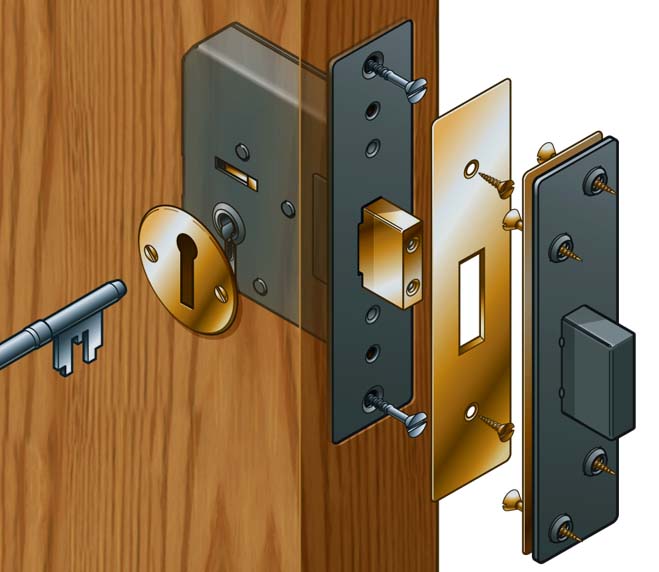
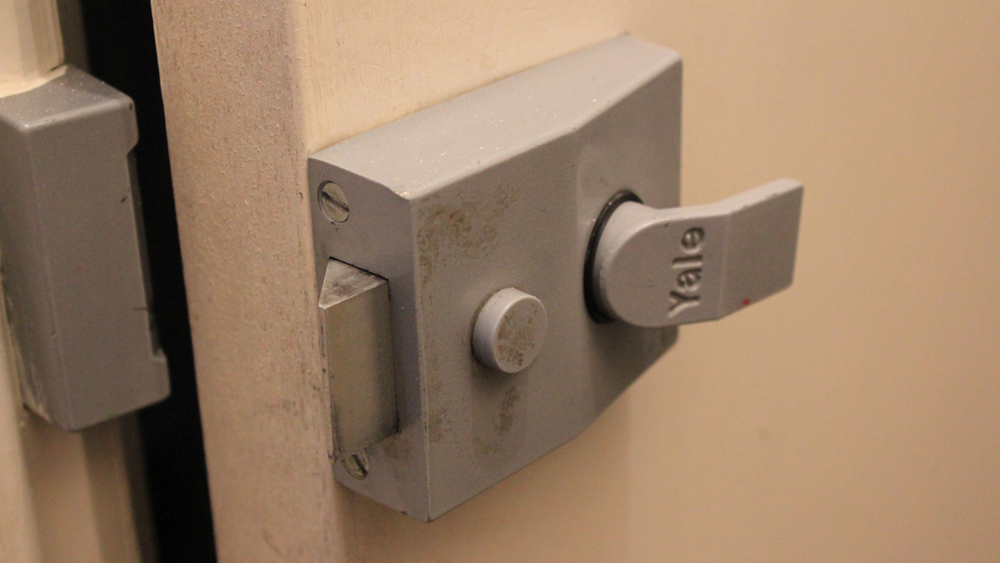
The mortice locks are harder to pick and are usually substantially sturdier in construction. In the UK at least, the mortice lock is physically inside the door structure (1) whereas the latches that don't need keys are attached on the door (2).
We recently had a break-in in the block of apartments where I live where the latch attached on the door was broken off by people forcing a door. If there had been a mortice lock, they'd have to break the door frame or the door itself, rather than just bust the weak latch lock off the back of the door (in this case the door opened outwards, so they just pulled on the door handle whilst bracing a leg against thethe wall and the latch came right off the back of the door)
1 - https://www.buildingsheriff.com/mortice-lock-costs_files/sta... 2 - https://www.diydoctor.org.uk/images/nightlatch.jpg
Re: Berlin Key
#79The English description on that page doesn’t make it easy to understand what this key does. ”Its name comes from the fact that it has two key blades (the part which activates the bolt) at each end of the key, rather than the usual single blade” How does that lead to the name “Berlin key” or either of the German names? I would guess “Berlin key” comes from the fact that it predominantly is used in Berlin. ”After unloc…
The Berlin key ("Berliner Schlüssel") was mostly used in tenements with multiple backyard houses with a common front gate that should be closed at certain times. These kind of arrangements were mostly used in Berlin, hence the name. The other German names for the key describe different aspects of it: "Durchsteckschlüssel" translates to "push-through-key" and "Doppelschlüssel" translates to "double-key". If you are mo…
During the day, the front gate can be opened from the outside with just pushing a button that unlocks the door. At night (from 20 or 21 or so), the button stops working, you need the key. It can be opened at any time from the inside without keys. So it's more or less implementing the same protocol, but electro-mechanically, so there is no need for the trick with pulling the key inward.
Re: Berlin Key
#80Earlier quoted context omitted.
As an American living in Switzerland one thing that has consistently surprised me is the difference in fire safety rules: not having any smoke alarm or fire extinguishers in homes is common, and it's also common to be able to lock people inside rooms/apartments/buildings so that they can't leave without having a key. It's possible to lock someone in my apartment even if they have the key if the door is locked with th…
You are much more likely to die in a fire in USA, so it makes sense for Americans to take more measurements to prevent it. But in for example Switzerland fires is not a big thing so there is no need to have any laws against it. https://ourworldindata.org/grapher/fire-death-rates