Live data from Hacker News

The Lost Art of Lacing Cable (2018)

thebroadcastbridge.com

151–156 of 156 posts

Re: The Lost Art of Lacing Cable (2018)

#151

Earlier quoted context omitted.

MR tech here. Newer MR safe power injectors and patient monitoring systems are wireless, which is very handy. They can be controlled from outside the room. I don’t know how they work, but I’ve assumed that they are avoiding particular frequencies. The downside is the batteries, which seem particularly short lived.

I gotta ask, why are you on HN? I know I'm a bit of a rare bird here, so it's always interesting to see what brought others like me to HN.

Interesting stories and news coverage mainly. The commentary on tech news is hard to beat. I also work in a minor role in a radiology IT department and some of the coverage here is very relatable.
Re: The Lost Art of Lacing Cable (2018)

#152
post #78

Aside: I work in med-tech. One of the largest complaints of doctors and nurses, especially in the ICU, is the cables and tubes. There are just SO MANY cables and tubes in a working ICU. Nurses and docs are constantly stepping on them, pulling them out, choking off blood/saline/urine/air in some tube, knocking power off of another, etc. Most of the machines can't do wireless, as some of the machines will 'jam' that pa…

One option, I think, is to accept that cables and tubes will be stepped on, and then attempt to mitigate pull-outs and pinches. (Which, admittedly, is close to the approach you already have.)

Longer cables and tubes would help diminish pull-outs, and could make a lot of the other suggested solutions possible too. Unfortunately the only way to achieve this is probably to call the manufacturer and pray... maybe they have longer options, or female-female adapters that can be used to connect multiple cables together?

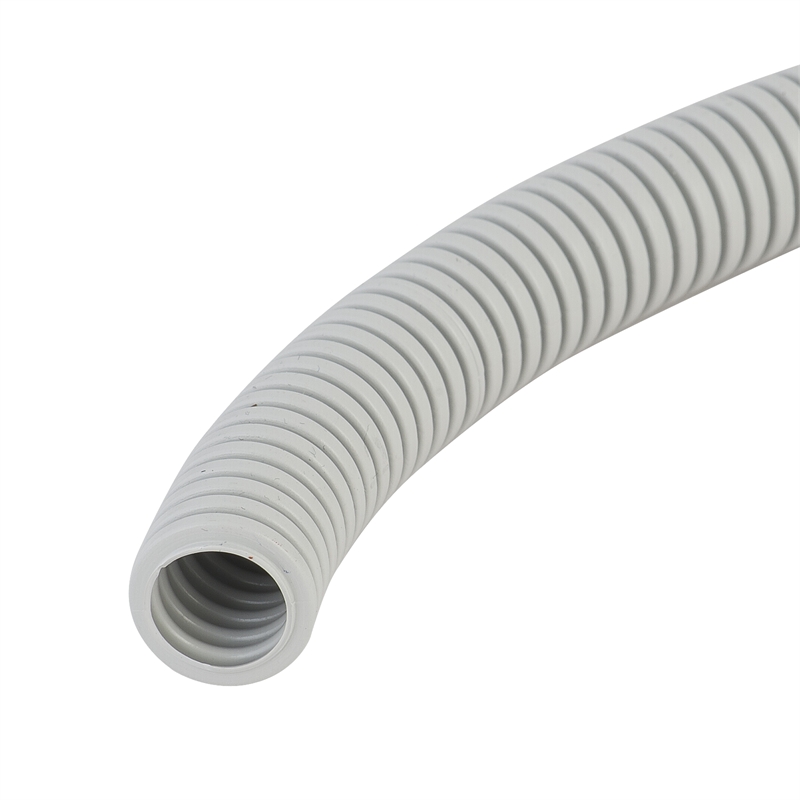
Preventing pinches us also something the manufacturer could solve by just making the middle section of tubes—the bit on the ground—a lot heftier. But you could also DIY it by slotting on some corrugated cable conduit? It comes slit down the side, so you could maybe slot it on after cables and tubes are all set up. It would be impossible to clean, but maybe in the grand scheme of a hospital budget it could just be declared disposable?

Image if the conduit I have in mind: https://2ecffd01e1ab3e9383f0-07db7b9624bbdf022e3b5395236d5cf...

Re: The Lost Art of Lacing Cable (2018)

#153

Earlier quoted context omitted.

I gotta ask, why are you on HN? I know I'm a bit of a rare bird here, so it's always interesting to see what brought others like me to HN.

Interesting stories and news coverage mainly. The commentary on tech news is hard to beat. I also work in a minor role in a radiology IT department and some of the coverage here is very relatable.

Thanks! That's mostly me as well. The commentary here is very good generally. You've seen the bestComments section of the site before I assume? It's a good clearinghouse of HN's community: https://news.ycombinator.com/bestcomments

Re: The Lost Art of Lacing Cable (2018)

#154

Earlier quoted context omitted.

Thanks for the input! That's a pretty good idea! The main issue is that you don't have the time to pull up the flooring and then run the lines. You get the machines into the room and then into the patient ASAP, as they tend to be some of the only things keeping them alive. Think a machine that replaces heart-beat function and that you will have a hard time disconnecting.

Maybe a foam pool noodle split longitudinal. You can feed in tubes/cables in the split after being hooked up, when you have time. Should protect the tubes/cables and be light weight and cheap. Cut to desired length. Put some Velcro straps at the ends of noodle to secure them in a position along the tubes. This is what I put around the lines of my sailboat.

Or, for a pre-split alternative, foam water pipe insulation: https://www.homedepot.com/p/M-D-Building-Products-1-in-x-72-...

Re: The Lost Art of Lacing Cable (2018)

#155
I cut my teeth as a teenager on an electronics assembly line by wiring up cable harnesses for marine operations, and the first 50 I made (out of about 1,000) were all rejected because I couldn't get the lacing right.

Spent a week learning to do it properly, and can still do it in my sleep. Its a very easy skill you'll never forget once you get it done (and approved on the production line..)

IMHO, the wax string in my toolbox is among the most important of devices, since it keeps things very neat and tidy.

To the point I find myself now as a grey-beard, teaching the kids how to do it.

Re: The Lost Art of Lacing Cable (2018)

#156
post #59

Earlier quoted context omitted.

I'm wondering if zip ties are used at all in a project like this one.

Leave plastic out in the sun, exposed to UV radiation: plastic degrades. Sub-zero temps? Plastic snaps. Snip the end, they leaves sharp edges. Zip ties are great for most conditions under which humans can survive. Now, NASA could have special "space zip ties" that are formulated to resist such conditions, but I would imagine they would bear little resemblance to the ones at Harbor Freight that comes in bags of 100 fo…

Probably not good for high temperatures or moisture, but I found cloth adhesive tape really handy, and it's gentle to the cables. Here's an example from a random Chinese seller I have absolutely no affilation with. Can be found by searching for "cloth adhesive tape". https://www.ebay.com/itm/143150416486
Post reply on HN