Live data from Hacker News

Users hate change

gist.github.com

71–80 of 315 posts

Re: Users hate change

#71

Earlier quoted context omitted.

Word for Dos 5.0. If you are old like me, you may remember thinking this was a pretty good word processor, and when Word 6.0 came out, it seemed a bloated mess in comparison. It's been downhill ever since. Mac OS X 10.6.8. It was good, and stable, and nothing that has come after has really added value to the product.

iOS 6. I'm using latest iOS and the only useful feature for me is fingerprint recognition and that is more about hardware. They added tons of new features but I wouldn't miss any of those features.

They've also added a whole load of negative features, or needless complexity, and taken away the helpful in the name of fashion. Maybe I liked coverflow. Or an analogue clock on the lock screen. Maybe I liked big album art on the lockscreen when playing music instead of the absurdly tiny thumbnail of now.

Snow Leopard, iOS 6, Word 6 (or 2003 if we have to take the modern era), all seem easy choices, yet the companies doing it never seem to notice they jumped the shark. Dropbox 10x the size with built in messaging anyone? Thought not. :)
Re: Users hate change

#72
> Secondly: Your change probably isn't for the better. Not for me, not for the majority of existing customers.

Things could be much worse. When the change suddenly prevents users from doing X, something they invested all that time, attention and effort to be able to do all without an option to change back. All software where updates are controlled by a party that develops it is at constant risk of becoming a piece of junk for and frustrating at least some of its users or most or all of them. In comparison it's not that big of a deal if software is a new competing alternative, like Wayland for example. If it breaks lots of use cases for existing users it will simply not get anywhere, only fragment ecosystem a bit with new niches.

Re: Users hate change

#74
post #33

It's interesting to compare the user responses to updates by Facebook and Twitter respectively. Facebook's UI has changed significantly over the last 15 or so years. Features have appeared and disappeared, boxes have been arranged and rearranged. But there's rarely a big fuss beyond it getting a little slower each time (roughly commensurate with consumer hardware speedup, in fact). People don't really notice and they…

People do hate change, regardless of how much better that change is. I don't think I've ever seen a UI redesign over which users didn't get into a massive uproar. I certainly saw the massive uproar any time FB introduced a UI change.

Sure, some UI redesigns are just plain bad and users are justified in hating them. The twitter redesign does appear to be clunky/bad as you noted. The new Reddit seems to be another case of the redesign being pretty bad.

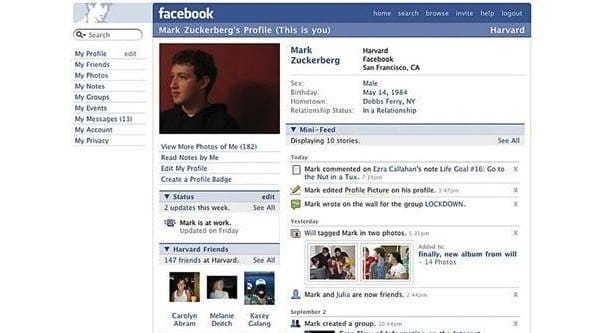
But users will unfailingly hate every major redesign without fail regardless of how much better it is. If users had their way, Windows 10 would still look like Windows 98. Facebook would still look like this [0].

[0] https://boostlikes-bc85.kxcdn.com/blog/wp-content/uploads/20...

Re: Users hate change

#75
post #29

Earlier quoted context omitted.

The solution is that every deployable version of the service should be usable on it's own and users should be able to chose exactly what version they are locked on to. Or they can choose to live on bleeding-edge and always get the latest updates. Wishful thinking maybe

That was feasible in a world where every computer was air-gapped because there was no such thing as the Internet. Now every app needs to stay up to date for security reasons, even if it doesn't directly use the internet itself.

What types of security vulnerabilities could apps like LibreOffice or Photoshop have?

Re: Users hate change

#76
post #29

Earlier quoted context omitted.

The solution is that every deployable version of the service should be usable on it's own and users should be able to chose exactly what version they are locked on to. Or they can choose to live on bleeding-edge and always get the latest updates. Wishful thinking maybe

That was feasible in a world where every computer was air-gapped because there was no such thing as the Internet. Now every app needs to stay up to date for security reasons, even if it doesn't directly use the internet itself.

Do they really? If you do a cost benefit analysis on using older versions of software that work better for you, including the probability of exploitation of both the new[0] and old versions, you'll find that it very often doesn't work out. Besides which, if you're really concerned about it there are plenty of better ways to mitigate those threats like sandboxing.

[0] updates have been known to make software more vulnerable too you know.

Re: Users hate change

#77
post #11
post #4

I just think of Microsoft when I read these. Every time they change something in Windows, they never take the old thing away but instead keep both. Which means there's a myriad of ways to get to the control panel. And there's multiple variants of the control panel UI... Outlook is another good example, there's 3 different UI's where we can add/remove accounts. Result: New users use the new (default) UI, old users use…

The real kick in the beans from MS is the new UI lacks anything beyond basic functionality in the new UI. For example, Win10 (1803) Mouse settings you can modify: Left/Right handed, Scroll Wheel lines, Scroll inactive windows when you hover. For every other change you have to click "Additional mouse options" and are taken to the old UI. MS Win10, and to a lesser extent Server 2016-19 has increased the number of click…

Use the cortana bar to search for control panel settings in Windows 10.

The UX for system settings is still like barf, arbitrarily choosing between two UIs depending on the setting is some shit that wouldn't even fly in desktop Linux in 2019, and was an artifact of the Win8pocalypse which Microsoft later walked back. But searching for settings is still possible.

Re: Users hate change

#78
post #70

My pet theory is that every software product has a "peak version". Before that peak version, the product is not yet in a complete state, and it is fairly obvious, both for the developer and user, what features are missing. Once the peak version is reached, new features are not added because they improve the product, but to justify selling the product again to existing customers, and to 'keep the team busy'. Instead o…

Subscription model is actually way better if you don't want to end up with feature bloat. Because you actually get money from users even if you only ever fix bugs and improve performance. If you freeze your features you will soon arrive at a point where everybody who wanted your software bought it and then the revenue stops.

Unless you have competitors and they offer (niche) features that you suddenly want as well.

Re: Users hate change

#79
post #29
post #25

Earlier quoted context omitted.

The problem with your theory is that "peak version" is different for every user of the software.

The solution is that every deployable version of the service should be usable on it's own and users should be able to chose exactly what version they are locked on to. Or they can choose to live on bleeding-edge and always get the latest updates. Wishful thinking maybe

I agree with you and wish this was far more common. JetBrains is one company that does it well. They let you download previous versions or upgrade to the latest version if you have an active subscription. If your subscription lapses you can still download older versions of the software from the time you had an active subscription.

I've done both, kept the latest version or rolled back to previous versions when I didn't like the latest changes. So, it's certainly doable, and I wish more companies offered this.

Re: Users hate change

#80
post #74
post #33

It's interesting to compare the user responses to updates by Facebook and Twitter respectively. Facebook's UI has changed significantly over the last 15 or so years. Features have appeared and disappeared, boxes have been arranged and rearranged. But there's rarely a big fuss beyond it getting a little slower each time (roughly commensurate with consumer hardware speedup, in fact). People don't really notice and they…

People do hate change, regardless of how much better that change is. I don't think I've ever seen a UI redesign over which users didn't get into a massive uproar. I certainly saw the massive uproar any time FB introduced a UI change. Sure, some UI redesigns are just plain bad and users are justified in hating them. The twitter redesign does appear to be clunky/bad as you noted. The new Reddit seems to be another case…

> regardless of how much better it is.

No, the simple truth is it's not better if users hate it. It means it failed to account for existing users and their use cases.

Post reply on HN