Insects feel persistent pain after injury, evidence suggests
1–10 of 236 posts
Re: Insects feel persistent pain after injury, evidence suggests
#2Well, this makes being faithful to my ethical commitments a little more complicated.
Re: Insects feel persistent pain after injury, evidence suggests
#3Well, this makes being faithful to my ethical commitments a little more complicated.
to complicate things further, mosquitos and ticks have been shown to feel really, really guilty about drinking your blood.
Re: Insects feel persistent pain after injury, evidence suggests
#4Is this a surprise? Dogs and cats, being injured, show that they feel it and are sensitive to others touching where they hurt. Is it really that 'weird' to think that beings other than mammals would have this?
Re: Insects feel persistent pain after injury, evidence suggests
#5Re: Insects feel persistent pain after injury, evidence suggests
#6Don't tell the vegans. They'll starve to death.
Re: Insects feel persistent pain after injury, evidence suggests
#7Is this a surprise? Dogs and cats, being injured, show that they feel it and are sensitive to others touching where they hurt. Is it really that 'weird' to think that beings other than mammals would have this?
Insects are mammals?
Re: Insects feel persistent pain after injury, evidence suggests
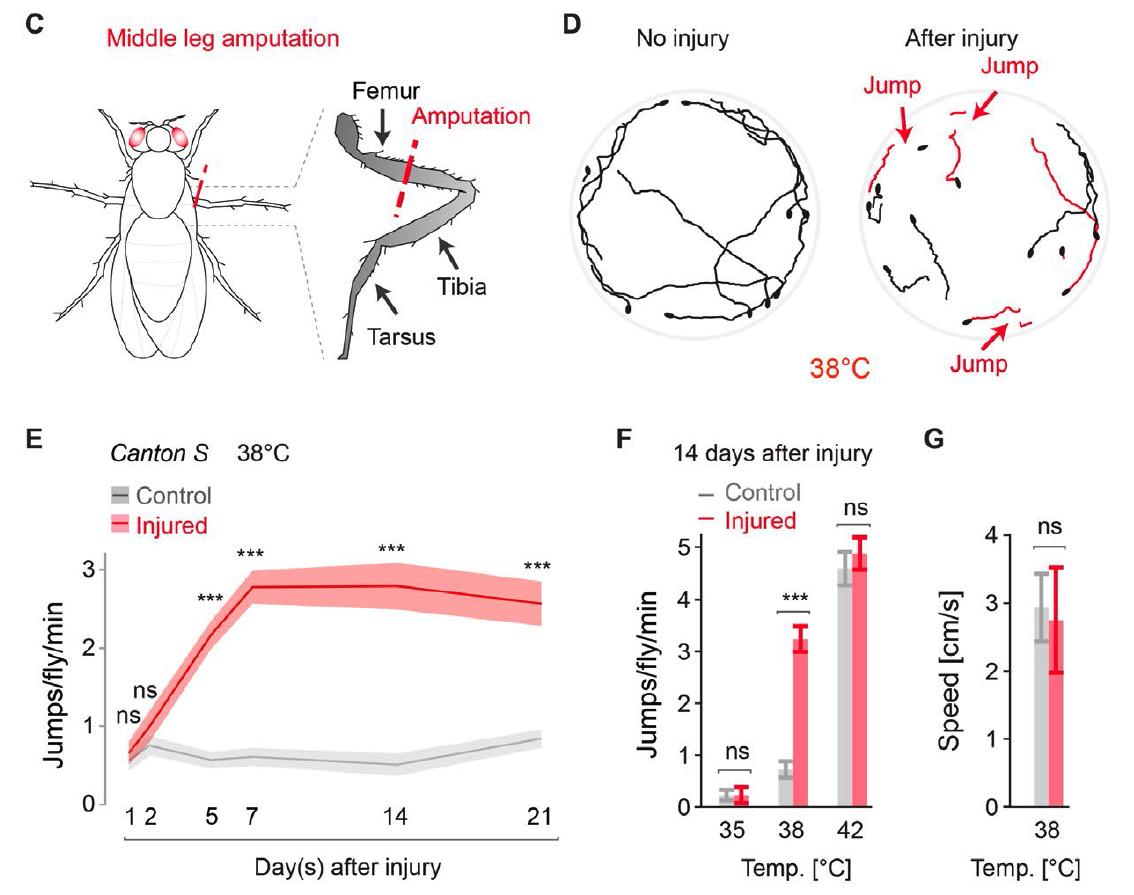
#8TLDR: They damaged a nerve in one leg of the drosophila fly. The injury was then allowed to fully heal. After the injury healed, they found the fly’s other legs had become hypersensitive through loss of the pain inhibitors (GABA).
Re: Insects feel persistent pain after injury, evidence suggests
#9Set your bug-a-salt to kill, not stun.
Re: Insects feel persistent pain after injury, evidence suggests
#10TLDR: They damaged a nerve in one leg of the drosophila fly. The injury was then allowed to fully heal. After the injury healed, they found the fly’s other legs had become hypersensitive through loss of the pain inhibitors (GABA).
I believe they cut off a leg. I don't really get the part where they say they "allowed it to fully heal". [1] Maybe that was a different experiment in the same paper?