Live data from Hacker News

Cars took over because the legal system helped squeezed out alternatives

theatlantic.com

281–290 of 451 posts

Re: Cars took over because the legal system helped squeezed out alternatives

#281
post #195
post #157

Earlier quoted context omitted.

> Older people losing their cars is often the start of a decline unto death because there’s so little you can do [without] driving in many neighborhoods. The solution is to replace their car with a vehicle that's less dangerous for others like an electrically assisted tricycle. That can serve their local transportation needs and won't cause nearly as much damage if they hit someone or something.

Also to invest in things like public transit, sidewalks & protected bike paths for ebikes & trikes, mobility services which will pick you up, etc. Unfortunately we’ve lost our way nationally about funding infrastructure and in many areas the sprawl density is low enough that these are more expensive than, say, much of Europe.

> Also to invest in things like [...] protected bike paths for ebikes & trikes

These lead to significant problems at intersections. It's best to keep vehicles of all types on roads where they obey the same set of rules.

Re: Cars took over because the legal system helped squeezed out alternatives

#282
post #250

Earlier quoted context omitted.

In The Netherlands, you're not taught those things when learning to drive either. What is taught, is that wet and/or especially cold conditions can cause unsafe road conditions that can lead to loss of control over the vehicle. As a reasonable person, you're supposed to know to adapt to this. This isn't specifically mentioned in the law, but it follows from one of the most basic articles of our traffic law that state…

Sure, that is the same here too. The unfortunate truth is that people are human and humans make mistakes. You could drive to work on the same back road every day. Except one day it's particularly cold and you don't see the ice patch on the sharp right hand corner you've taken 100s of times before. The rear of the car steps out, but you don't know what to do as you have never encountered this before. You panic, natura…

> The unfortunate truth is that people are human and humans make mistakes.

That's true, it's also going to stay true no matter the amount of training. That isn't to say that I'm advocating against more training, but I think the training is prohibitively more expensive (even in a context where driving isn't as much of a necessity as it is here) for a gain that I perceive to be largely negligible unless linked to stricter training and re-certification in general (which is certainly prohibitively expensive).

Re: Cars took over because the legal system helped squeezed out alternatives

#283
post #119

Earlier quoted context omitted.

I’m certain that the police officers the original commented mentioned actually said that they had no grounds even though it is completely incorrect just because the United States is so heavily built around people driving everywhere (and that public transit is for poor, distasteful people). Older people losing their cars is often the start of a decline unto death because there’s so little you can do with driving in ma…

> Older people losing their cars is often the start of a decline unto death I'm not sure this is just because of the way neighborhoods are set up. It's also a lack of social structures to catch this. The richest country one earth, has Uber, yet can't keep healthcare costs low enough to keep the elderly alive longer.

Elderly have medicare. My dad just spent $300 out of pocket for a week in the hospital. Not that big a deal.

Re: Cars took over because the legal system helped squeezed out alternatives

#284
post #30

living in a big city in europe i was able to live without a car easily, but when i got a job in the US i fully expected that i'd have to learn to drive and get a car to get around. BUT, i managed to get an apartment 10 minutes walking from the office. this was in san diego, of all places, a city which is very spread out. a few months later i moved in with friends and we found a place far north. most of my roommates h…

While you could get between pre-selected points reliably (home and work), how was your experience living in LA carless when it came to going anywhere outside walking distance? The sprawl is massive and the busses/trains only go so far

Re: Cars took over because the legal system helped squeezed out alternatives

#285
post #251
post #210

Earlier quoted context omitted.

What do you mean by "full control"? The average driver does not have the experience nor the training to maintain full control at all times. For example, consider a situation where the driver has to correct understeer, or lift-off oversteer, both relatively easy to achieve in cold, wet conditions.

You're never supposed to operate your vehicle outside of your comfort zone where you know you'll be able to react correctly and optimally. If the conditions are sub-optimal and you think you might not be able to handle your car correctly in case of emergency you should drive slower or not drive at all. I won't pretend that I've always been a perfect driver, quite far from it actually, but I don't think the law should…

>You're never supposed to operate your vehicle outside of your comfort zone where you know you'll be able to react correctly and optimally. If the conditions are sub-optimal and you think you might not be able to handle your car correctly in case of emergency you should drive slower or not drive at all.

This all sounds ok in theory, but as the article makes a great case for, this is totally impossible in America because it's impossible to get around in most places without a car. You can't just not drive when the weather is a little wet, for instance; you'll lose your job, you won't be able to get home, etc.

One big problem is that most people just have no training for bad conditions. How many people even here on HN know what "lift off oversteer" is? Or how to correct for it? I do, but most don't and would wreck. The regular barely-educated driver? Forget about it. Drivers should get far more training than they do. But even then, many people wouldn't be able to master this stuff; they just don't have the aptitude.

In Germany, people have to pay thousands to take driver training that does cover much more than what Americans are required to learn. However, it's not that hard to get around in western Europe without a car if you suck at driving or can't afford car ownership.

Re: Cars took over because the legal system helped squeezed out alternatives

#286

Earlier quoted context omitted.

I've cycled for decades and never had such an incident of aggression from drivers. Maybe it depends on some other factors in addition to the drivers.

To counter your anecdote, cyclist deaths have risen lately in NYC to the point of public protest: > Aster Ryan, 25, of Wingate, said “this summer has felt especially dangerous.” In addition to the three cycling deaths that took place within a week, Ryan said she was hit while riding her bike a little more than a week ago on Dean Street, and also watched another rider get hit by an opening car door recently. https://w…

These problems are caused by riding in areas where one is not visible to drivers of other vehicles (e.g. filtering to the right of other vehicles that are preparing to make a right turn) and also riding too close to parked cars. A secondary cause are laws that require cyclists to use bike lanes or keep as far right as practicable within the lane.

Re: Cars took over because the legal system helped squeezed out alternatives

#287
post #69

Earlier quoted context omitted.

Totally agree and totally ignores the fact that people like the flexibility and freedom (in fact as well as psychologically) Unfortuetly this area and "green" in general does I am afraid does tend to attract "hobbyist" / "crank" activists. (I am using these terms in the political sense and not dising peoples hobbys Eg the green movement needs to concentrate on the present problem (runaway global heating) and not on p…

Speaking as a Dutchman, I experience much more flexibility and freedom riding a bike than my car. That's probably a consequence of both the overcrowding of our roads, and the density of our infrastructure -- I rarely have to drive more than 15 minutes to reach any kind of shop, and by bike I can take shortcuts that my car can't follow, especially in inner cities. Ultimately, my car has been relegated to recreational…

That's because you don't live in a country as big as the US is and don't need to move around like we do in the US.

I am from Denmark who also have plenty of bikes and it's a thing. The reality is however that thats fine as long as you live in the cities, it's not way to get around if you live in the suburbs and have to drive 30 miles to work and take care of your picking up the kids and drive 20 miles to the nearest grocery store etc.

Biking is possible in small cities but you can't build infrastructure around a giant continent like the US on bikes and trucks.

Re: Cars took over because the legal system helped squeezed out alternatives

#288
post #241

Earlier quoted context omitted.

> Most of your argument is about motorized vehicles, not bicycles They are the same thing. Bicycles have wheels, they should be on the streets. > Cities with lots of steps or staircases are only accessible for pedestrians, but no one else. And that's good! BTW, you can walk the bike. Just like you do when you have to jump on a train or take the subway. If you're talking about accessibility in general, that's a whole…

> Bicycles have wheels, they should be on the streets. But who is arguing that they shouldn't? > [1] is very young No it's not. Photo from 1926: http://www.rijwiel.net/fotos/foto001n.htm > You're over optimizing for a small percentage of the population. From the link [1] in my GP post: "Cycling accounts for 24 % of all commuter trips." That doesn't sound like a small percentage. > You solve a lot by removing cars fro…

> No it's not

There are people in their 90s swimming in freezing water

Would you say it is ok for everybody?

What kind of discussion are you trying to have?

> That doesn't sound like a small percentage.

And what accounts for the remaining 76%?

You are trying to force Netherlands way as if it is the only one.

But Netherlands is a very _uncommon_ place.

> What would you change in that picture?

Why would I want to change anything?

Can you see that there are vast areas for walking in that picture?

Do you think there aren't other small cities in the World where bike is the preferred vehicle?

This is Ferrara, Italy [1] [2]

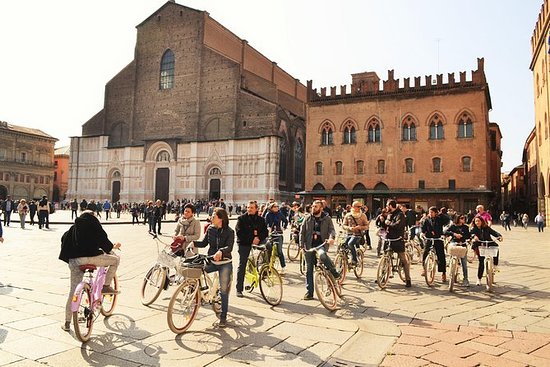
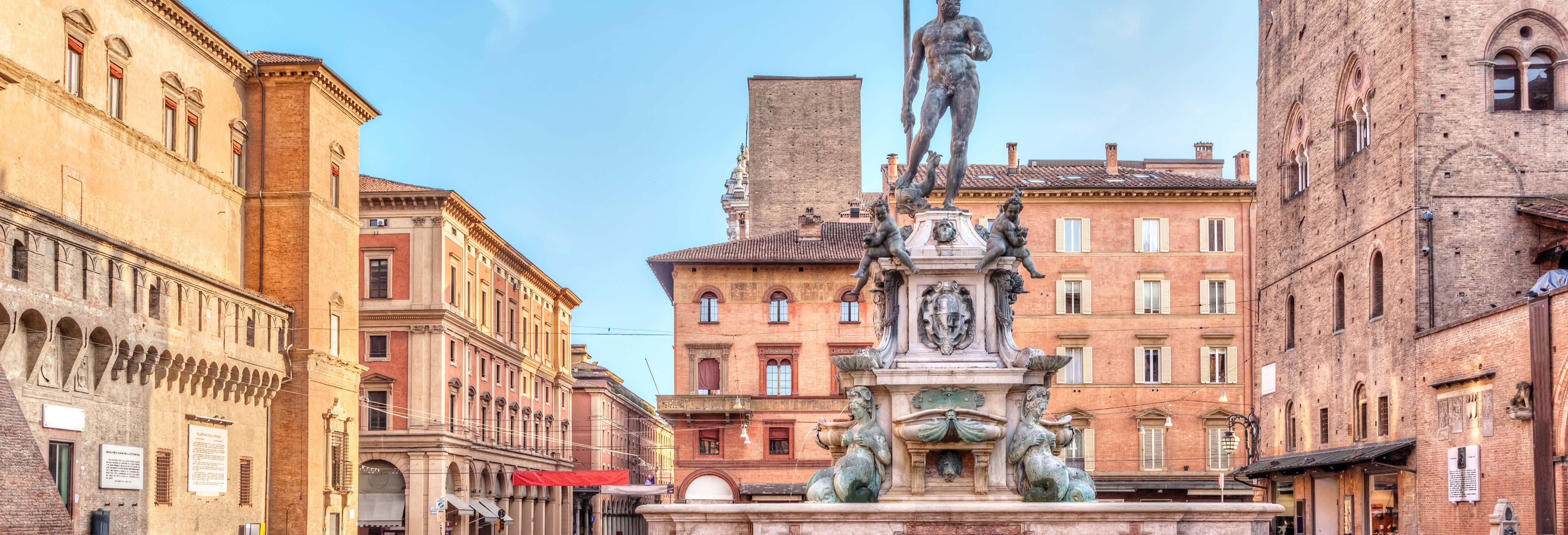
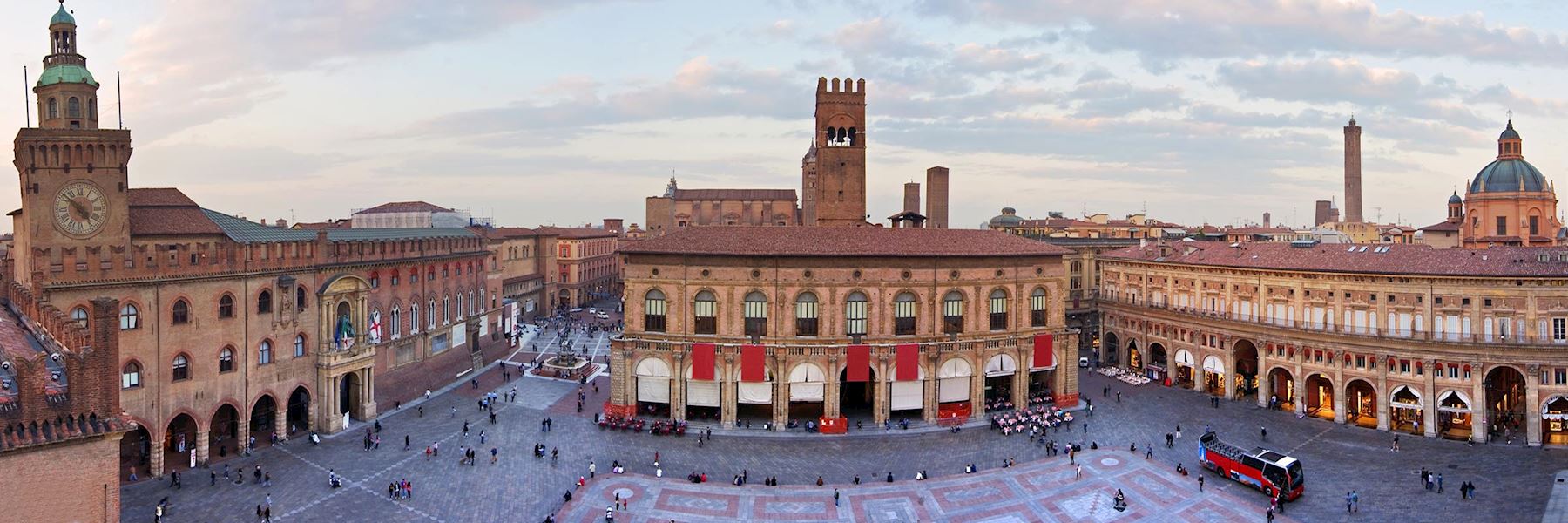
This is Bologna, Italy [3] [4] [5] [6]

Can you see the large pedestrian areas?

I think they're even more beautiful then Deen Haag.

I've lived in Bologna for 2 years, I never had to drive a car or ride a bike, because I could walk.

Because they're also also very small (the size of Deen Haag) and everything is close.

Now let's talk about big cities:

Large areas for walking means that other vehicles have their spaces as well

Small areas for walking means that ONLY vehicles have their own spaces (streets have to be big enough for cars, but sidewalks can be reduced to a bare minimum or eliminated completely [7] majority of citizens, especially the low income ones that cannot afford to own a car or to live near the workplace or people with kids or people with reduce mobility, that's why they then switch to using cars, because streets are not safe for them and bike lanes wouldn't change a thing.

[1] https://italoamericano.org/sites/default/files/styles/crop_s... [2] https://www.lautomobile.aci.it/fileadmin/_processed_/6/1/csm... [3] https://media-cdn.tripadvisor.com/media/photo-s/15/d6/28/b2/... [4] https://cdn.civitatis.com/italia/bolonia/tour-bicicleta-bolo... [5] https://media.audleytravel.com/-/media/images/home/europe/it... [6] https://www.bolognawelcome.com/imageserver/gallery_big/files... [7] https://www.larena.it/image/policy:1.5942827:1504744507/imag...

Re: Cars took over because the legal system helped squeezed out alternatives

#289

Another way of stating this could be "transport is a policy question." How cities are built and what transport infrastructure they're built around. Im fairly sympathetic to the overall aims of this article. I think a transport system more similar to those in the Netherlands makes for better urban landscapes. But... this habitual style of treating everything as a conspiracy, built around a personified enemy ("They gav…

It's not personified, it's almost the opposite — to insitutionalize the mindset in the form of law is precisely to depersonalize it, take it out of any individual's hands. The reason this pattern seems so common to you is because it is an extremely important phenomenon in modernity. See Max Weber on the rationalization of society[1]

[1] https://en.wikipedia.org/wiki/Rationalization_(sociology)

Re: Cars took over because the legal system helped squeezed out alternatives

#290

Earlier quoted context omitted.

I want the majority of the road network roofed with turf into a long hill with occaisional exits, or lowered and moved completely underground.

I've concluded the opposite: leave the cars where they are. What I want is a separate pedestrian level to the city - a skyway system (though I'm fine with it being underground). Let the humans walk in air conditioned comfort while not cars to worry about. This is much cheaper than the underground roads.

How about air conditioned skyways for pedestrians in cities and underground roads everywhere else?
Post reply on HN