We've been playing a lot recently with the concept of IPFS websites. We even created a plugin ( https://github.com/almonit/almonit-plugin - unreleased officially yet!) for websites that combine IPFS with ENS (a decentralized DNS). Our repository contains a list of decentralized websites using this method. We found about 20 so far. Technically , IPFS work well for us, but we made sure to have a server seeding our webs…
IPFS, Again
191–200 of 227 posts
Re: IPFS, Again
#192Hey, but it's great if you want to piggy-back a botnet on it, with no way to kill c&c: https://www.anomali.com/blog/the-interplanetary-storm-new-ma...
Re: IPFS, Again
#193I don't think this is ultimately an IFPS problem. How I've always understood IPFS is the protocol being a decentralized blob storage. You would use it in place of a CDN, to share files, or other building blocks for something higher-level. This is in contrast to browsing where there are established semantics on addressing absolute and relative URIs, and clustering relevant content under hierarchical addresses in the U…
> but I think this is (vaguely) analogous to building > a website based on IP addresses and port numbers, not URIs.
IPNS is a naming solution designed to address this:
https://docs.ipfs.io/guides/concepts/ipns/
It's not super fast right now, but there's some work happening now to make it much faster.
ENS, the Ethereum name system, is also an emerging way of doing this.
> basically be this URI resolution map
IPLD is a data model that works with IPFS to address the use-case you're describing, where you have a permanent reference to a mutable set of data: https://ipld.io/
Re: IPFS, Again
#194Earlier quoted context omitted.
Sadly a lot of the mechanisms behind bitcoin make for it to be difficult to use in a vast transaction setting (millions/sec, similar to credit cards), which would be required for using its blockchain for proof of work purposes. That’s why alternatives exist in order to solve these “problems” that the BTC community either choose not to fix or simply won’t. It’ll be interesting to see what crypto people would intend to…
IPFS is from the crypto people. This is what blockchain advocates put forward as the solution to mass storage for their blockchain dreams. IPFS is basically BitTorrent with magnet links - hashes to address content, if you want to be sure your obscure content will stay around then you have to seed it, etc. There's some fancier stuff on top, but if you know that's how it works, all else follows. You can tell how "block…
You make a really good point about communicating readiness - the author of the post is expecting more from pre-alpha software than it is ready to provide.
Re: IPFS, Again
#195Just out of curiosity, how would you delete something off IPFS? Is the only solution to have the address hash point to a program, or app, if at all possible? Or a space that does not update the hash, iven if the "thing" is updated? I'm new to this interplanetary world... :D
Re: IPFS, Again
#196Earlier quoted context omitted.
I agree. Personally I've had similar thoughts but instead of viewing it as a signal of their lack of talent, I viewed it.. sadly, as a signal for their lack of attention to IPFS. From a largely outsiders perspective, it has felt like FileCoin was the thing they wanted to do. Either that, or they just don't have enough bandwidth to take on all of these projects. Regardless, it doesn't feel to me as if IPFS has had the…
This is exactly the impression I've formed as well. I'm sure they have super smart people (and I've talked to many of them), it just doesn't seem they're interested enough in improving IPFS. The "canary in the coal mine" for me is that pinning API ticket, which has been open for years and amounts to "please put an async UI over pinning". If something that simple and useful doesn't get fixed quickly, I'm not optimisti…
Sure, we could hack this together quickly, but we're trying hard to avoid adding technical debt at this point. Adding every feature requested would put us in a bad spot.
Prioritizing this over the countless other things people continually ask for is hard, but we hear you. We welcome pull requests, and since you needed this for the service you were building, helping us out here would be fantastic.
Re: IPFS, Again
#197Who is going to defend the free internet agains Azure, AWS and Google Cloud? They are the very opposite of a free and open internet where everyone can "run a website" on her own machine. It pains me to see a great idea like the Interplanetary File System still not working. I had similar experiences with IPFS and yes, we do need a project like this, only without the broken incentive structure attached to it. Why a "Fi…
Filecoin isn't a currency. It's a token that proves "I replicated x amount of data, y reliably, for z amount of time", and (protocol-wise) can be exchanged for file storage services only. The market decides how much file storage is actually worth , by arbitrage. The same principle goes for Namecoin, incidentally. The token embodies the value of the resource. I actually think this kind of thing is a much more stable b…
By design, the Filecoin Network stores data on Filecoin nodes — not IPFS nodes. While we want to make these two networks even more interoperable (https://github.com/filecoin-project/specs/issues/143) — so that, for example, you could choose to supplement IPFS nodes with Filecoin nodes — we want to leave the choice up to users. There is a big opportunity to have a distributed marketplace for ensuring IPFS persistence, and multiple solutions optimizing for different use cases will likely coexist.
Re: IPFS, Again
#198Earlier quoted context omitted.
This is exactly the impression I've formed as well. I'm sure they have super smart people (and I've talked to many of them), it just doesn't seem they're interested enough in improving IPFS. The "canary in the coal mine" for me is that pinning API ticket, which has been open for years and amounts to "please put an async UI over pinning". If something that simple and useful doesn't get fixed quickly, I'm not optimisti…
Doing this right is not simple. It requires an entire task management system internally, which (as you know) i've sketched up here: https://github.com/ipfs/go-ipfs/issues/3114 Sure, we could hack this together quickly, but we're trying hard to avoid adding technical debt at this point. Adding every feature requested would put us in a bad spot. Prioritizing this over the countless other things people continually ask f…
Maybe I'm in a small minority of people who are interested in this feature, but how do people pin things without it? Do they just `screen ipfs pin ` and leave that terminal there for ever? Wouldn't it be in the project's best interest to make pinning work well?
Unfortunately, I don't know Go at all, or I would at least take a stab at this...
Re: IPFS, Again
#199I agree that IPNS is pretty unusable (do names still expire after 1 day?). Last I saw, the IPFS devs seemed to be pretty excited by a pub/sub mechanism they were building into the system; potentially to replace the workings of IPNS. Is that a stable or useful alternative for indexing changing content like a blog? How decentralised is the pub/sub (i.e. do new subscribers need to contact the publisher, or are messages…
Re: IPFS, Again
#200We've been playing a lot recently with the concept of IPFS websites. We even created a plugin ( https://github.com/almonit/almonit-plugin - unreleased officially yet!) for websites that combine IPFS with ENS (a decentralized DNS). Our repository contains a list of decentralized websites using this method. We found about 20 so far. Technically , IPFS work well for us, but we made sure to have a server seeding our webs…
> We even created a plugin (https://github.com/almonit/almonit-plugin - unreleased officially yet!) for websites that combine IPFS with ENS (a decentralized DNS).
This is great! We’ve been wanting something like this for a while-- and there are a bunch of utility in bringing ENS and IPFS together.
A lot of the problems you mention are known, and being worked on. Let me describe a bit more in each.
> Technically, IPFS work well for us, but we made sure to have a server seeding our website at all times (where we suffer similar problems like the author of the post describes).
The IPFS content model requires somebody with interest in the data to keep serving it. So for now, yes you need to keep some ipfs nodes with the content around. For example, we serve all our content (all our websites are distributed w/ ipfs) using ipfs-cluster, which connects to the gateways. We’re working on ipfs-cluster and filecoin as the ways to solve this. Ipfs-cluster for when you want to run your own infra (or a community gets together), and filecoin for when you want to hire someone else to serve it for you.
> Even then, we still had to make sure that the website is available in all main gateways, since most people don't run their own IPFS daemon. The strange part is that sometimes content is available in one gateway, but not in others. Or sometimes it's available in one gateway, but we can't get it on our local IPFS node.
This is a big problem that we’re working on right now. Many of our recent releases aim to fix / reduce this problem. The nature of this comes from content-routing scaling. We’ve detected this getting worse as the network grew orders of magnitude, and we’re working on fixing this right now.
> I understand that IPFS is not a blockchain, so I can't expect all the nodes to have the same content. But I do expect the main gateways to communicate more directly with each other.
Yes, definitely. We agree-- on it.
> Conceptually, IPSF websites are a bit like sending your website to someone via an unreliable slow mail; i.e., it's not that attractive. You can make it somehow more dynamic, using what they call IPNS (it allows you to update your content). But the result is so slow, that even the most devoted monk would lose his patience eventually.
IPNS key names are just not working well -- and getting worse with scaling. We’re working on fixing it, but lower prio than other more important problems. For now, we’ve been directing people to use DNS -- check out https://docs.ipfs.io/guides/concepts/dnslink/ -- these should be fast for you. But yeah, figure you know about this and may just be avoiding DNS in favor of more decentralized tools (ENS, IPNS key names).
Also check out https://dev.peerpad.net/ -- this is an experimental tool w/ dynamic content (give it 10-20s -- unfort takes a while to “get online” -- this is the dev pad). Once peers are connected you get a pad that’s distributable across ipfs nodes.
> A workaround is using a decentralized name system, like ENS. > This works very well, but the result are still static websites. No comments or anything really interesting happening.
+1 for ENS. And, you could use ENS to point to something like the content hash of peerpad above (see the latest content via `ipfs dns dev.peerpad.net` or `dig TXT _dnslink.dev.peerpad.net` == /ipfs/QmWbsqqqG9YpNYDt5afp6HY8TrKMtCtdGUtUfgkS9fRYeH -- and this would be a _static_ html5 bundle that gives you a _dynamic_ local app. The hard part is backing up your content beyond your own browser-- pinning it to an ipfs-cluster or other tools, etc.
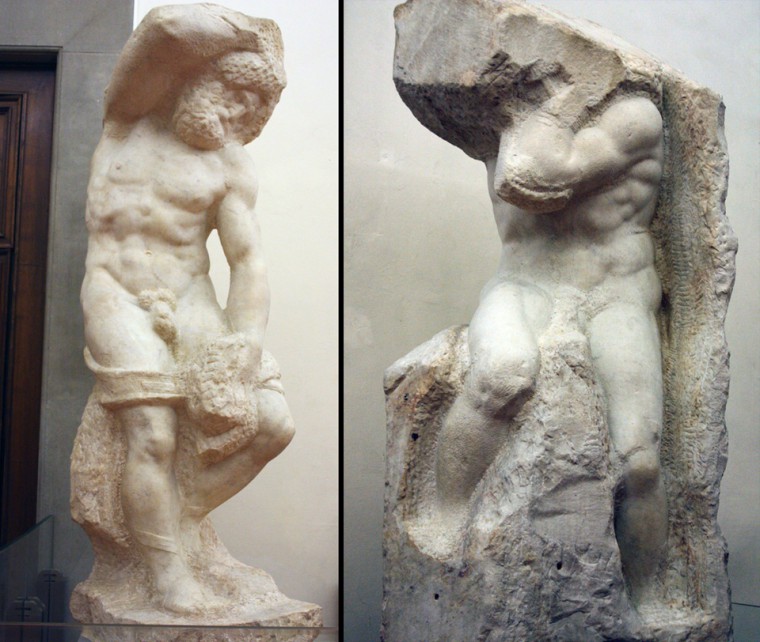
Anyway, the picture is clearly not there and usable yet, but the implications are big: you can get fully distributable p2p apps w/ fully dynamic content. (you could even encrypt the app bundles themselves, but this needs an extension to decrypt browser side) -- this feels like this: http://www.accademia.org/wp-content/uploads/2014/01/slaves-b... -- the form is emerging, but much work to be done.
> Those websites are censorship-resistance and very robust, you don't have to worry about ddos attacks. But then again, how many people worry about such things?
A lot.
* https://en.wikipedia.org/wiki/Block_of_Wikipedia_in_Turkey and https://ipfs.io/ipfs/QmT5NvUtoM5nWFfrQdVrFtvGfKFmG7AHE8P34is...
* https://en.wikipedia.org/wiki/Censorship_of_Wikipedia#China
* https://firstmonday.org/ojs/index.php/fm/article/view/9402/7...
> That said, I still like the concept of IPFS. We are exploring a few options to add dynamic behavior to that now, where the dream is to mimic existing services in a decentralized way. > Surely, they won't work as well, but the pro would be that it will be controlled by the users, and that they will be able to survive financially with no ads.
It takes a long while for all of this kind of tech to come together. Keep at it-- you make significant progress YoY, and it adds up. What we can do now in 2019 is vastly superior to what we could do in 2015. Big innovation leaps take significant time to develop -- but the good news is _a lot_ changes decade over decade:
* https://en.wikipedia.org/wiki/History_of_the_Internet
* https://en.wikipedia.org/wiki/History_of_hypertext
* https://en.wikipedia.org/wiki/History_of_personal_computers
* https://en.wikipedia.org/wiki/History_of_operating_systems
* https://en.wikipedia.org/wiki/Cryptocurrency#History
* https://en.wikipedia.org/wiki/History_of_self-driving_cars