Live data from Hacker News

Don Norman on how design fails older consumers

fastcompany.com

141–150 of 154 posts

Re: Don Norman on how design fails older consumers

#141
post #9

I characterize this as "all PMs have perfect eyes and skin". The first iteration of the Microsoft Surface featured a micro SD slot that was unusable if you had anything less than perfect, pliable finger nails. I cracked a nail so many times using that slot I gave up. Current generation Apple designers clearly have amazing vision: part numbers on light grey on white in microscopic fonts.

I've had a lot of trouble entering the Windows serial numbers when installing Windows. The B and 8 look alike, ditto for O and 0. I've had to use a magnifying glass on it. Apple's online documentation pages have also tended to be light grey fonts on white. My eyes would ache trying to read them. I find their choices baffling. It's like they were so focused on design they forgot about people simply wanting to read it.

I've had a lot of trouble entering the Windows serial numbers when installing Windows. The B and 8 look alike, ditto for O and 0. I've had to use a magnifying glass on it.

This kind of thing is a pet peeve of mine. So many codes require digits and letters these days -- why not just digits?! It would be so much more user friendly, especially when using a smartphone keyboard.

Re: Don Norman on how design fails older consumers

#142
post #62
post #54

Earlier quoted context omitted.

And should last longer, make it easier to clean and not get gunk stuck in it causing it to jam up.

It's possible to have a sealed membrane over a set of physical buttons.

That's still hard to clean. I have a stove that has no physical buttons or knobs and I can wipe it clean with a cloth easily.

Re: Don Norman on how design fails older consumers

#143
post #29

My partner's mom, age 94, got new hearing aids and the app that can control them (adjust focus on front/side/back, high/low/midrange, etc), runs only on iOS. We got her an iPad mini and I set it up so she can (A) read the Washington Post, (B) read a poetry app, (C) control her hearing aids, and (D) not much else (so as not to be confusing). Much to my surprise, the hearing aid app does not adjust it's font size per t…

Most likely the app was written by a third-party contractor who didn't know much about who the users are, they only received the requirements (app must do X and Y) and delivered.

Absolutely. That’s why I’ll be contacting the hearing aid company, who is ultimately responsible for those requirements.

Re: Don Norman on how design fails older consumers

#144
post #56
post #29

My partner's mom, age 94, got new hearing aids and the app that can control them (adjust focus on front/side/back, high/low/midrange, etc), runs only on iOS. We got her an iPad mini and I set it up so she can (A) read the Washington Post, (B) read a poetry app, (C) control her hearing aids, and (D) not much else (so as not to be confusing). Much to my surprise, the hearing aid app does not adjust it's font size per t…

Maybe Apple could hint to the app vendor that they should support the system feature? I'd probably contact the app authors themselves first, though. It might happen that the issue is resolved quickly with no confrontation.

I’ll be making my suggestions to the hearing aid company who sells the devices and the app. If there is any response at all, I expect it will be congenial. However, I doubt it will be resolved quickly since even non-invasive medical devices like hearing aids have rigorous and time-consuming reviews.

Re: Don Norman on how design fails older consumers

#145
post #127

Earlier quoted context omitted.

I wouldn’t recommend 1Blocker. I had it and was disappointed at how they rarely (if ever?) update their filter lists (they’re also not using the standard lists like EasyList). AdGuard Pro is much better and supports standard lists like EasyList and Fanboy’s lists, along with region-specific lists and DNS-based blocking (so blocks ads/cancer in non-browser contexts too).

I’ve been using 1Blocker for a long time since back when there where few choices and it was clearly the best option. I like that it syncs with my desktop and use it with Safari on macOS too. I also like that it’s easy to whitelist sites, that it’s easy to block elements of specific sites, and that it’s an indie app. I think the reason for not using the full EasyList is that Safari limits the number of content blocker…

For me the main reason has been EasyList support instead of some kind of home brew list (they’re pretty much always based on EasyList anyway, but with a homebrew list you explicitly rely on the developer updating that list).

Re: Don Norman on how design fails older consumers

#146
post #141

Earlier quoted context omitted.

I've had a lot of trouble entering the Windows serial numbers when installing Windows. The B and 8 look alike, ditto for O and 0. I've had to use a magnifying glass on it. Apple's online documentation pages have also tended to be light grey fonts on white. My eyes would ache trying to read them. I find their choices baffling. It's like they were so focused on design they forgot about people simply wanting to read it.

I've had a lot of trouble entering the Windows serial numbers when installing Windows. The B and 8 look alike, ditto for O and 0. I've had to use a magnifying glass on it. This kind of thing is a pet peeve of mine. So many codes require digits and letters these days -- why not just digits?! It would be so much more user friendly, especially when using a smartphone keyboard.

Yes, I'd rather just use a longer password that is easier to type.

Re: Don Norman on how design fails older consumers

#147

I'm 51 and work in tech. I now understand the nuances in this article. I'll probably understand them better as time goes on. Young readers probably skimmed over the bits about floaters in the eyes. Everyone older than 50 gets it. Young readers probably skimmed over the bit about frequency definition, captions etc. Everyone older than 50 gets it. I don't get the bit with walking sticks yet, but I am not there yet. But…

As a floater sufferer myself since my late 30s, I totally got that bit.

Re: Don Norman on how design fails older consumers

#148

Earlier quoted context omitted.

I already have to look at the knobs in my car to see what I'm doing with them (or even find them in the first place). Is this true for anyone else? I'm reading this thread totally unable to understand what we are arguing about haha.

Temperature settings have famously bad controllers. I guess it's because they are new, and car designers didn't have time to compete on quality of those yet. You can control the radio of any high-end 00's car without looking at the controls.

Back in the early 70s, before the energy _crisis_ when the speed limit had never been reduced below 70, everybody went 90 (and I passed everybody).

Auto air conditioning was a great luxury to have, especially in the deep south on a multi-hour tollway through wilderness with no exits for miles on either side of the pavement.

Of course gasoline was still commonly available with over 100 octane rating for prices less expensive than milk.

And most cars had a regular ordinary V8 engine.

On the typical GM car, AC controls were like this:

https://www.rickscamaros.com/productmedia/catalog_product_ga...

Many drivers never went anywhere without their good buddies "MAX" and "NORM".

And this is what was in a Ford:

https://secure.cougarpartscatalog.com/c9zz-19a884-a.html

Notice how there is only one sliding selector for all the main exclusive functions, each well separated physically and tactically and labeled well. Each company has almost the same identical functions arranged with a similar but not identical order and nomenclature. Regardless each company shows a logical spectrum of functions from left-to-right.

The other continuous slider is for temperature, and a third slider on an opposing axis for the fan setting (closer to the driver when center-mounted) since that's the one you change most often. Other than the fan, the other settings often remain unchanged across multiple rides in the most ideal expected usage scenarios.

Obviously Max was quite popular with both Ford and GM, and it seems intuitively instinctive as the most cold you are going to get, but it's really just the Recirculate setting, while Norm is for Fresh outside air coming in across your cooling coils, which is what it says on the Ford.

All of this being fully documented in the handy owner's manual in the glove compartment, but even the least technically oriented people usually figured it all out quite easily on their own. Without even looking. If you did have to page through the book at least it was (much) faster than a PDF.

You could say there is very great similarity between both of these major competing control panels, or alternatively maybe there are only superficial differences in these co-operating engineering approaches.

The temperature can be completely set tactically across the entire range with no unanticipated discomfort, even though there is no thermostat, you are simply choosing across a continuous range of what is available under the prevailing environmental conditions. Which therefore required occasional tweaking en route, on this type of early 70s fully-analog system this critical physical adjustment was most-often accomplished when needed by real-time fine-motor actuation under the direct control of _usually_ natural intelligence. Yeah, there was some total system latency, with largely unavoidable contributions from this type of hardware, but occasionally the intelligence level itself was not up to even average expectations which can add the most noticable deficiency. Some things never change.

On some Cadillacs there was an actual system thermostat handled transparently by the same control panel, and when "digital" there was a fancy numerical indicator but you didn't need to take your eyes off the road to set the temperature as exactly as you would like using the same control panel either.

Well, that's most of the cars on the road having AC, Chrysler/AMC was much smaller and most imports were Volkswagens (without AC) still concentrated in and nearby port cities where there were foreign-car dealers, parts, and mechanics having metric tools. If you drove a Volkswagen micro-bus across a number of states to get to Woodstock in 1969, during most of the trip there was no expected source of repair, tools, or supplies, even tires.

Out on the Turnpike they had some good pavement designed for 100mph along all arcs (even when iced over as often as _that_ happens in Florida) but the regular two-lane roads out in the middle of nowhere were quite wavy after decades of overweight citrus trailers and going 100 on them was like constant air turbulence. It made your voice wavy while the occasional semi was bouncing toward you at 80mph themself. Sometimes when you are in their lane passing one of them simultaneously. The approaching big truck required a certain amount of pavement on your side of the center line since the roads were built when semis were narrower and there was not a lot of traffic out there way back then anyway.

At least the cars were over-engineered for better structural integrity (using a slide rule), but were mostly less capable of precise handling compared to 21st century offerings.

But you really didn't want to take your eyes off the road.

Well that was when Moon landings were a regular occurrence too, so you have to figure at certain times in history you had to be a lot further above average to get very far in engineering or technical areas compared to today.

Even though technology has come a long way over the decades (and centuries) in some ways (in some places) average people themselves were more advanced then compared to now.

A lot more effort is needed to build _foolproof_ systems simply because there are a lot more fools and they are getting more determined than ever.

This of course can be confirmed by direct observation over the long term.

There is still no indication that less-than-natural intelligence will ever be an adequate substitute when performing difficult (but commonly expected) efforts like in the old days. Especially when the natural stuff is trending downward at an increasing rate itself.
Re: Don Norman on how design fails older consumers

#149
post #98
post #54

Earlier quoted context omitted.

And should last longer, make it easier to clean and not get gunk stuck in it causing it to jam up.

And make the driver look at a screen to adjust temperature / fan or whatever.

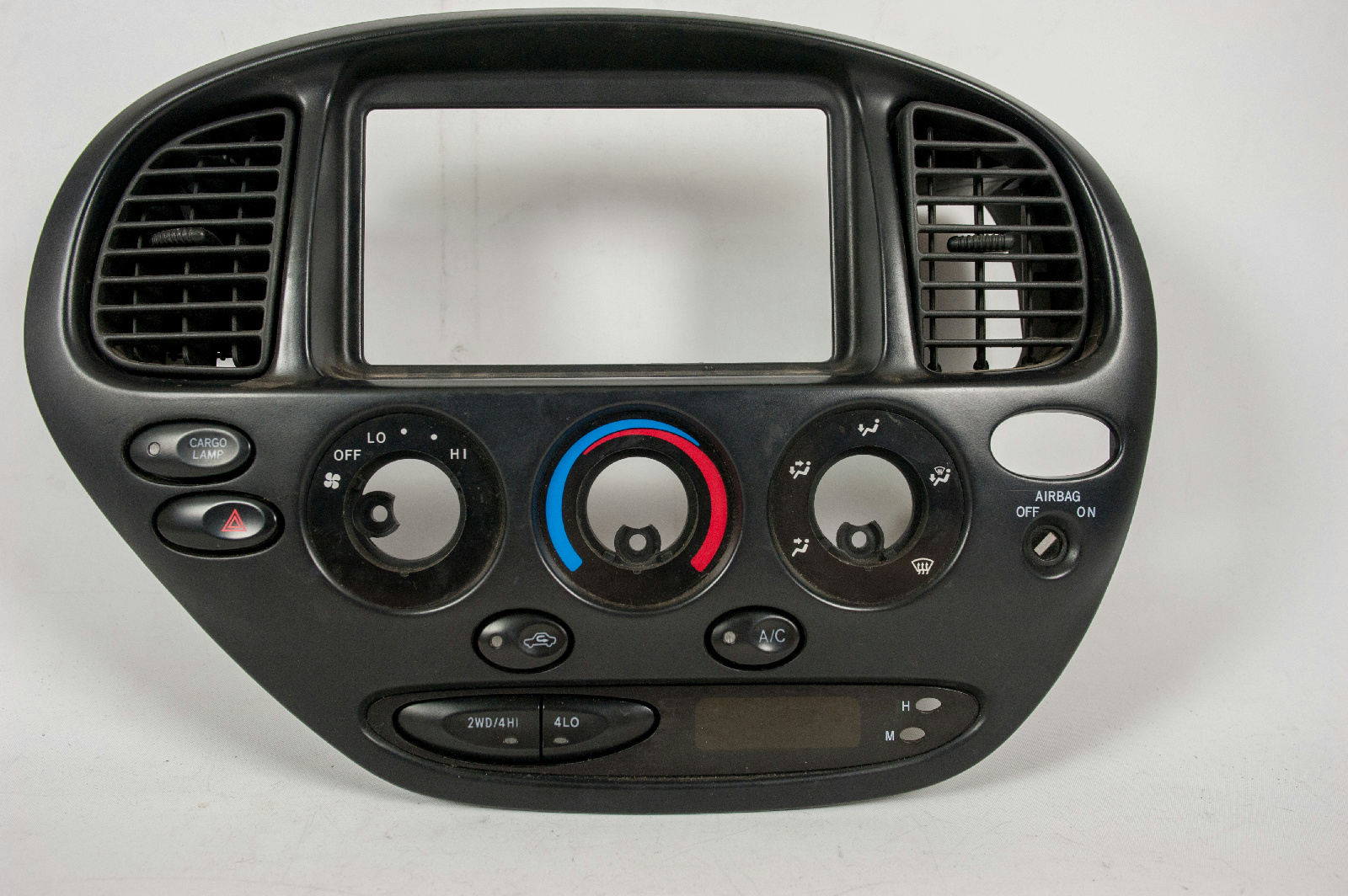
Standard five-item cabin control was the high-water mark of effectiveness, efficiency, and usability.

Fan, heat, vent dials or sliders, AC switch, recirc switch or selector.

It sucked the least.

https://kyozoufs.blob.core.windows.net/filestoragetcdb/Pictu...

Re: Don Norman on how design fails older consumers

#150

Earlier quoted context omitted.

Using an add-on to get a usable experience is nearly the same as admitting defeat.

It's also a necessity. Beyond uBlock Origin for the abusive parts, I've also recently started to use Stylus to fix bad design of sites I visit frequently. Few minutes with browser's Inspector and I can usually whip up a little bit of CSS that removes unnecessary whitespace, UI trinkets, and densifies the site by factor of 2 to 5.

I've been doing that Stylus thing for years.
Post reply on HN