King Alfred and India
caitlingreen.org
King Alfred and India
1–10 of 26 posts
Re: King Alfred and India
#2This is interesting, but I don't believe it's all that surprising. Medieval Europe was very well connected. Alfred himself went to Rome when he was a child and had an extensive cultural exchange with mainland Europe. It is also well known, as the article points out, that interactions with Asia was much more widespread than what is perhaps understood by most people today (who still sees it as a dark age).
This can also be seen by the fact that Christian communities existed, not only in India, but also in China as early as the 7th Century: https://en.wikipedia.org/wiki/Christianity_in_China#Earliest...
Re: King Alfred and India
#3I come from Kerala, the southernmost state in India referenced in the article. My last name is Thomas and every now and then people in the US look at me bewildered when I tell them my name – “But you don’t look Spanish”. I take it as an opportunity to give them a bit of a history lesson – “Do you know Christianity came to India 14 centuries before the US? And Columbus was looking for these Indians selling black pepper?”
Surprises people so much to know that Christianity exists in India, let alone that St. Thomas died in India [1].
Re: King Alfred and India
#4I come from Kerala, the southernmost state in India referenced in the article. My last name is Thomas and every now and then people in the US look at me bewildered when I tell them my name – “But you don’t look Spanish”. I take it as an opportunity to give them a bit of a history lesson – “Do you know Christianity came to India 14 centuries before the US? And Columbus was looking for these Indians selling black peppe…
A lot of people think Marco Polo was the first European to travel to the far east, but in fact his father and Uncle at least had already been there and he travelled back with them. This sort of travel along the silk routes had probably been going on since Roman times at least, and if so why not the spice routes to India and beyond as well?.
Re: King Alfred and India
#5I come from Kerala, the southernmost state in India referenced in the article. My last name is Thomas and every now and then people in the US look at me bewildered when I tell them my name – “But you don’t look Spanish”. I take it as an opportunity to give them a bit of a history lesson – “Do you know Christianity came to India 14 centuries before the US? And Columbus was looking for these Indians selling black peppe…
Similarly one wonders how chilli peppers are so prolific in Asian cuisine, but were only introduced during the columbian exchange.
Re: King Alfred and India
#6I come from Kerala, the southernmost state in India referenced in the article. My last name is Thomas and every now and then people in the US look at me bewildered when I tell them my name – “But you don’t look Spanish”. I take it as an opportunity to give them a bit of a history lesson – “Do you know Christianity came to India 14 centuries before the US? And Columbus was looking for these Indians selling black peppe…
Since you seem to know a bit of history, would you happen to know how the name "Jose" (pronounced 'jos', without the 'e') came to be so popular in Kerala? My last name is Jose. And people outside Kerala pronounce it like the Spanish 'José'. My best guess would be that it was adapted from the Portuguese.
Re: King Alfred and India
#7Seems like more bullshit propaganda to 'harvest' the remaining of the 'pagans'.
http://indiafacts.org/the-myth-of-st-thomas-part-one/
See, Joshua project, and USAID, and the dying Christian churches in the West are being used together with statecraft to make India a bigger prostitute than she already is at the point (what with linguistic and cultural destruction over the past centuries).
Re: King Alfred and India
#8This is interesting, but I don't believe it's all that surprising. Medieval Europe was very well connected. Alfred himself went to Rome when he was a child and had an extensive cultural exchange with mainland Europe. It is also well known, as the article points out, that interactions with Asia was much more widespread than what is perhaps understood by most people today (who still sees it as a dark age). This can als…
> Alfred himself went to Rome when he was a child and had an extensive cultural exchange with mainland Europe.
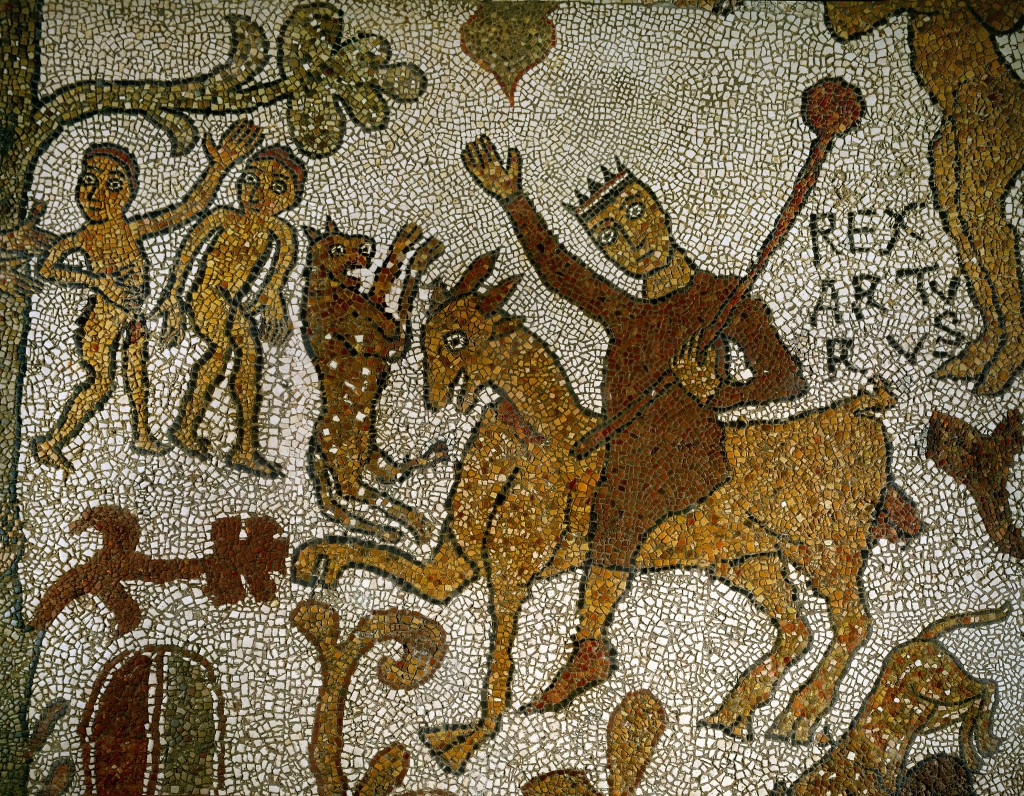
There’s also a depiction of King Arthur (Rex Arturus) in a famous mosaic located inside the Otranto cathedral, located in Puglia, Italy [1]. Presumably the mosaic was put in place in the 1160s, give or take a few decades.
A bit OT but not by that much, the same Italian city of Otranto was under direct Ottoman control for a year, sometimes in the early 1470s. Most of its Christian residents who had dare resisting were killed, and presumably the final step of the Ottomans’ journey was Rome (I have a quote about this made by Mehmed II somewhere in my books, I’m too lazy to search for it on my phone). Fortunately for Western Christianity Mehmed got caught up in some fierce fights in present day Albania and also in a region of present day Romania (Moldova, to be more exact) so that he had to recall his troups from the Italian peninsula.
Which is to say that yes, the East and West have been a lot more involved with each other compared to what most of today’s people assume.
[1] http://sites.duke.edu/danteslibrary/files/2016/02/otranto-mo...
Re: King Alfred and India
#9I come from Kerala, the southernmost state in India referenced in the article. My last name is Thomas and every now and then people in the US look at me bewildered when I tell them my name – “But you don’t look Spanish”. I take it as an opportunity to give them a bit of a history lesson – “Do you know Christianity came to India 14 centuries before the US? And Columbus was looking for these Indians selling black peppe…
Similarly one wonders how chilli peppers are so prolific in Asian cuisine, but were only introduced during the columbian exchange.
Like potatoes in the British Isles.
Do you mean how (the method by which it was achieved)? Perhaps you really wanted to know why?
You might also compare coffee, and tea, there.
I imagine it's about fashion really, the new product usurps the old, it garners higher prices initially, then there's a glut, unless there's a reason to go back the product becomes entrenched.
Re: King Alfred and India
#10So I take it that island at the far east of the map is Japan?
Its interesting how they thought the Nile came from Asia. And what's with Scandinavia missing?