Live data from Hacker News

1969 and 1970 at Bell Labs

larryluckham.com

61–70 of 83 posts

Re: 1969 and 1970 at Bell Labs

#61
post #44
post #22

Earlier quoted context omitted.

There are great essays on the topic, but basically - they were kicked out when the position started to earn money for the business. Programmed Inequality by Marie Hicks [0] is a great introduction to some of the history. As my mother was a software engineer in the 70s, it's so incredibly upsetting to hear folks describe how it's just an inherently male interest, forgetting the history of sexism that just happened. [0…

>Programmed Inequality by Marie Hicks [0] is a great introduction to some of the history. That's largely bullshit. The position of 'programmer' today would be that of a systems architect from 1960. The position of 'programmer' of 1960 is the linker/assembler program of today. The jobs where women used to be a majority of the staff were simply automated away. Before you cry sexism the position of CNC programmer, a lar…

That’s all based on the potentially dangerous assumption that the majority of women were working in now obsolete jobs. Your post also implies that those same women weren’t qualified to work other jobs even after their old jobs were retired.

I would also say that the assumption isn’t entirely correct based on the percentage of CS graduates that were female around that time compared to today. Maybe these early women in tech could transfer to other positions but got rejected on application because of biases among employers?
Re: 1969 and 1970 at Bell Labs

#62
post #43

Earlier quoted context omitted.

What happened to the women in tech is that the clerical jobs were all replaced by computers. I'm still not clear how office work has improved by me not having a secretary. The two hours a day I waste on email, meeting planning etc would pay someone a comfortable wage and mean I don't have to be bothered all the time by emails that I probably don't need to answer, unless it's from those two people. In my current gig w…

The women who used to be secretaries (some subset of them, at least) are now lawyers, doctors, investors, managers, engineers, etc. That's always been the point of eliminating jobs: it frees up the people who used to do those jobs to do other things.

Ironically it doesn't free up the people who used to do them to go about doing what they want with their time - it only frees them up in the same way that the computer will free up memory, the people are able to be allocated to other places in the economy. The observation that automation tends not to free people in any genuine sense even runs against Keynes' predictions for how much we'd be working today.

Re: 1969 and 1970 at Bell Labs

#63
post #23
post #4

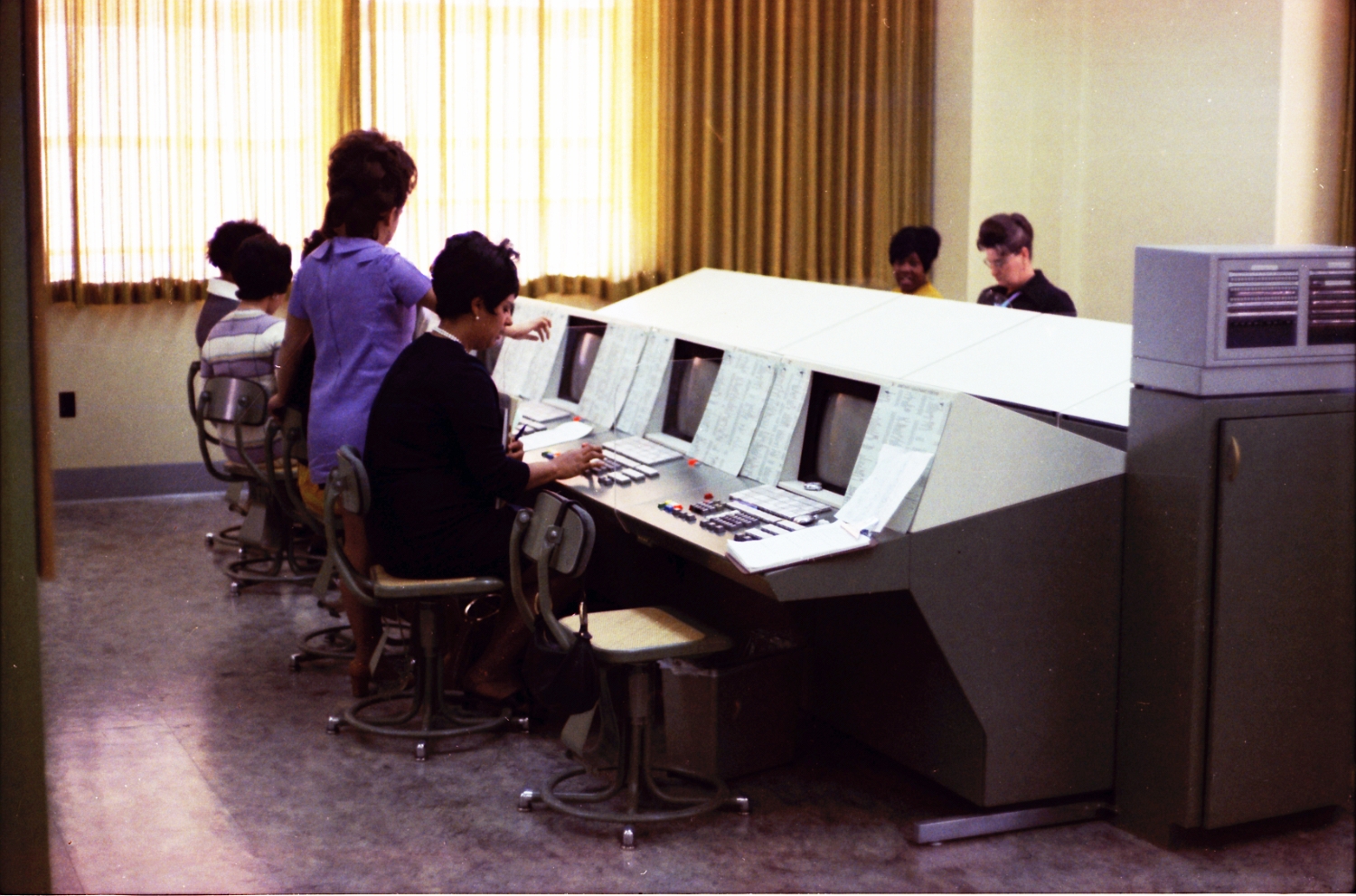
What happened to all the women? This office would make diversity/inclusion officers salivate.

Well into the 90s one of my aunts was a programmer on the 5ESS switch code, mission-critical stuff that needed to be 99.9995% reliable. She was eventually laid off when Lucent abandoned the line and she transitioned into a far more lucrative career as a realtor. I know other ladies of my mother's generation (I was born in 1970) who worked at IBM and the like. If you look at female percentage of enrollment in CS cours…

> in part because PCs were aggressively marketed towards boys only.

I've seen this repeated a lot without, as far as I can see, any credible evidence that (a) this was actually the case and (b) that the causality worked the way indicated.

To me, it's at best a classic "wet roads cause rain" fallacy that doesn't make sense at any level.

1. Companies are dollar driven

This idea that companies would forego a massive market in order to...I don't know, "keep the girls out of computers" just doesn't make any sense. Even typing these words is weird, the idea is just so utterly ludicrous.

And the idea that it might have been just oversight also doesn't wash. At least one company would have at some point asked the question, tried it out and made a killing.

2. Nobody wanted to keep girls out

Heck, I grew up in the 80s, and the very last thing on the mind of any of us computer nerds was "oh my god, we need to keep the girls away from this stuff". We would have given almost anything to get more girls interested. They just weren't.

3. The effects of marketing are vastly overstated

Us computer nerds did not want computers because they were "marketed towards" us. We wanted computers because we really wanted computers. In fact, I had no awareness of computers until exposed to Apple IIs in summer camp, first a little BASIC and then shape tables. Oh boy, shape tables! And yes, the computers were open to anyone who wanted.

In fact, we got an Apple, despite all the marketing material I remember being the Tandy catalogs. They even had a 68K based model at that time!

4. The ads were gender neutral

Although I don't remember much in terms of ads, what I remember was fairly neutral. As a quick check, I did a Google image search and the ads were quite balanced, for example families grouped around a computer with mom+dad+girl+boy.

Re: 1969 and 1970 at Bell Labs

#64

Earlier quoted context omitted.

UK, non-government public sector, very senior people still have secretaries - often described as personal assistants. The PAs handle interfacing and information flow, the senior people can get on with the thinking .

A PA is not a secretary years ago I worked on organising a large event and one of the committee member was the PA to the county fire chief. She was awesome, at the first meeting she had worked out from previous years all the key things the other members of the committee needed to do - written all the letters and handed them to us to sign.

That sounds exactly like a secretary.

Re: 1969 and 1970 at Bell Labs

#65
post #55

All these comments on the number of women in the photographs and "what happened to all the women in tech?" ... I'm just thinking the photographer was a man with a plan. Anyway heres Wonderwall https://web.archive.org/web/20190202185041/http://www.larryl...

There may be a little bit of a selection bias going on - as you described - but it is worth remembering that back in the 50s and possibly 60s system administrators did used to be quite a female dominated role because they used to manage the cypher machines during the second world war while the men went off to fight and thus that trend of seeing women in server rooms continued a little while after. Sadly the designing…

They might well have been keypunch staff back in those days a lot of code was written long hand and send of to the punchroom to be keyed in.

Re: 1969 and 1970 at Bell Labs

#66
post #35

One of the things I notice is that there is not a single Asian male in any of the photos. If you went into any software office around Oakland, CA or the larger Bay Area now, I would guess that 30-50% (if not more) of the programmers you see would be Asian males.

Well until '65 there were agressive immigration restrictions on Asians, so I expect that would reduce the number available with the required skills.

India was quite closed off until relatively recently its only in the mid 80's that India began to compete when it abandond soviet style central control. "you can have any car you like as long as its a hundistan ambassador"

Re: 1969 and 1970 at Bell Labs

#68
post #55

Earlier quoted context omitted.

There may be a little bit of a selection bias going on - as you described - but it is worth remembering that back in the 50s and possibly 60s system administrators did used to be quite a female dominated role because they used to manage the cypher machines during the second world war while the men went off to fight and thus that trend of seeing women in server rooms continued a little while after. Sadly the designing…

They might well have been keypunch staff back in those days a lot of code was written long hand and send of to the punchroom to be keyed in.

Ahh yes, I'd forgotten about them. We had a team of 4 or 5 keypunchers at one of the of the companies I worked for near the start of my career.

Re: 1969 and 1970 at Bell Labs

#69
Love your pictures!! Wow, it actually looks like a bunch of people who are happy to be there.

Look at that Tek scope on the scope cart! I purchased one of those as an undergrad in EECE, what a great old scope.

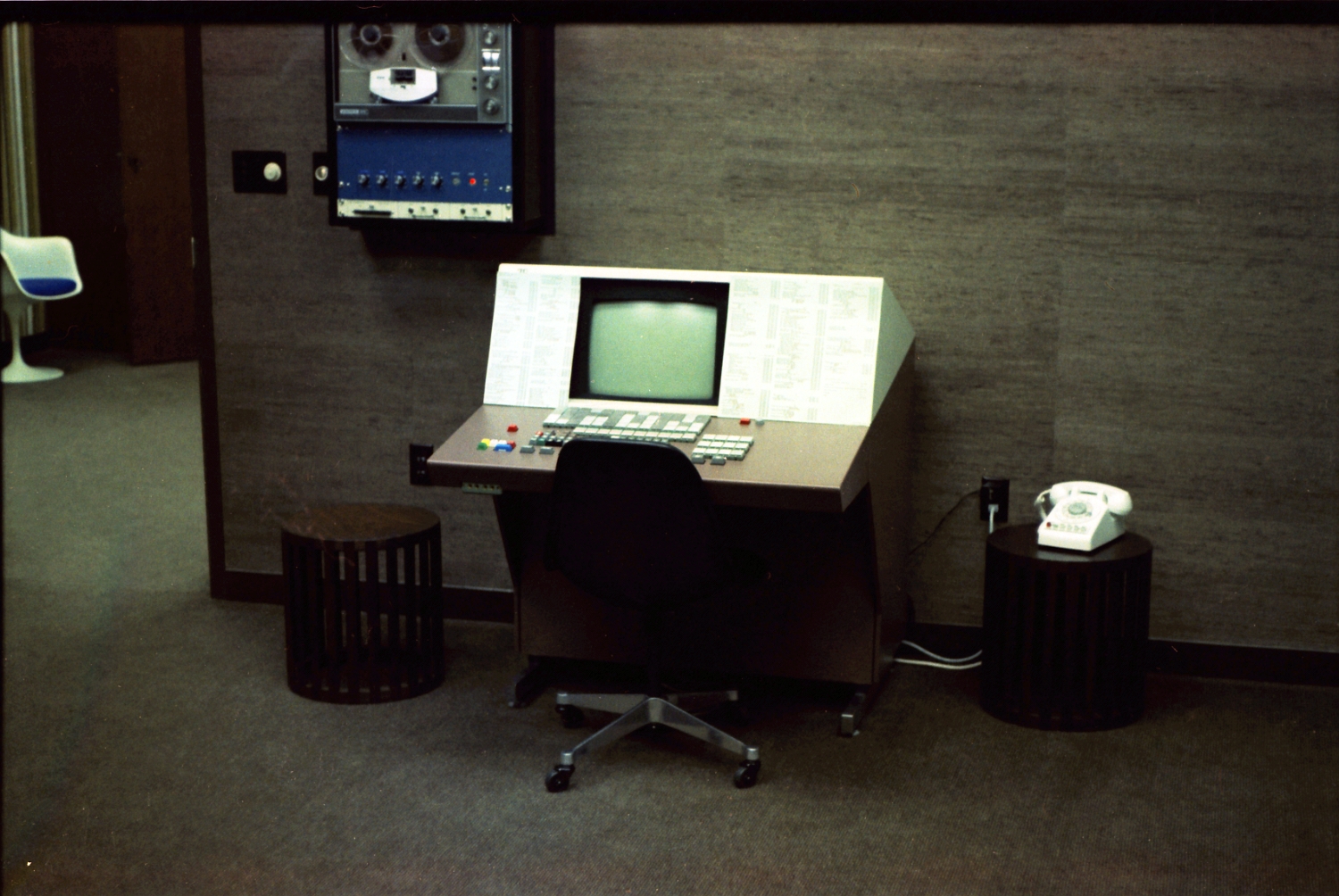
Also, is the part of your website that loads images behind a 1970s switch at bell labs, perhaps? :) I thank the other HN members for the mirrors.

Re: 1969 and 1970 at Bell Labs

#70
post #23

Earlier quoted context omitted.

Well into the 90s one of my aunts was a programmer on the 5ESS switch code, mission-critical stuff that needed to be 99.9995% reliable. She was eventually laid off when Lucent abandoned the line and she transitioned into a far more lucrative career as a realtor. I know other ladies of my mother's generation (I was born in 1970) who worked at IBM and the like. If you look at female percentage of enrollment in CS cours…

> in part because PCs were aggressively marketed towards boys only. I've seen this repeated a lot without, as far as I can see, any credible evidence that (a) this was actually the case and (b) that the causality worked the way indicated. To me, it's at best a classic "wet roads cause rain" fallacy that doesn't make sense at any level. 1. Companies are dollar driven This idea that companies would forego a massive mar…

To the degree there's something to the PCs became a thing mostly with teenage boys, which discouraged others from getting involved with computers at a later age... And I think there probably is. You need look no further than skeptical comments here about hiring someone who didn't have a "passion" for computers from a young age. Or college curricula with entry-level courses that clearly assume prior familiarity with computers. But it's probably more of a connection between PCs and gaming.

Which means that dynamic should be changing again as PCs are far less relevant as a gamer platform. Though arguably the environment is established and is hard to change as a result.

Post reply on HN