Live data from Hacker News

Piano Tuning

sidsite.com

41–50 of 71 posts

Re: Piano Tuning

#41

Once, long ago I landed in a house in Poznan, Poland which had the wreck of a Bosendorfer baby grand piano sitting in one of the rooms. I had a lot of time on my hand and tried to figure out the story behind the piano. After tracing the owner it turned out that he was trying to 'restore' the piano but in the process had butchered it and had sent parts all over Poland for refurbishing. For some strange reason the Acti…

I had a friend, Jim, who was blind. He went to school to become a piano tuner. Once, we were at another friend's house who had a piano. The friend played a short piece on the piano and Jim mentioned that it could use some tuning and went on to claim he had perfect pitch hearing. Well, of course, we had to test him. We hit one key. "That's D!", he said. We hit another. "That's G!" With a smirk, my friend pressed three…

Many good musicians can do that, especially if they have a reference pitch (I have A-440 pretty much memorized from years playing in orchestra). The chord would take more time to reason out, but a standard chord (like the B-minor one you mention) would be quite quick.

I sing with someone that has perfect pitch (not just good relative pitch like I have). He can immediately identify a note at random, but has a very hard time when we want to transpose a piece—he's never really had to learn how to figure out intervals.

Re: Piano Tuning

#42
post #33

Earlier quoted context omitted.

I had a friend, Jim, who was blind. He went to school to become a piano tuner. Once, we were at another friend's house who had a piano. The friend played a short piece on the piano and Jim mentioned that it could use some tuning and went on to claim he had perfect pitch hearing. Well, of course, we had to test him. We hit one key. "That's D!", he said. We hit another. "That's G!" With a smirk, my friend pressed three…

Of course, once he'd got the first note right, he didn't need perfect pitch to get the second one. Is there a reset procedure for testing perfect pitch? Some confusing sequence of slidey trombone sounds? Just listen to Shepard tones for a while?

In real psychophysics experiments, you never tell the subjects if they were right or wrong (in fact, double blindness means not even the experimenter knows). So in that case you could try using relative estimates, but it won't increase the expectation of the accuracy.

Re: Piano Tuning

#43
Every time we had our piano tuner scheduled to come was a special occasion. When he'd come, he'd have this aura about him which made his intense disposition seem fitting for the work he was doing.

My mom felt it important to prepare us for the two day process to be without our piano and to tread lightly as he worked through his vast toolset of tuning forks on each key with his most amazing one, his ear.

To watch him act as one with our piano, positioning his head to absorb its vibrations and set it right for us, made our most prized possession seem like part of an intricate world of students connected and tuned to the sound motions of the Universe.

Re: Piano Tuning

#44
post #33

Earlier quoted context omitted.

I had a friend, Jim, who was blind. He went to school to become a piano tuner. Once, we were at another friend's house who had a piano. The friend played a short piece on the piano and Jim mentioned that it could use some tuning and went on to claim he had perfect pitch hearing. Well, of course, we had to test him. We hit one key. "That's D!", he said. We hit another. "That's G!" With a smirk, my friend pressed three…

Of course, once he'd got the first note right, he didn't need perfect pitch to get the second one. Is there a reset procedure for testing perfect pitch? Some confusing sequence of slidey trombone sounds? Just listen to Shepard tones for a while?

One of my kids has perfect pitch and it's very weird. I used to randomly test her with things and she was never wrong. I'd ask what note the microwave beeps or her toothbrush buzzes and she could easily say answer the question (or at least say what two notes the noise falls between).

Re: Piano Tuning

#45

Our old piano tuner explained to me how in practice when tuning you must stretch the high notes higher and the low notes lower so as to make the piano sound right. He didn't explain why. It was obvious if you played octaves and listened to the notes, and he was an excellent piano tuner and the piano did sound good. The first comment in the article describes it nicely and links to the excellent Wikipedia section which…

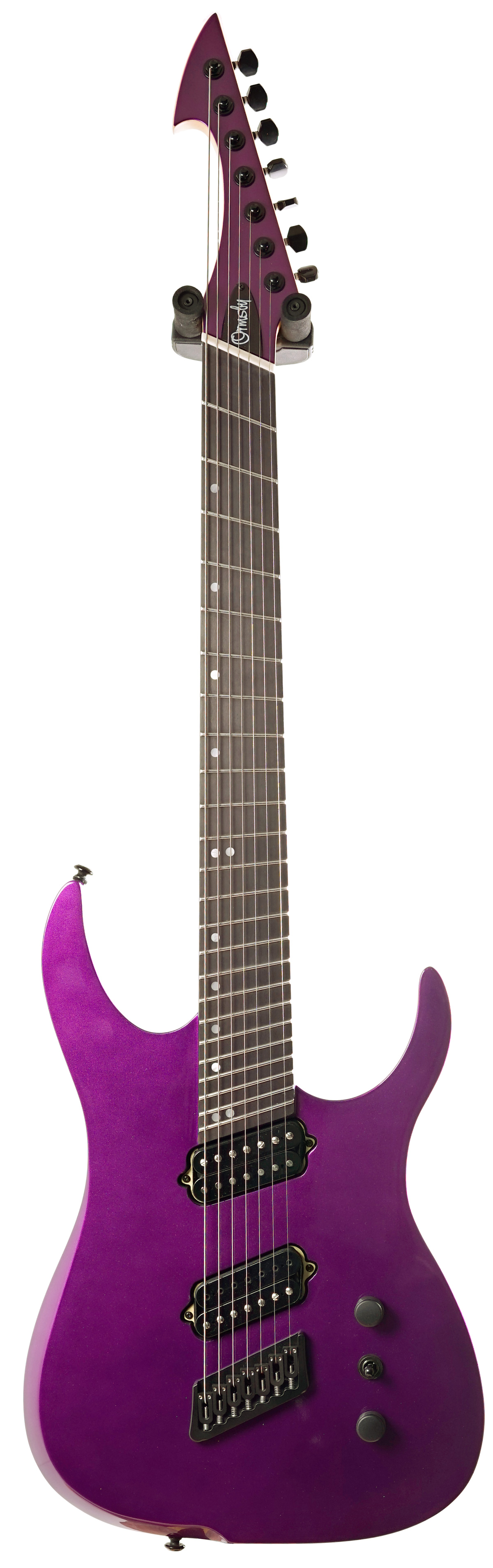
There are also guitars which take a tempered approach to tuning, and typically require a multi-scale fitment of bridge and nut. The Buzz Feiten system [1] is the first I can recall, although now many guitar manufacturers are building guitars with each string using a different scale and fanned fretboards [2].

[1] https://en.m.wikipedia.org/wiki/Buzz_Feiten#Buzz_Feiten_tuni...

[2] https://images.guitarguitar.co.uk/large/130/170316308819006f...

Re: Piano Tuning

#46
post #11

minutephysics had a nice video about the mathematics that go behind piano tuning too. "Why It's Impossible to Tune a Piano" https://www.youtube.com/watch?v=1Hqm0dYKUx4

If you really want to dive deep into historical tuning systems, check out early music sources, https://m.youtube.com/channel/UCJOiqToQ7kiakqTLE7Hdd5g/video...

Re: Piano Tuning

#47

Once, long ago I landed in a house in Poznan, Poland which had the wreck of a Bosendorfer baby grand piano sitting in one of the rooms. I had a lot of time on my hand and tried to figure out the story behind the piano. After tracing the owner it turned out that he was trying to 'restore' the piano but in the process had butchered it and had sent parts all over Poland for refurbishing. For some strange reason the Acti…

I had a friend, Jim, who was blind. He went to school to become a piano tuner. Once, we were at another friend's house who had a piano. The friend played a short piece on the piano and Jim mentioned that it could use some tuning and went on to claim he had perfect pitch hearing. Well, of course, we had to test him. We hit one key. "That's D!", he said. We hit another. "That's G!" With a smirk, my friend pressed three…

We had a deaf tuner. He “heard” through his hands.

Re: Piano Tuning

#48
post #7

This is certainly a fun way to introduce twelve-tone equal temperament to someone who knows enough math to understand logarithms but is new to music theory. It works well, because the only elementary music theory claims that we need to accept without explanation are that there are twelve different note names that repeat in the same order and that each note of a given name is twice the frequency of the previous note o…

> Of course, there are so many more details on every side of this topic. Why 12 divisions per octave (this certainly isn’t the case for all musical traditions)?

Earlier systems had you tune instruments so that notes within an octave would be tuned to a few different simple harmonic relationships to a root key. This has the downside that playing a tune in a different key yields entirely different frequency relationships to the root. Twelve tone equal temperament is a sort of compromise in that it produces pitches that only roughly correspond to these simple relationships, which it trades for consistent relationships in any key. A few of these simple relationships are common across multiple musical traditions. In the Arab tone system there are musically significant intervals that don't have any nears in 12-TET. At some point it was modernized to an equally tempered scale, but with 24 tones per octave instead of 12.

If you listen to a string ensemble or a choir, you can however often hear that they tend towards the simple harmonic relationships rather than their corresponding equal-tempered frequencies.

> And, most importantly to me, since it’s the question I can find the least solid information on: why do we take for granted that one note with twice the frequency of another note sounds so similar that we call both notes by the same name? I have a pretty good understanding of other details of music theory, but I’ve never gotten a straight answer on why (and indeed to what extent) octave equivalence exists.

Maybe thinking of sounds in terms of sets of overtones is useful. If we define sound similarity (of largely harmonic and overtone-rich sounds) as the size of the intersection of their sets of harmonic overtones, the octave is the most similar you'll get to the root because half of the harmonic overtones of the root also appear in the octave. The next best interval in these terms is the perfect 12th, which has a third of all the overtones in the octave.

Of course this is oversimplifying and the overtones should probably be weighed according to timbre and the limits of hearing, but I think it gets the general idea across.

These integer harmonic intervals (octave and perfect 12th) are also unique in that played together with the root, they don't produce any undertones.

The relationships within the octave are more complex and don't have integer harmonic relationships to the root. They occur early in the harmonic series, but the root does not coincide with the base frequency of the series, so they produce undertones. For example, a perfect fifth (3:2) played together with the root will produce an undertone an octave below the root. If you sum two sine waves with this frequency relationship together, you'll see that the resulting waveform cycles at half the frequency of the root. For very small ratios like that of the minor second (16:15 in some tuning systems) the overtone series in which both appear starts at a 1/15 of the frequency of the root note, so the length of this cycle is much longer, thus appearing dissonant. If the interval is really small, though, or if you play a very low root note, this undertone ends up at an inaudible frequency and will be perceived rather as a slow timbral modulation than a dissonance.

Of course, the perfect fifth and the perfect 12th don't appear at all in 12-TET.
Re: Piano Tuning

#49
For those of you that want to go deep on this subject (of which this article only superficially covers), I commend Stuart Isacoff's entertaining book _Temperament_ (Vintage 2009) to your attention.

A wonkier, somewhat more no-nonsense treatment is J. Murray Barbour's _Tuning and Temperament_ (Dover 2004).

Re: Piano Tuning

#50
post #10
post #7

This is certainly a fun way to introduce twelve-tone equal temperament to someone who knows enough math to understand logarithms but is new to music theory. It works well, because the only elementary music theory claims that we need to accept without explanation are that there are twelve different note names that repeat in the same order and that each note of a given name is twice the frequency of the previous note o…

> And, most importantly to me, since it’s the question I can find the least solid information on: why do we take for granted that one note with twice the frequency of another note sounds so similar that we call both notes by the same name? I have a pretty good understanding of other details of music theory, but I’ve never gotten a straight answer on why (and indeed to what extent) octave equivalence exists. I don't k…

I disagree. A sine wave has no overtones but we can still easily perceive the octave notes.

Also overtones don't have to be even multiples of the fundamental. Many organs have stops that are not multiples of the fundamental. 2-2⁄3′, 1-3⁄5' are common flute stops.

Post reply on HN