Have I missed it or are there no results in the article? First he has a long intro, which is nice. Then he goes way over board explaining his data and code. Then he talks about his mattress. If you've seen results can you point them out to me? Thanks.
On whether changes in bedroom CO2 levels affect sleep quality
241–250 of 322 posts
Re: On whether changes in bedroom CO2 levels affect sleep quality
#242I'm eager to hear the results. I recently got an Awair 2.0 after seeing this talk by DHH: https://www.youtube.com/watch?v=MRqh8oLY7Ik It quickly confirmed that, without turning my thermostat fan to "ON", my bedroom CO2 jumps from about 1000 ppm to 2000 ppm within a couple hours of us going to sleep. In the fall, my wife and I started waking up in the middle of the night feeling like we couldn't breathe. What I figure…
Have you thought about installing a screen door in your bedroom? You could also look into reinforcing it with chicken wire or hail cloth to keep the cat out.
Re: On whether changes in bedroom CO2 levels affect sleep quality
#243I am already baffled that a major Dutch periodical (Elsevier magazine) fails at typesetting the "2" in "CO2" in subscript, but gwern? (Et tu, gwern?)
Re: On whether changes in bedroom CO2 levels affect sleep quality
#244I've worked on environmental sensing iot projects and have seen the cost of co2 sensors. Almost all the cheap ones are VOC sensors which infer a co2 level by assuming the VOC output is from humans (rather than paint for example). Given the cost of the device I would be amazed if it wasn't a VOC based sensor. The cheapest CO2 sensors I've seen are well over $250, even in bulk. CO2 is quite innert, so it requires very…
I got an NDIR CO2 sensor on AliExpress for $20. Do you think one of those would just have low accuracy or be uncalibrated?
Also if someone is searching for PM2.5 particle monitoring:
https://smartairfilters.com/en/blog/how-accurate-are-common-...
Re: On whether changes in bedroom CO2 levels affect sleep quality
#245This might be completely unrelated, but let's give it a shot: I've noticed that sometimes after spending extended periods of time (in the magnitude of hours) in very close proximity with a significant other (e.g. cuddling, kissing, etc.), I feel groggy, dizzy, and have brain fog/difficulty focusing. Could this be related to CO2 levels? I've been feeling it today and was wondering if it is hormone related, but CO2 cou…
I had that happening. For me it was an allergic reaction which slightly blocked my sinuses and reduced the air intake. The allergy was previously undetected because I do/did not use the same cosmetic products that my partner uses. A antihistamine nasal spray may help, but check with an ENT.
Re: On whether changes in bedroom CO2 levels affect sleep quality
#246I was lucky to get my hands on 5 proper co2 sensors from university, while I was teaching and working. So plenty of test places. What I found: -Just a couple of hours in a office, without ventilation spikes the co2 enough to make everyone dizzy and tired by the end of the day. Keeping eye on the meter and ventilating properly, increased everyones productivity and people werent so tired by the end of the day. - Classr…
As someone who has built my fair share of houses and worked on many more over the last 25 years, I have to agree that our ability to seal air better than ever is causing problems, especially if you don't have forced air heating and cooling running all the time. People just completely ignore or haven't ever thought about room ventilation, positive or negative room pressures, and where and how to ventilate to the outsi…
What's the solution?
My house is absolutely frigid during the winter, and I got quote for resealing it. He told me that afterwards I am either going to have to leave my windows open (no thanks!) or live with mold.
I've heard that you can install vents, but can't find useful info. My grandparents had a chute vent, and it somehow became a breeding ground for flies and all sorts of ichies. Not sure why.
And short vents sound to me like an always open wondow, which just brings in the cold.
I want the insulation, the circulation, the breathability and the warmth. Is there any way to have it all?
Re: On whether changes in bedroom CO2 levels affect sleep quality
#247Earlier quoted context omitted.
As someone who has built my fair share of houses and worked on many more over the last 25 years, I have to agree that our ability to seal air better than ever is causing problems, especially if you don't have forced air heating and cooling running all the time. People just completely ignore or haven't ever thought about room ventilation, positive or negative room pressures, and where and how to ventilate to the outsi…
What's the solution? My house is absolutely frigid during the winter, and I got quote for resealing it. He told me that afterwards I am either going to have to leave my windows open (no thanks!) or live with mold. I've heard that you can install vents, but can't find useful info. My grandparents had a chute vent, and it somehow became a breeding ground for flies and all sorts of ichies. Not sure why. And short vents…
Heat recovery ventilation can bring in fresh air with about half the heat loss, but it needs regular maintenance.
You can also look at whole house dehumidifiers to take the water out of the air to help reduce the mold problem.
Re: On whether changes in bedroom CO2 levels affect sleep quality
#248I was lucky to get my hands on 5 proper co2 sensors from university, while I was teaching and working. So plenty of test places. What I found: -Just a couple of hours in a office, without ventilation spikes the co2 enough to make everyone dizzy and tired by the end of the day. Keeping eye on the meter and ventilating properly, increased everyones productivity and people werent so tired by the end of the day. - Classr…
As someone who has built my fair share of houses and worked on many more over the last 25 years, I have to agree that our ability to seal air better than ever is causing problems, especially if you don't have forced air heating and cooling running all the time. People just completely ignore or haven't ever thought about room ventilation, positive or negative room pressures, and where and how to ventilate to the outsi…
> As someone who has built my fair share of houses and worked on many more over the last 25 years, I have to agree that our ability to seal air better than ever is causing problems, especially if you don't have forced air heating and cooling running all the time. People just completely ignore or haven't ever thought about room ventilation, positive or negative room pressures, and where and how to ventilate to the outside. In older houses there was always air leaks, small, but they let the house breath, especially if you had a central fireplace and your house was at negative pressure. I have seen many people purposefully over seal their house in ill conceived ways, to try and improve insulation, but end up causing ventilation problems with mold being especially common. Materials and vents that should let air pass through are commonly replaced with impermeable plastics and sealing tapes, many times in conjunction with a misunderstanding in expansion and contraction joints that have small gaps.
Sorry, but this is just wrong and is the type of "accepted wisdom" that holds back construction, particularly here in the UK.
Repeat: ventilation and permeability are different things.
Yes, permeability can achieve some ventilation but it comes at the cost of:
1) Not being reliable; it is dependent on pressure deltas around the dwelling.
2) Being potentially deleterious to the fabric of the building where escaping warm air cools and water condenses on surfaces in the fabric.
3) Being wasteful of energy.
The solution is to separate the two:
1) Seal the fabric totally, bearing in mind vapour permeability. The seal should be on the warm side of the insulation.
2) Install a ventilation system which provides reliable fresh air and, ideally, exchanges the heat leaving the building with the fresh air coming in.
We can no longer rely on folksy wisdom. Let's engineer our houses.
Re: On whether changes in bedroom CO2 levels affect sleep quality
#249Earlier quoted context omitted.
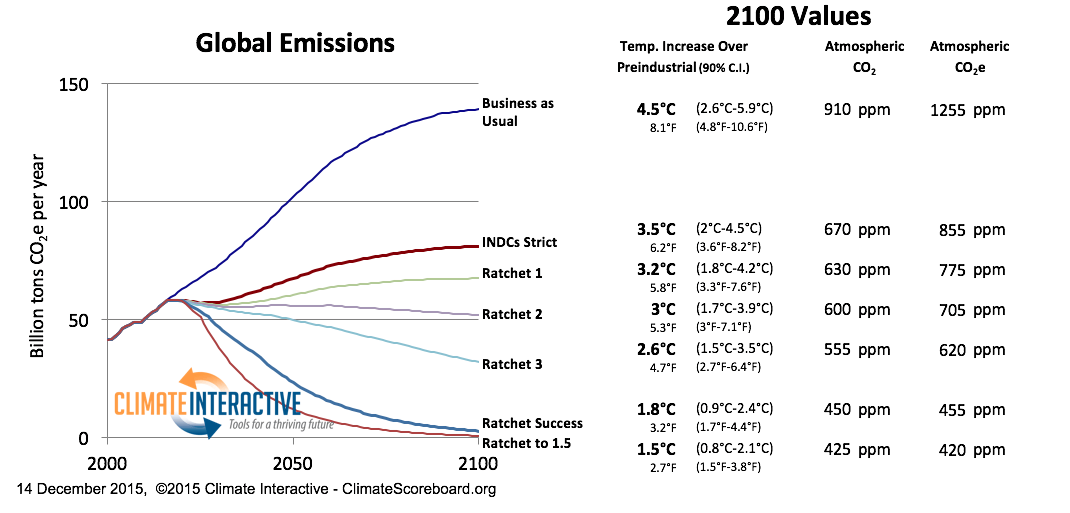
We're on track to reach 1000ppm by the end of the century, if levels continue to rise at their present (accelerating) rate. This is about the threshold where cognitive effects become reliably detectable. However, such levels also bring climate change on such an apocalyptic scale (4.5+ degree temperature rise) that industrial activity could well wind down as society collapses.
This is absolutely not true. The predicted number is much closer to around 650 ppm, and that's assuming no change. In reality, things like solar technology have massively gone down in price over the last couple decades, and are only continuing to reduce in price. We will likely see 2-3 degrees of warming, but no credible scientist is making the predictions that you seem to be making.
I suppose the question is, predicted by whom? And no change in what?
If there is no change in CO2 emission, then yes we might restrict the total damage to 650 ppm. But "no change in CO2 emission" doesn't mean "business as usual", it means a moratorium on all kinds of expanding industrial activity.
Not only are CO2 levels increasing, but CO2 emission rates are increasing. Hell, the first derivative of CO2 emission rate was also increasing until the past couple of years, a minor but happy development that could easily snap back. "Business as usual" means an exponential curve.
Solar powered industry is still a far-off pipe dream. Even if it only takes 30 years to replace all energy sources with sustainable alternative, in 30 years huge damage will have been done. We cannot afford to just shrug and say the problem will just solve itself.
https://www.co2.earth/images/widgets-in-site/climate-interac...
Re: On whether changes in bedroom CO2 levels affect sleep quality
#250Earlier quoted context omitted.
> The predicted number is much closer to around 650 ppm, and that's assuming no change. Though solar and other non-carbon energy sources are coming down in price, world energy needs are outpacing them. Out CO2 emissions are increasing, not decreasing. I doubt that we'll see 1000 ppm by the turn of the century, but if the "no change" projection is 650 ppm then by simple matter of inference, due to increasing CO2 outpu…
What I am saying is, that we will get to the point where it literally doesn't matter if world energy demand is increasing or not. Why? Because if solar power and others, continue to go down in price, as they are doing now, then solar ect will be cheaper than coal. From a purely economic stand point, countries will eventually just stop burning coal, because the alternatives are just flat out cheaper, even when you ign…
From a certain level of abstraction, if countries always did the economically rational thing, we wouldn't be in this mess at all. Building out solar capacity requires planning and foresightedness and political will. Hell, America could transition entirely to solar power for a fraction of the price of the Iraq war - in that sense, sustainable power is already cheaper than carbon-based, once you factor in the externalities of middle-eastern instability. If you factor in all the externalities - pollution, environmental destruction etc - then sustainable has been "cheaper" for a very long time.
The trouble is that countries are not purely rational, and do not factor in all externalities.