Live data from Hacker News

The West Coast is beating the East Coast on transportation?

nytimes.com

181–190 of 205 posts

Re: The West Coast is beating the East Coast on transportation?

#181

Earlier quoted context omitted.

Also the MAX slows to a crawl downtown, where it shares the street with cars and busses and stops every 2-4 blocks.

They're closing a few downtown stops that saw low usage to speed things up, but it will still be sluggish. I think the only real solution would be to move the Red/Blue lines to the transit mall and put all the downtown track underground with a cut-and-cover tunnel. Also, the attempts to get the Yellow line into Vancouver fell through because the Washington legislature voted against it. There are renewed efforts to bu…

Yeah, not much we can do about WA. But that bridge is so old and has no shoulder. Any car accident means a huge slowdown.

It'd be nice if we had elevated trains that didn't have to share with busses, cars, bikes, and pedestrians.
Re: The West Coast is beating the East Coast on transportation?

#182
post #178
post #161

Earlier quoted context omitted.

The cost still exists — you’re just moving it. Instead of factoring it into the labor cost and being part of the money allocating to the particular job, you’d just see lower allocation, and have the same problem. The only real difference would be that the comparison in funding/cost between equivalent US and EU work would be more fair (also achieved by de-nationalizing healthcare and pensions in the EU). Unless of cou…

Not true. Healthcare service costs in other industrialized countries are much lower than the US, because of their better systems. So, for instance, if you need hip replacement surgery and you have to pay for it out-of-pocket, it'll cost you a small fraction if you get it done in Belgium than in the US.

As always, comparing on consumer medical costs is difficult, especially because an (insured) person in the US doesn’t pay anything close to sticker price, and neither does the insurance company. Im not sure what the real cost per operation comes out to be, if you’ve got anything regarding that

Re: The West Coast is beating the East Coast on transportation?

#183

Earlier quoted context omitted.

The DC Metro averages 33 mph, including stops. I’d be surprised if NYC’s express lines didn’t hit 50 routinely.

They do not, the max speed limits on rare long stretches of track are around 45 mph. Most stretches are well below this. https://ny.curbed.com/2018/12/19/18146933/mta-new-york-subwa...

It is worth noting that NYC and DC have fundamentally different design philosophies that result in different average speeds.

New York's system is designed around walking to stations. All the way to the end of the lines, stations tend to be about a half mile apart. There are express lines but even those become locals on at least one end, with half-mile stop spacing.

DC's is an auto-oriented system, where you're expected to drive to the stop and then take the train in from the suburbs. As a result, while there is dense stop spacing in the center, distances between stations in the suburbs get progressively longer and longer. It's over these long stretches in the suburbs that DC is able to attain much higher speeds.

Re: The West Coast is beating the East Coast on transportation?

#184

Earlier quoted context omitted.

Scooters and bikes are not exclusive of mass transit -- they complement mass transit by working on the "last mile" problem that no mass transit system has ever really found a good solution to.

In a walkable area there is no "last mile" problem for able bodied people. A mile is a perfectly reasonable 20 minute walk provided the streets are safe. And if the streets are built safely, scooters and bikes will be usable as a natural consequence. And if you're disabled, scooters and bikes aren't helping you much anyway. Scooters and bikes are great supplements to a system, but they won't actually do much good wit…

20 minutes is practically an entire commute. It’s not at all reasonable to burn that much time on the last mile alone.

Re: The West Coast is beating the East Coast on transportation?

#185

Earlier quoted context omitted.

Simplest solution for the transit planner, maybe; but for people who want to get around, who wants to be stuck in a bus? Why should we settle for a crappy, minimally-functional experience? Let's build good transit that people will actually want to use.

If buses arrived every five minutes and had a dedicated lane, people would not be stuck anywhere and people would certainly want to use it. Here is a thought. Walk to your nearest busy street. Assume you could convert half the number of cars to buses and that a bus would have about 20 riders. When you count 40 cars go by, that is how often the bus would arrive.

No, it won’t. Even routes that are consistently bursting at the seams get no more than 3-4 departures per hour around here.

Re: The West Coast is beating the East Coast on transportation?

#186
post #23

Earlier quoted context omitted.

Shouldn't a bus have similar throughput to a subway though, with no traffic?

A single bus can move about 100-200 people. A single subway train can move about 1000-1500 people, an order of magnitude more.

A single bus has 25-40 seats, so those other 160 people are going to be pretty miserable.

An articulated bus might be able to move closer to 100 people comfortably.

Re: The West Coast is beating the East Coast on transportation?

#187

Earlier quoted context omitted.

Seattle actually has extremely high transit ridership and walk commmute share, which is pretty impressive considering how the transit system is mostly buses right now. And by 2024, major centers in the region will be connected by rail transit that is faster than road travel. Anecdotally, I live pretty well without a car here; I use Uber and Lyft when transit don't work out, and if I want to hike usually one of my fri…

I think there is an objective measure here. Just plot a 30-minute transit radius around the centers of various cities and you'll get a sense of the transit size of the city vs. covered population. Some cities are notoriously "small," like SF, despite it being on some best-to-live-without-car lists. You can't go very far before practically needing a car: so what if you can get there by transit if it takes 1-2 hours an…

Yes. Apartments.com has a nice visualization where you specify a mode, destination, and time limit, and it lights up all the listings in range. It’s really shocking how small SF is for sane commute times (20–45 minutes).

Re: The West Coast is beating the East Coast on transportation?

#188

Earlier quoted context omitted.

It was also built when nobody who the government cared about owned land in the West, before pesky environmental regulations, and when 20MPH was an acceptable speed for a train. Today California High Speed Rail and Texas Central and Florida's Brightline have to deal with angry suburban neighbors, angry farmers, and legal and environmental review processes that are the result of a century and a half's worth of hindsigh…

Seattle is taking 30 years or so to build a handful of miles of track. There really isn't any "environmental impact" for construction within the city (the environment there is already destroyed). But that sure does provide fodder for endless delays and expense. > 20MPH Travel from Omaha to San Francisco was 4 days at the opening, including stops. The distance was 1,912 miles. So the average was indeed 20, but to achi…

The Boston subway was built by tearing up a street from building wall to building wall, and several people died during the process. Seattle's light rail construction is far less disruptive and deadly.

Seattle is a bit of an odd case when talking about construction timelines, because the projects are drawn out mostly due to a state law that limits how much Sound Transit can bond out at any given time. Anything more aggressive than that would require passing a 60% vote threshold, which would be quite the landslide election. (It's also how the first Seattle subway attempt died.)

Environmental impact doesn't just concern spoilage of a pristine environment; among other things, it can consider impacts on drainage and runoff, noise pollution, construction impacts, efficacy at diverting car trips and CO2 emissions, etc.

Re: The West Coast is beating the East Coast on transportation?

#189
post #179

Earlier quoted context omitted.

. . . I like riding the bus though. You get a window instead of being stuck in an underground tunnel. It's quieter than the train. And the drivers can actually make detours and improvise if there are problems. The only issue is traffic, which dedicated lanes and automatic right of way takes care of. There is also the issue of having to wait outside in bad weather for it, but if you keep headways low that's not so bad…

>It's quieter than the train. Huh? What kind of trains have you been riding? Buses are noisy and have herky-jerky motion because they drive in traffic and have noisy diesel engines and are constantly accelerating and braking and turning. Trains ride on metal rails with no traffic in their way. Of course, the shitty subways in America's east coast cities somehow manage to be extremely noisy and bumpy; I'm not sure how…

Buses are universally horrendous.

Re: The West Coast is beating the East Coast on transportation?

#190

How about beating Europe or Asia?

> How about beating Europe or Asia? London is the only city in Europe that even comes close to offering what NYC alone does in terms of public transit. Even Berlin, the second largest city in the EU, has pitiful public transit in comparison.

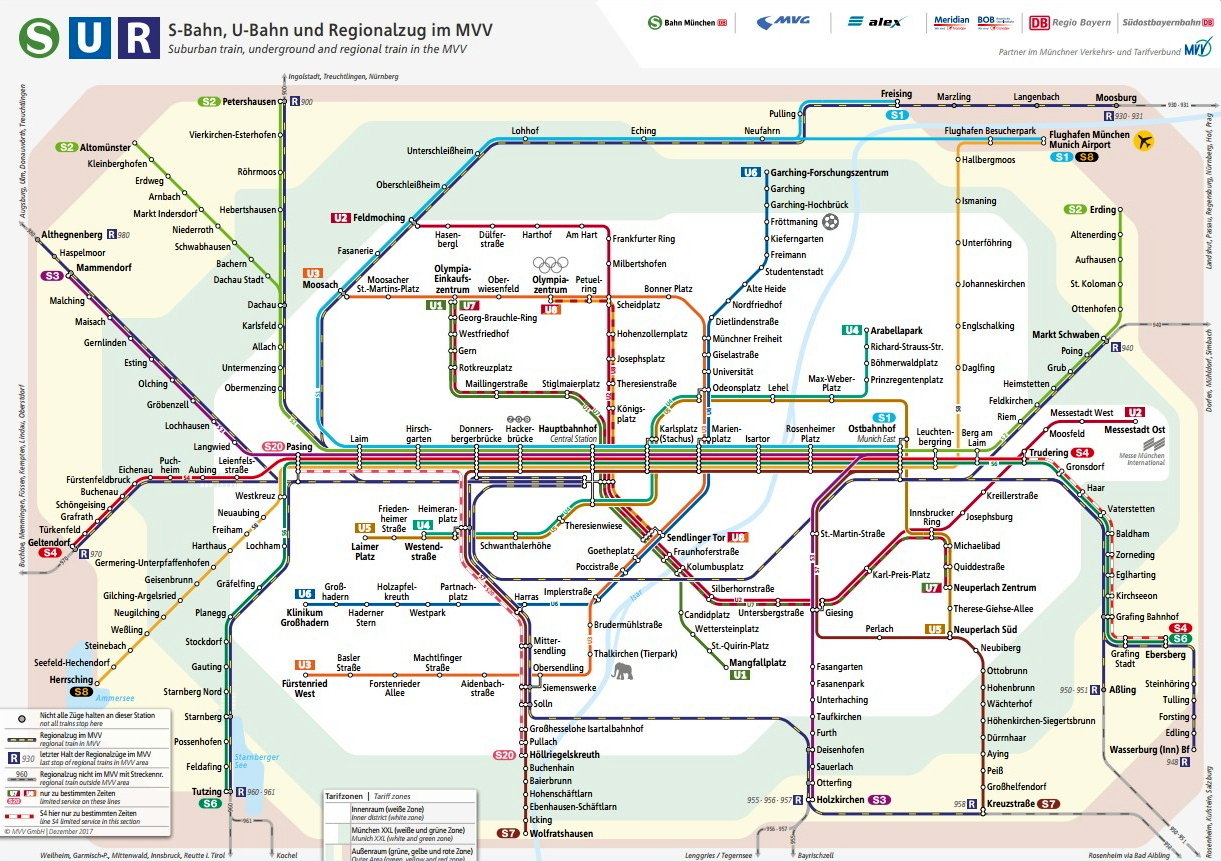
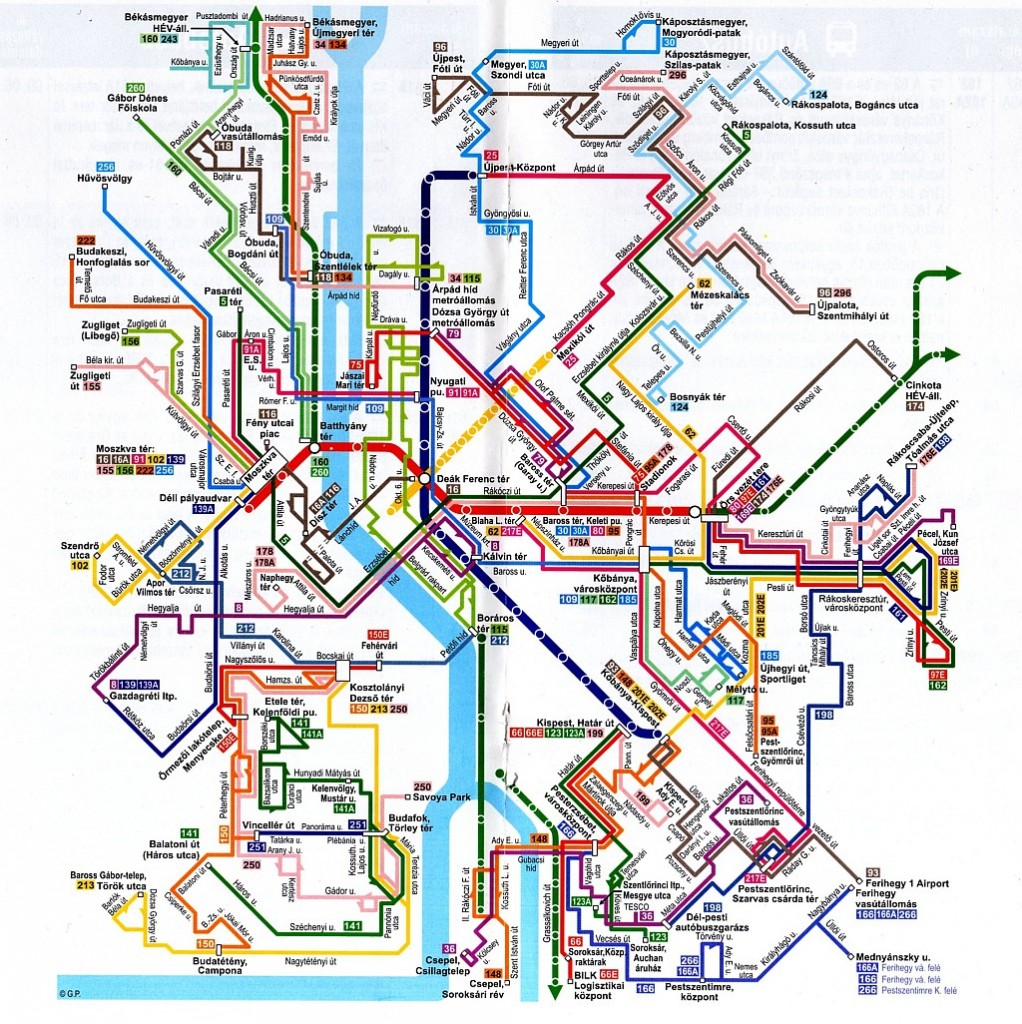
You must be joking. Have you seen the public transportation in Munich? Budapest? Berlin?

http://www.muenchen-touristeninformation.de/MVV-Schnellbahnn...

http://www.hungarybudapestguide.com/wp-content/uploads/detai...

https://www.s-bahn-berlin.de/pdf/VBB-Liniennetz.pdf

Post reply on HN