Live data from Hacker News

Acquiring absolute pitch in adulthood is difficult but possible

biorxiv.org

41–50 of 148 posts

Re: Acquiring absolute pitch in adulthood is difficult but possible

#41

Perfect pitch is overrated. In college as a music student with excellent relative pitch, I routinely outscored peer students with perfect pitch when taking classical ear training courses. Perfect pitch is more of a parlor trick. It's occasionally useful when trying to tune a stringed instrument by yourself, and distracting if your ensemble starts to drift off key while remaining in tune with each other. Also, trained…

Your comment is analogous to a colorblind person telling everyone how overrated red and green are. First, someone with "untrained" AP (I assume you mean no musical training) wouldn't be in a position where they'd be needing to transcribe a Bach chorale, would they? Any AP possessor with musical training--I am one--finds transcription trivially easy since there's only rhythm to figure out. While it can be momentarily…

Do you believe that lack of perfect pitch should be recognized as a disability? Do you believe that lack of perfect pitch should prevent someone from certain licensed professions? Do you believe that lack of perfect pitch is a safety concern in some circumstances?

Because the answer is "yes" for colorblindness. It's just a wildly overstated comparison. I mean, even tone-deaf people don't experience the kind of difficulties that people with colorblindness experience. You could just say that I could never entirely understand the benefits of having perfect pitch since I don't have it, and maybe that would be true, but I have literally never experienced a professional musical situation where I felt or thought, "Oh man, if only I had perfect pitch - I would have succeeded where I just failed." And this includes directing gigs, accompanying gigs, performance gigs, etc.

I'm occasionally wistful I don't have synesthesia just because that sounds actually expansive, but I don't pine for perfect pitch at all.
Re: Acquiring absolute pitch in adulthood is difficult but possible

#42
post #4

More interesting to me is the fact that many people with absolute pitch start to lose it in their 40s and 50s. This has happened to me too. What happens is that your pitch assessment often starts going sharp, so what you thought was a C was actually a B, say. For me the pitch assessment accuracy differs depending on the harmonic content of the sound: guitars and harmonicas are awful, but pianos and flutes etc. seem t…

So you have perfect pitch and does that equate to having a good quality singing voice (others enjoy listening to you)?

It is a weird phenomenon and I think songwriting is too .. like why do Melodies and lyrics (usually somewhat jumbled) I never heard before pop in my head? Where does that come from?

Re: Acquiring absolute pitch in adulthood is difficult but possible

#43
post #3

TLDR, what did they use to do the training, and is it available to the general public?

It was an unreleased progressive training program, with sections of immediate feedback, and sections with only feedback after a certain amount of questions.

The secret sauce is kinda a glissando between sections to try and throw off your pitch memory.

there are people working on recreating this in a web page. There are also people who argue this is not Perfect pitch, but just well trained relative pitch. It did fade after no training for 3 months IIRC.

There was a a different study that showed Depakote possibly aiding learning perfect pitch as an adult. Don't go find some Depakote and cram music theory, Depakote could kill you.

Re: Acquiring absolute pitch in adulthood is difficult but possible

#44

Perfect pitch is overrated. In college as a music student with excellent relative pitch, I routinely outscored peer students with perfect pitch when taking classical ear training courses. Perfect pitch is more of a parlor trick. It's occasionally useful when trying to tune a stringed instrument by yourself, and distracting if your ensemble starts to drift off key while remaining in tune with each other. Also, trained…

I agree. I was a music major long ago and at least as far as musical applications go, relative pitch is much more valuable. Hearing intervals and harmony is much more important for the performance of music.

Re: Acquiring absolute pitch in adulthood is difficult but possible

#45

Earlier quoted context omitted.

Your comment is analogous to a colorblind person telling everyone how overrated red and green are. First, someone with "untrained" AP (I assume you mean no musical training) wouldn't be in a position where they'd be needing to transcribe a Bach chorale, would they? Any AP possessor with musical training--I am one--finds transcription trivially easy since there's only rhythm to figure out. While it can be momentarily…

Color is overrated in a world where most are colorblind . Red means danger or stop because you have seen a lot of stop signs. In a world of colorblind people, stop sign colors are chosen by the colorblind, based on something like "is this a cheap metal" rather than design language (which no longer exists for color). Instead we would use reflectivity or something to indicate danger. As to whether or not the varying-co…

> Color is overrated in a world where most are colorblind.

That's speaking to the value in communication/collaboration.

The sensory experience itself would still have its own qualities even if other people are unable to appreciate them.

I went through a weird period of a few months in college when tones had a... character. I use that term rather than color because for some reason some of them were tied in with associations I had with the sound of people's voices. Not every pitch had this association, but recognizing the character let me identify the pitch.

The utility of this was certainly nothing astounding, but it was interesting to say the least. And it probably wasn't even absolute pitch.

And then, of course, there's the matter of utility that doesn't come from communication. Color vision doesn't just provide a field of aesthetic exploration, it actually lets people distinguish certain things more easily.

Re: Acquiring absolute pitch in adulthood is difficult but possible

#46

Earlier quoted context omitted.

Your comment is analogous to a colorblind person telling everyone how overrated red and green are. First, someone with "untrained" AP (I assume you mean no musical training) wouldn't be in a position where they'd be needing to transcribe a Bach chorale, would they? Any AP possessor with musical training--I am one--finds transcription trivially easy since there's only rhythm to figure out. While it can be momentarily…

Agreed. I had a special ear training class at Berklee for all the incoming freshman who aced placements, and if I recall correctly everyone in the class had perfect pitch. Transcribing was trivial across the board. I transcribed solos for jazz magazines as a side gig, and filled notebooks with solos in my personal practice. Without a doubt, relative pitch and learning theory are important skills too, but they aren't…

All of that is possible and frequently accomplished with relative pitch. I'm sure you don't disagree, but just for the benefit of other readers. Most of transcribing is recognizing intervals and rhythms, which does not require perfect pitch in the slightest. (If transcribing pitches were purely about recognizing pitches, then it would be maddeningly frustrating to transcribe a recording that is slowed down a few cents. But it can be done just as easily by someone with relative pitch, by focusing on intervals, key relations, and contextual memory.)

Re: Acquiring absolute pitch in adulthood is difficult but possible

#47
post #37

Earlier quoted context omitted.

> Your comment is analogous to a colorblind person telling everyone how overrated red and green are. Ooh, that is such an intriguing analogy. I think it's wrong. The analogy should be a colorblind person complaining that the ability to guess html hex color values is overrated for the purpose of measuring, analyzing, and describing how a combination of colors affects the mise en scene in a given film still. We must al…

In a lot of classical music, especially since 1900, pitch classes play a really fundamental role. When, say, G is a prominent pitch class for a while, and then I hear it come back a few minutes later, that lets me understand the structure of the piece better than if I didn't recognize it. So absolute pitch has a real use, and I don't think it's quite fair to put it on the level of "absolute hex color values". Of cour…

> When, say, G is a prominent pitch class for a while, and then I hear it come back a few minutes later, that lets me understand the structure of the piece better than if I didn't recognize it.

Give me a controlled example where the return of the prominence of pitch class G lets you understand the structure of a section of music.

Controlled example would mean:

* the orchestration used for the G is different at moment A and moment B, OR the piece is for a solo instrument. Otherwise you could be hearing a timbral connection and confusing it for a pitch class connection.

* the G at moment B is in a different octave. Otherwise you could be hearing a pitch connection and confusing it for a pitch class connection. (Esp. if you have perfect pitch.)

* the musical texture at moment A is different from moment B. Otherwise you could just be hearing a textural connection (e.g., big orchestral hit, moment where the woodwinds return, etc.) and confusing it for a pitch class connection.

* it's not a tonal piece of music. Otherwise you could be hearing the same or similar harmonic progression and confusing it with a pitch class connection.

* moment A is melodically dissimilar from moment B. Otherwise you could be hearing a melodic connection and confusing it with a pitch class connection.

I can't think of any musical moments that meet those constraints.

Re: Acquiring absolute pitch in adulthood is difficult but possible

#48
I think it's overly simplistic to group people into those who have perfect pitch and those who don't. Of course, I don't know if the article makes this claim, but I think a lot of people tend to view perfect pitch as a binary ability -- either you have it or you don't. But speaking personally, I have "sort of" perfect pitch (imperfect pitch? semi-perfect pitch?), by which I mean that I can sing and/or recognize the pitch of certain notes from memory, but not any arbitrary note, not under all circumstances, and not instantaneously. If I'm not right on the money, I'm usually at least within a semitone or two. I can do it reliably enough that I'm convinced it's not just a fluke when I get it right, but on the other hand it's not at all "perfect." Moreover, the recognition happens too slowly to be practical in real time; usually it involves audiating part of a song that I know has certain notes, and using them as reference pitches. Perhaps if I dedicated more time to it I could get it more accurate or faster, and maybe even develop proper perfect pitch.

All that being said, while having true perfect pitch would probably open up new ways to appreciate and understand the music I'm listening to, I think that relative pitch is a far more useful skill -- nigh essential for many genres.

Re: Acquiring absolute pitch in adulthood is difficult but possible

#50

Earlier quoted context omitted.

Your comment is analogous to a colorblind person telling everyone how overrated red and green are. First, someone with "untrained" AP (I assume you mean no musical training) wouldn't be in a position where they'd be needing to transcribe a Bach chorale, would they? Any AP possessor with musical training--I am one--finds transcription trivially easy since there's only rhythm to figure out. While it can be momentarily…

Do you believe that lack of perfect pitch should be recognized as a disability? Do you believe that lack of perfect pitch should prevent someone from certain licensed professions? Do you believe that lack of perfect pitch is a safety concern in some circumstances? Because the answer is "yes" for colorblindness. It's just a wildly overstated comparison. I mean, even tone-deaf people don't experience the kind of diffic…

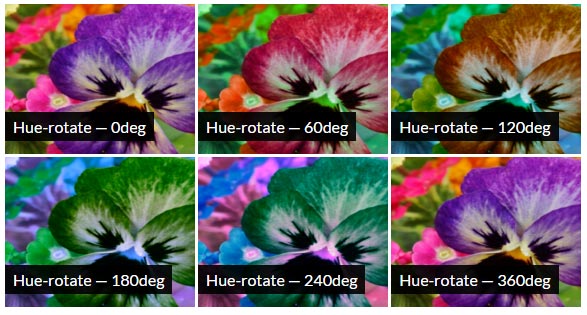
The comparison to colorblindness isn't precise: colorblind people don't have relative color perception. In terms of information content, over an entire song the information encoded in the scale is very small compared to the information encoded in the relative pitches of notes (in fact the ratio goes to 0 for long music). A grayscale image contains significantly less information, essentially a 2D chrominance array; the ratio of information is roughly constant and does not diminish for large images, or say a series of images (e.g. a grayscale movie). It would be more like applying unknown hue rotations [1] each time you look at an image.

[1] Example I found: https://cms-assets.tutsplus.com/uploads/users/1251/posts/259...

Post reply on HN