Live data from Hacker News

Life in the Spanish city that banned cars

theguardian.com

301–310 of 699 posts

Re: Life in the Spanish city that banned cars

#301
post #228

Earlier quoted context omitted.

There ARE some great suggestions in the article, namely underground parking, roundabouts instead of stop lights, and banning street parking. Now, to YOUR points: "Mass transit": Shared and claustrophobic space with other travelers. "Biking lanes": Requires exposure to the elements. Depending on where you live this is already a non-starter if you don't want to arrive at your destination drenched in sweat. "electro-sco…

Pontevedra mild climate? MediteWHAT? Please, take a map of Spain and comment again. Spain among Portugal is what you see when you cross over the Atlantic from the US. Pontevedra is in Galicia, northern Spain. Here it rains like UK, and even worse. No Sun except a very few weeks a year. Not all Spain is sunny, and not all the US is like California, Texas or Florida. You would freeze in Castille or Aragon in Winter. Yo…

I know where Pontevedra is....because I looked at the Wiki article and read all the climate data before I posted. ^_^

And where I live on a tropical island in Asia has 25% more rainfall (2000mm annually), annual daily mean temp is 9deg Celsius higher (with 29deg C average highs June - September), and 25% fewer hours of sunshine.

So yeah, Pontevedra's climate may not technically be Mediterranean by Koppen classification but it sure as Hell is "mild" compared to where I live.
Re: Life in the Spanish city that banned cars

#302

This may be shocking to people with an American upbringing, but cars (especially privately owned ones) just do not make sense going forward. Cities get bigger and denser, and wasting a big % of land on parking spaces, roads, intersections and accepting a horrible air quality (that reduces citizen life spans and health quality) and noise pollution just does not make any sense anymore. Carse are effective in less dense…

Here’s a picture comparing the amount of space required for cars:

https://www.bicycles.net.au/2012/09/cycling-promotion-fund-r...

Re: Life in the Spanish city that banned cars

#303
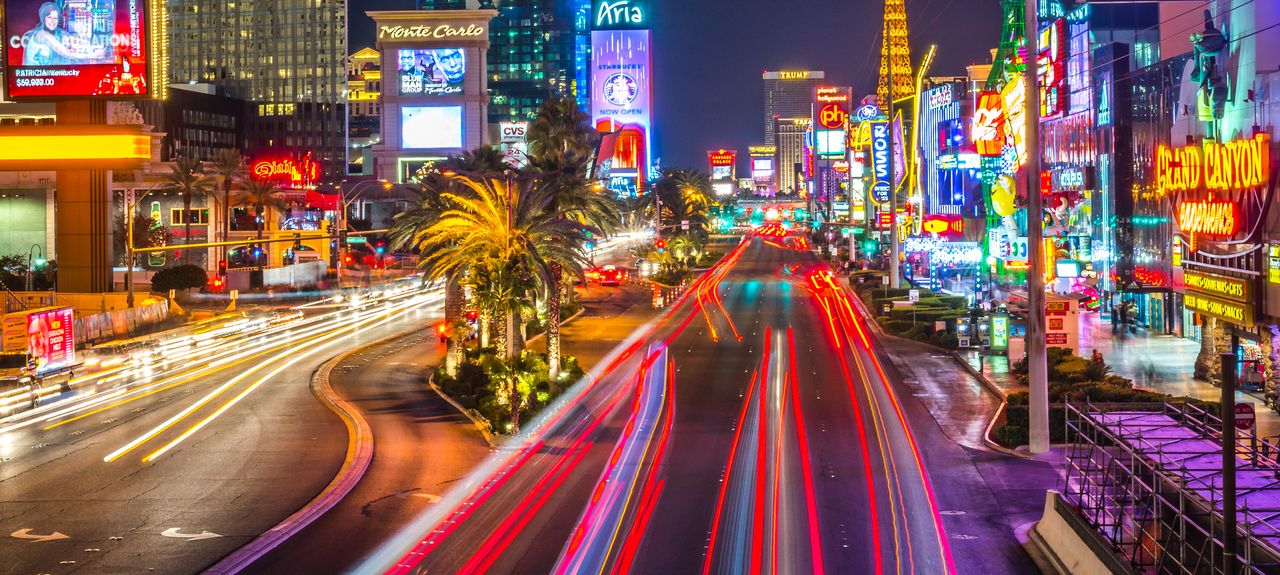
The Las Vegas Strip is the antithesis of this. It's probably the only place in the world where the main downtown area is also an 8 lane highway. It's so bad that you actually cannot cross the street there, and you have to get around by walking on raised walkways above the street. Uniquely terrible urban planning.

https://odis.homeaway.com/odis/destination/2ee03d5b-c981-44d...

https://upload.wikimedia.org/wikipedia/commons/thumb/1/15/La...

http://theworldisurban.com/wp-content/uploads/2011/05/Elevat...

Re: Life in the Spanish city that banned cars

#304

Not sure what your situation is but there are a fair number of options for people who are decent programmers to move to Europe permanently..

I'm a mathematician and I have done programming professionally but it just doesn’t interest me. My training in pure math got me focused on showing something can be done or that a solution exists. When I think of a software project I think of course it can be done and lose interest.

There are a zillion things that can go wrong in software development and problems arise that require creative solutions. That’s the engineering part I suppose. But I have no interest in it. I’m stuck being a teacher at a community college. It’d be great if my job, in its current form, could be found in Germany or Switzerland but I’m stuck where I’m at.

My wife is a physician and she’s not doing residency over again just to live in Europe.

Re: Life in the Spanish city that banned cars

#305

Earlier quoted context omitted.

Nobody drives a car in New York. Too much traffic.

You have also a good public transportation system in New York. There are many big cities with much worse traffic than NYC but there are simply no alternatives to cars.

I believe the poster was making a joke :P

Re: Life in the Spanish city that banned cars

#306
post #294

Earlier quoted context omitted.

> This may be shocking to people with an American upbringing, but cars (especially privately owned ones) just do not make sense going forward. You're really looking at this from a very narrow mindset. It isn't going into the city that a lot of Americans really want and need cars, it's heading out of the city. This may be shocking to people with a European upbringing, but when you have a vast country with lots of open…

There are several European countries with a lower population density than the US, and places like Norway and Finland are _much_ more sparsely populated https://en.wikipedia.org/wiki/List_of_countries_and_dependen...

That's not terribly significant. An average density for an entire nation says nothing about the spaces between population centers. There are national parks in the US that are bigger than entire European nations. Destinations that are more remote from American cities, than all of Europe.

Re: Life in the Spanish city that banned cars

#307

Raleigh converted Fayetteville Street to pedestrian only back in 1977. It ended up killing all of the businesses there. https://www.wral.com/news/local/story/163829/ The city reopened it to traffic, however, and "revitalized" the area, resulting in a booming downtown economy: https://www.metrojacksonville.com/article/2007-may-learning-... I love pedestrian districts in cities. Copenhagen comes to mind. However, pedes…

You could also make the argument that opening city centers to cars should be considered carefully, and that is also true. It just happens to be the current default almost everywhere.

Re: Life in the Spanish city that banned cars

#308
post #2

Pedestrianisation works well in European cities, especially small ones. It's quite common here in the UK, often there are strict time limits on when delivieries can be made, e.g. 6-8am when barriers are open to let vehicles in and out. However this model just does not work in the US, outside of very few places. US cities are designed for cars, and without major redevelopment everything's just too far apart - even wit…

> there are strict time limits on when delivieries can be made, e.g. 6-8am when barriers are open to let vehicles in and out. That is nuts. That means a plumber, electrician, home appliance deliveryman, mover, etc. can only handle one job requiring a vehicle per day. He will have to charge 3-4 times more for his services than someone working in an area where it's feasible to finish 3-4 jobs in a workday. The costs ar…

You're being unrealistic.

I live in a large apartment development in Manhattan that is pedestrian-friendly and decidedly vehicle-unfriendly. You can't drive a car to the front of my building. And yet it works, very well.

I moved in with my girlfriend recently. You know how that worked? The movers she hired drove as near as possible, and simply pushed her stuff on dollies the rest of the way to the building. No big deal. Yeah, it took a little bit longer, but nowhere near as bad as the 4-day move you're hyperbolically claiming. And that side of the move was actually better than the other side, since she was moving out of a fourth floor walkup. Even though the truck could park almost directly in front of that building, it turns out it's harder to carry stuff down many flights of stairs than it is to push it on wheels across a flat surface and then up an elevator.

I moved from another building within my complex, and I accomplished my entire move simply by pushing my stuff on a dolly, without even having to hire movers. I've never before had a vehicle-less move even be an option, but it was in this situation.

As for repairmen, you know how they work? They get around on bicycles. You can carry a surprising amount of stuff on a bicycle, including all the tools you'd need for >95% of repairs. The plumbers ride around on bikes with a toolbox, plungers, and a snake, for example. For appliance delivery, they use tiny little vehicles that are basically a pick-up truck version of a golf cart. These vehicles don't go fast and the drivers yield to pedestrians, and you see them on pedestrian paths (and don't feel unsafe about it).

Every problem that you're bringing up is already solved in the many different areas that are pedestrianized and prohibit vehicle traffic. It's a failure of imagination to think that these problems are unsolvable. When your city is dense enough, a plumber/electrician can easily support him/herself on just jobs that are within a 10 minute walking radius, with the tools that can be pushed on a handcart or fit on a bicycle. Vehicles aren't necessary. It's actually more efficient for these professions, because in the suburbs it's typical to drive for up to an hour to get to a jobsite! So much wasted time spent just getting somewhere!

Re: Life in the Spanish city that banned cars

#309

I don't know why this didn't occur to me but in San Juan Capistrano, CA, I enjoy that place so much with my kids because of the fairly large area where cars have to have very slow speed limit or no cars allowed at all and pure walking which was far better even. There is such freedom allowing your children to laugh and play and walk on their own pace without worrying they'll be run over and having to strictly hold the…

There is a gated neighborhood of large, well appointed homes near Rice University in Houston.* They open up every once in a while for tours, particularly at Christmas. More than once kids or adults raised there have mentioned being able to just play in the street as one of their fondest memories of the place. In car-centric Houston their experience is rare if not exactly unique.

*1 - https://en.wikipedia.org/wiki/Shadyside,_Houston

Re: Life in the Spanish city that banned cars

#310

I don't know why this didn't occur to me but in San Juan Capistrano, CA, I enjoy that place so much with my kids because of the fairly large area where cars have to have very slow speed limit or no cars allowed at all and pure walking which was far better even. There is such freedom allowing your children to laugh and play and walk on their own pace without worrying they'll be run over and having to strictly hold the…

Exactly. Walking with young kids is so stressful. All that kids want to do is run ahead, and I keep having to yell at them to stop, wait. You can never be at ease.

A city with fast cars running around is the least human-friendly environment that we have built on purpose.

People often complain about hostile or "anti-human" architecture [1], but those are silly details. The sad tragedy is building the whole city around the needs of cars.

[1] https://en.wikipedia.org/wiki/Hostile_architecture

Post reply on HN