I hope they get this all shaken out before the Japanese are allowed to develop or given nuclear weapons.
'Japan's millennium bug' ahead of Akihito's abdication
11–20 of 99 posts
Re: 'Japan's millennium bug' ahead of Akihito's abdication
#12How pervasive is the Japanese calendar in computing actually? I suppose most programs calculate all dates internally using UNIX timestamps or UTC and only convert that to Japanese dates for display purposes. Anybody has any experience with this?
At least train tickets show dates in Japanese era years.
Like this one for instance: https://blue-works.com/jprail/wp-content/uploads/2010/07/res...
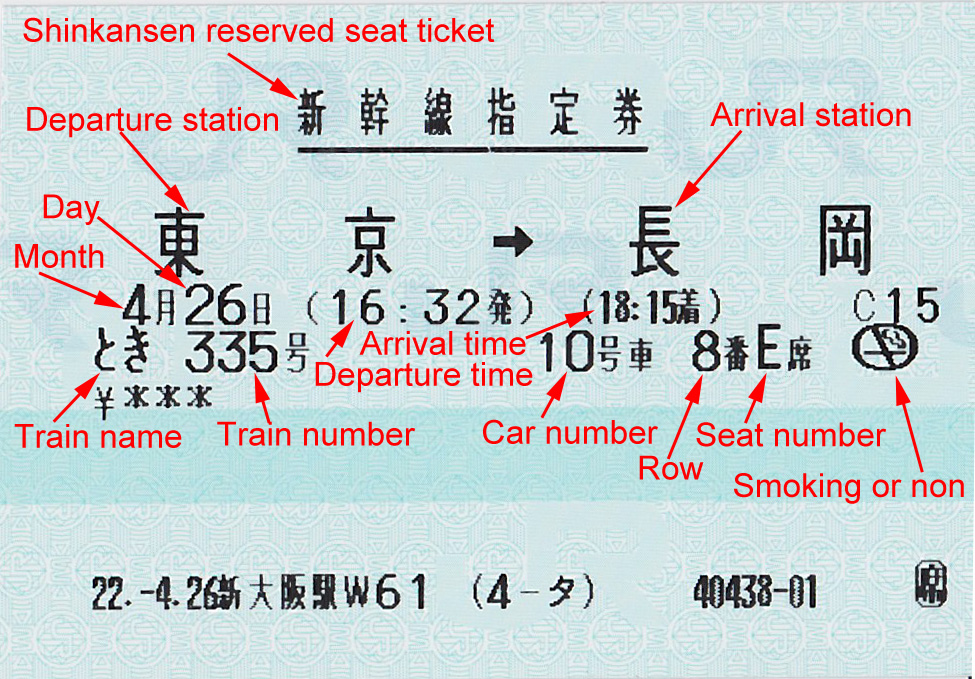
The date at the bottom left is April 26th of the year Heisei 22 (so 2010)
Re: 'Japan's millennium bug' ahead of Akihito's abdication
#13Why can't the Unicode consortium not reserve codepoints for the next 10-50 eras and simply wait with filling in how it should look and what to be called?
Re: 'Japan's millennium bug' ahead of Akihito's abdication
#14How pervasive is the Japanese calendar in computing actually? I suppose most programs calculate all dates internally using UNIX timestamps or UTC and only convert that to Japanese dates for display purposes. Anybody has any experience with this?
I've just been on a 3 week trip to Japan and didn't see traditional Japanese dates used anywhere except on museum exhibits. Train tickets, bus tickets, hotel check-in / out dates, credit card receipts, tickets for various attractions etc. all displayed the date in ISO-8601 format. It's interesting to ponder, but the traditional date format seems to have fallen out of use (probably with the advent of the computer era)…
If you are there to live rather than to tour you will find that the traditional date format is pervasive in daily life. Banking, legal documents, etc.
Re: 'Japan's millennium bug' ahead of Akihito's abdication
#15> For one, Akihito has been on the throne for almost the entirety of the information age, meaning that many systems have never had to deal with a switchover in era.
The writer must be 12. The last transition, in 1989, is squarely in the middle of the information age.
Re: 'Japan's millennium bug' ahead of Akihito's abdication
#16How pervasive is the Japanese calendar in computing actually? I suppose most programs calculate all dates internally using UNIX timestamps or UTC and only convert that to Japanese dates for display purposes. Anybody has any experience with this?
I've just been on a 3 week trip to Japan and didn't see traditional Japanese dates used anywhere except on museum exhibits. Train tickets, bus tickets, hotel check-in / out dates, credit card receipts, tickets for various attractions etc. all displayed the date in ISO-8601 format. It's interesting to ponder, but the traditional date format seems to have fallen out of use (probably with the advent of the computer era)…
Probably not with the tourist , though all my JR ticket I have are listed with traditional date though -- maybe they issued it with A.D because of you are tourist. Other tickets seems to be mixed though.
For example, of documents I have laying around my desk right now:
Alien card: A.D / Student card: A.D. / My number card (like US SSN): Traditional / Insurance card: Traditional / Water bill: Traditional / Electricity bill: Traditional (this one doesn't even tell you that it's traditional, it just say 30-07-xx) / Monthly health insurance bill: Traditional / Gas bill: A.D.
So it is pretty much in heavy use.
Re: 'Japan's millennium bug' ahead of Akihito's abdication
#17Why can't the Unicode consortium not reserve codepoints for the next 10-50 eras and simply wait with filling in how it should look and what to be called?
As jerf pointed out [0], you can do that but once you print that unknown symbol, the Unicode consortium can't really do much.
Also, you can't just say "well, next era begins on September 1st 2054, so let's write that in our date calculator" - precisely because you don't know when an era begins or ends before it's close.
Re: 'Japan's millennium bug' ahead of Akihito's abdication
#18How pervasive is the Japanese calendar in computing actually? I suppose most programs calculate all dates internally using UNIX timestamps or UTC and only convert that to Japanese dates for display purposes. Anybody has any experience with this?
I work on a large enterprise software product. We support Emperor dating (since the long gone legacy product from the late 1970s), and it is used, I just don't know how widely or for what reasons.
Re: 'Japan's millennium bug' ahead of Akihito's abdication
#19How pervasive is the Japanese calendar in computing actually? I suppose most programs calculate all dates internally using UNIX timestamps or UTC and only convert that to Japanese dates for display purposes. Anybody has any experience with this?
Yes, I have been doing software development in Japan for the past decade.
Of course you are right that no sane person would contemplate this calendar for any purpose other than user-facing display, and even then only where it is absolutely required.
But the insane WTF thing is that it does still seem to be widely required on any kind of financial document. Expense reports, salary statements, that kind of thing. All my banks use this format (and also SJIS text encoding when I download my data (T_T)...)
There are also lots of internal processes^W^W Excel spreadsheets in active use that expect these values so I've seen more than one program that converts 2013 to "H.25"... and it's literally impossible to represent a future date, since we don't know when the emperor might die, even if we have a projected abdication date.
I can't be too smug about it, since I'm American (miles and feet, anybody?) but it is... objectively non-optimal.
Re: 'Japan's millennium bug' ahead of Akihito's abdication
#20How pervasive is the Japanese calendar in computing actually? I suppose most programs calculate all dates internally using UNIX timestamps or UTC and only convert that to Japanese dates for display purposes. Anybody has any experience with this?
I've just been on a 3 week trip to Japan and didn't see traditional Japanese dates used anywhere except on museum exhibits. Train tickets, bus tickets, hotel check-in / out dates, credit card receipts, tickets for various attractions etc. all displayed the date in ISO-8601 format. It's interesting to ponder, but the traditional date format seems to have fallen out of use (probably with the advent of the computer era)…
I lived in japan for a few months and all the dates for the immigration, housing, etc... in official papers had to be written in the traditional format.