Live data from Hacker News

Ok-Cancel versus Cancel-Ok

factorio.com

31–40 of 286 posts

Re: Ok-Cancel versus Cancel-Ok

#31

Going to the right seems natural to progress, but is that because English is left to right? If a language goes up to down, do their dialog boxes proceed downward?

Apple Human Interface Guidelines do indeed recommend the "OK" type buttons on the left for right-to-left texts (and put the menus on your mobile apps on the right instead of the left, etc). Computers do not generally use vertical text for localization, for example, Chinese and Japanese are left-to-right as far as the computer is concerned. (This doesn't apply in all cases just to the way UIs are localized. You can still make text vertical, for example, see https://www.w3.org/TR/css-writing-modes-3/)
Re: Ok-Cancel versus Cancel-Ok

#32

Earlier quoted context omitted.

Not really, Ok can be a verb. You can “Ok” a change.

"Ok" for a change (that's described in the body of the dialog's text) is... okay, I suppose. But it's better to mirror the action verb for your confirmation button, because users don't necessarily read the text you present them with. So, instead of this: Delete xyz.jpg? -------------------------- The file 'xyz.jpg' will be permanently deleted. -------------------------- [ OK ] [ Cancel ] You have: Delete xyz.jpg? ---…

Yes, precisely. The worst UI I've ever seen was:

"Cancel this action?" "Yes" "Cancel"

Seriously?!

Re: Ok-Cancel versus Cancel-Ok

#33

HN folks will appreciate the entire Factorio blog. They are super open about the design of their game and it's full of micro-postmortems. https://www.factorio.com/blog/ Also, if you're reading this, you are in a demographic that is likely to absolutely love Factorio. Go buy it, it's 20 eur/usd, you won't regret it. Some call it "Programming: The Game".

> Some call it "Programming: The Game". This is actually why I haven't bought it (yet). When I have the urge to program something, I think I'd rather put that towards building something real than playing Factorio.

I usually agree, but while it certainly feels like programming it does so in an entirely theoretical environment where both concurrency and parallelism is nearly infinite. I think that makes it feel different enough.

Re: Ok-Cancel versus Cancel-Ok

#34
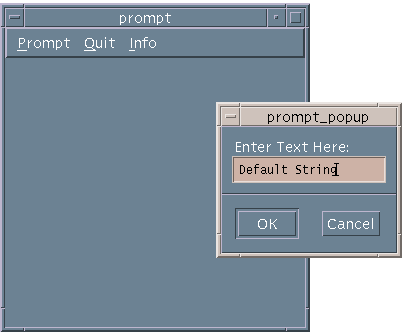
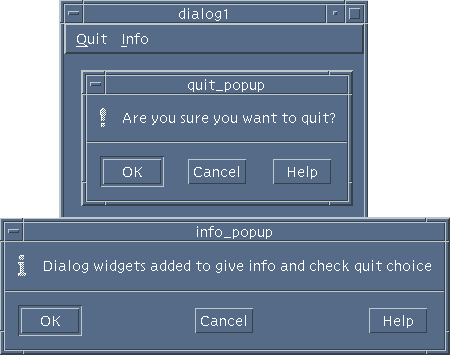
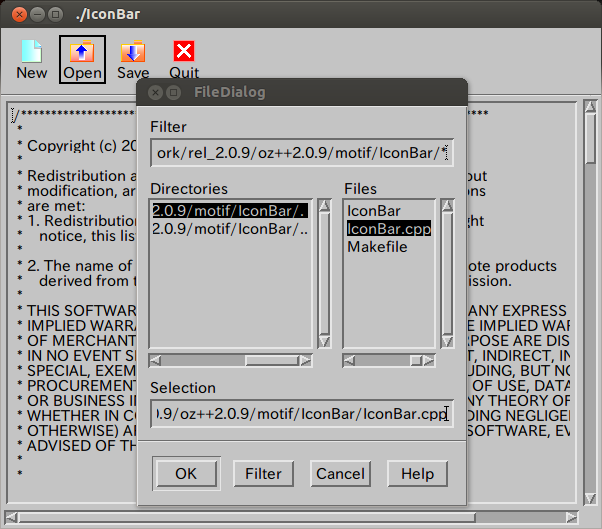
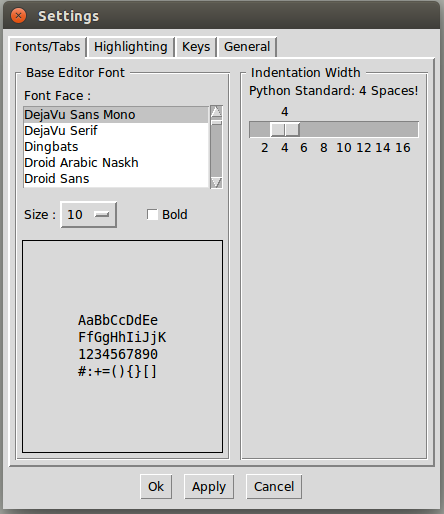
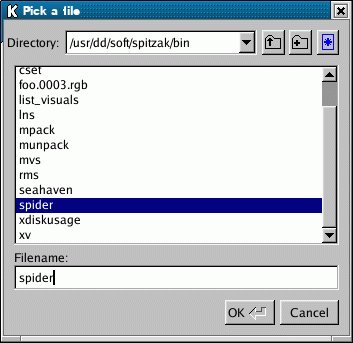
> But little I knew, that this is actually specific to windows, and on Linux or macOS, the order is reversed

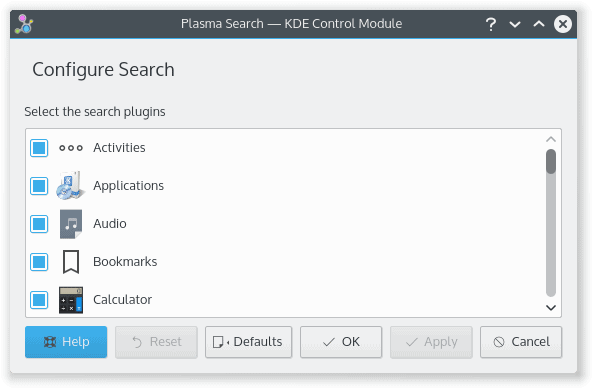
Actually on Linux it depends on the toolkit and/or environment you are using and in this case it seems that GNOME/GTK is the odd one out. After doing some search, it looks like that every other toolkit and environment uses OK -> Cancel:

http://ocsmag.com/wp-content/uploads/2015/02/plasma-krunner-... (KDE)

https://docs.kde.org/trunk5/en/kdeaccessibility/kmouth/kmout... (KDE)

https://api.kde.org/4.x-api/kdelibs-apidocs/kdeui/html/kdial... (KDE)

https://www.sao.ru/hq/sts/linux/book/xbook_marshall/prompt.g... (Motif)

https://www.sao.ru/hq/sts/linux/book/xbook_marshall/dialog1.... (Motif)

http://northstar-www.dartmouth.edu/doc/idl/html_6.2/images/m... (Motif)

http://www.antillia.com/oz++/images/IconBar.png (Motif)

https://tkdocs.com/images/idleprefs_l.png (Tk)

http://zetcode.com/img/gui/tkinter/colorchooser.png (Tk)

http://www.fltk.org/doc-2.0/html/filechooser.gif (Fltk)

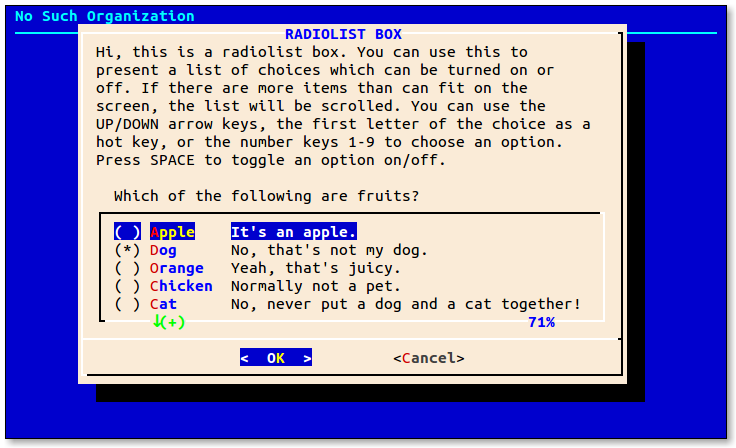
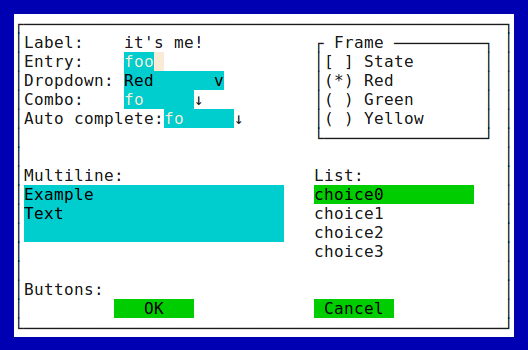
Even on TUIs/Console the order tends to be OK -> Cancel:

http://linuxcommand.org/images/adventure_dialog-radiolist.pn... (dialog)

https://i.imgur.com/ruW7AQE.png (Free Vision)

https://raw.githubusercontent.com/pfalcon/picotui/master/pic... (picotui)

Also FWIW in my own programs i am always going OK -> Cancel since it feels more natural.

Re: Ok-Cancel versus Cancel-Ok

#35
> But little I knew, that this is actually specific to windows, and on Linux or macOS, the order is reversed...

Did anybody else pick this up? The person has only ever seen Windows. That’s extremely limiting.

A later comment talks about how Microsoft designed things... one of the big differences between Mac and (DOS and early Windows) was that Mac developers tended to use the Apple tool kit and design guidelines, but the other platform devs tended to inventvtheir own and go their own way — being deliberately different.

I taught computing in the early 1990s around the transition from DOS to Windows 3.1 and on a Mac if you learned to print in one app you had it right for all others. With DOS each app was a completely different set of key presses (looking at WordPerfect and Lotus 123). Windows standardised this but it took a while for devs to catch on that consistency with other apps is good practice

Re: Ok-Cancel versus Cancel-Ok

#36

This has been a debate for as long as I've been a UX designer (mid '90s), and probably much longer. Ultimately, the answer about this UX style is very much the same as a question about writing style—there's no objectively right answer, but you have to be consistent. For example, you can pick up any number of style books from Strunk & White to the Chicago Manual of Style and get different "right" answers about writing…

> So the answer from this veteran UX designer would be: Use whichever placement your users are going to be the most familiar with, but whichever you choose, be 100% consistent with the choice you make.

Not only that, but make the "OK" choice standout with a different color. If the "default" option is brighter than the rest, your eyes will most likely gravitate towards it first, regardless of the order of the buttons.

Re: Ok-Cancel versus Cancel-Ok

#37
post #20

HN folks will appreciate the entire Factorio blog. They are super open about the design of their game and it's full of micro-postmortems. https://www.factorio.com/blog/ Also, if you're reading this, you are in a demographic that is likely to absolutely love Factorio. Go buy it, it's 20 eur/usd, you won't regret it. Some call it "Programming: The Game".

I was surprised at the minimum requirements. I don't know if I'm not up to date with current games, but from the style of it I thought it would be much lighter.

I haven't looked at them, but anything slightly modern should do. My laptop (5 years old), the desktops in school (2-3 years old), my girlfriend's laptop (3-4 years old), my cousin's laptop (another girl with a not-so-beefy laptop), and my brother's laptop all run it fine... Most of those don't even have dedicated GPU.

Sure, once you go megabase scale, after a few hundred hours of playing, most hardware will lag a little. But at that point there are millions of objects the game has to track every loop, there isn't terribly much that can be done about it. The game doesn't aggregate like OpenTTD, where the number of passengers at a train stop is just a number. Because of the way it works, every piece of iron ore in a train station in Factorio is a separate object existing somewhere. (Though they do some tricks to abstract that a bit as well, see their belt compression blog posts.)

Re: Ok-Cancel versus Cancel-Ok

#38

This has been a debate for as long as I've been a UX designer (mid '90s), and probably much longer. Ultimately, the answer about this UX style is very much the same as a question about writing style—there's no objectively right answer, but you have to be consistent. For example, you can pick up any number of style books from Strunk & White to the Chicago Manual of Style and get different "right" answers about writing…

Okay/Confirm/Continue on the right is easier to hit with the mouse for me since it is in the corner of the window.

Re: Ok-Cancel versus Cancel-Ok

#39
post #20

HN folks will appreciate the entire Factorio blog. They are super open about the design of their game and it's full of micro-postmortems. https://www.factorio.com/blog/ Also, if you're reading this, you are in a demographic that is likely to absolutely love Factorio. Go buy it, it's 20 eur/usd, you won't regret it. Some call it "Programming: The Game".

I was surprised at the minimum requirements. I don't know if I'm not up to date with current games, but from the style of it I thought it would be much lighter.

The facilities that you create in the game can be quite large and complex. These facilities can be processing and tracking maybe tens of thousands of different individual items. There’s a lot of stimulation workload when you reach large scale.

Unlike in a lot of games where the computational complexity is all graphics-oriented and done in the GPU, these computations are largely all CPU.

Modern laptops should generally be fine though.

Re: Ok-Cancel versus Cancel-Ok

#40

Earlier quoted context omitted.

"Ok" for a change (that's described in the body of the dialog's text) is... okay, I suppose. But it's better to mirror the action verb for your confirmation button, because users don't necessarily read the text you present them with. So, instead of this: Delete xyz.jpg? -------------------------- The file 'xyz.jpg' will be permanently deleted. -------------------------- [ OK ] [ Cancel ] You have: Delete xyz.jpg? ---…

Yes, precisely. The worst UI I've ever seen was: "Cancel this action?" "Yes" "Cancel" Seriously?!

If you get lucky, it has a window close button on the right top as a safe way out. If you're unlucky... better have that power cable in reach.
Post reply on HN