Maybe this is a good time to plug PICO-8 which describes itself as a "fantasy console for making, sharing and playing tiny games and other computer programs." https://www.lexaloffle.com/pico-8.php I don't even know the difference between the two programs, but someone interested in TIC might also be interested in PICO.
They are conceptually very similar and both obviously inspired by the old CHIP-8. TIC-80 is a bit more 'powerful' in that it's a bit higher resolution with double the sprite count. The most substantial differences: >PICO-8 has its own BASIC-like language >TIC-80 is programmed in Lua or JS > >PICO-8 is commercial software, costs $15 >TIC-80 is open source
TIC-80, a fantasy computer to learn programming
11–20 of 75 posts
Re: TIC-80, a fantasy computer to learn programming
#12I love the way he thinks and distills a design to give it so much character. He does lots of retro hardware re-designs too, which are singularly cool. I bet he'd have a blast playing with TIC-80.
Re: TIC-80, a fantasy computer to learn programming
#13I've played around with the TIC-80 and I gotta say that the development environment is something that is enjoyable for small projects but larger projects are a headache.
Re: TIC-80, a fantasy computer to learn programming
#14Maybe this is a good time to plug PICO-8 which describes itself as a "fantasy console for making, sharing and playing tiny games and other computer programs." https://www.lexaloffle.com/pico-8.php I don't even know the difference between the two programs, but someone interested in TIC might also be interested in PICO.
The PICO-8 is where the current trend for fantasy consoles began. There's a growing number of them (I'm making one myself). They all have slightly different areas of focus. Some are scripting language based, some emulate CPUs. TIC-80 programs are "64KB of Lua or Moonscript or JavaScript". My own is 8-bit AVR (128k rom, 64k ram). Z80 seems a popular base as well.
Re: TIC-80, a fantasy computer to learn programming
#15Maybe this is a good time to plug PICO-8 which describes itself as a "fantasy console for making, sharing and playing tiny games and other computer programs." https://www.lexaloffle.com/pico-8.php I don't even know the difference between the two programs, but someone interested in TIC might also be interested in PICO.
The PICO-8 is where the current trend for fantasy consoles began. There's a growing number of them (I'm making one myself). They all have slightly different areas of focus. Some are scripting language based, some emulate CPUs. TIC-80 programs are "64KB of Lua or Moonscript or JavaScript". My own is 8-bit AVR (128k rom, 64k ram). Z80 seems a popular base as well.
Re: TIC-80, a fantasy computer to learn programming
#16Maybe this is a good time to plug PICO-8 which describes itself as a "fantasy console for making, sharing and playing tiny games and other computer programs." https://www.lexaloffle.com/pico-8.php I don't even know the difference between the two programs, but someone interested in TIC might also be interested in PICO.
They are conceptually very similar and both obviously inspired by the old CHIP-8. TIC-80 is a bit more 'powerful' in that it's a bit higher resolution with double the sprite count. The most substantial differences: >PICO-8 has its own BASIC-like language >TIC-80 is programmed in Lua or JS > >PICO-8 is commercial software, costs $15 >TIC-80 is open source
Re: TIC-80, a fantasy computer to learn programming
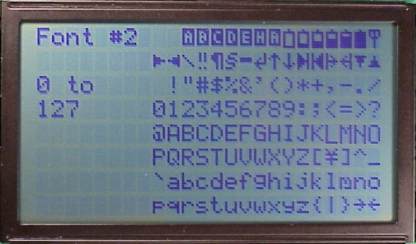
#17The programming system looks really interesting, but that font is super annoying.
The font is awesome for the first minute or two, but yeah, hard to work with after that.
https://int10h.org/oldschool-pc-fonts/fontlist/
Edit: it actually looks like a 5x7, in which case the best font would probably be something like the 5x7 a lot of character LCDs use: https://www.pjrc.com/mp3/lcdfont2a.jpg
Re: TIC-80, a fantasy computer to learn programming
#18Maybe this is a good time to plug PICO-8 which describes itself as a "fantasy console for making, sharing and playing tiny games and other computer programs." https://www.lexaloffle.com/pico-8.php I don't even know the difference between the two programs, but someone interested in TIC might also be interested in PICO.
Re: TIC-80, a fantasy computer to learn programming
#19Earlier quoted context omitted.
The font is awesome for the first minute or two, but yeah, hard to work with after that.
Indeed, for an 8x8 pixel font one can't really go wrong with something more similar to what was used in the early microcomputers: https://int10h.org/oldschool-pc-fonts/fontlist/ Edit: it actually looks like a 5x7, in which case the best font would probably be something like the 5x7 a lot of character LCDs use: https://www.pjrc.com/mp3/lcdfont2a.jpg
Re: TIC-80, a fantasy computer to learn programming
#20Maybe this is a good time to plug PICO-8 which describes itself as a "fantasy console for making, sharing and playing tiny games and other computer programs." https://www.lexaloffle.com/pico-8.php I don't even know the difference between the two programs, but someone interested in TIC might also be interested in PICO.
They are conceptually very similar and both obviously inspired by the old CHIP-8. TIC-80 is a bit more 'powerful' in that it's a bit higher resolution with double the sprite count. The most substantial differences: >PICO-8 has its own BASIC-like language >TIC-80 is programmed in Lua or JS > >PICO-8 is commercial software, costs $15 >TIC-80 is open source
> The harsh limitations of PICO-8 are carefully chosen to be fun to work with, encourage small but expressive designs and hopefully to give PICO-8 cartridges their own particular look and feel.
It can be a little frustrating at first, but if you focus on the other important elements of a good game it can be really satisfying.
In addition, there are some people doing some very cool stuff really pushing that limit as far as possible.
- https://twitter.com/paloblancogames/status/97765346516502528...
- https://hackernoon.com/pico-8-lighting-part-1-thin-dark-line...
Just to cherry pick a few. Personally, I like the restraints.
To add to the others, Pico-8 definitely uses a modified version of Lua 5.1/5.2.