Live data from Hacker News

Notes on Resonance

worrydream.com

31–40 of 42 posts

Re: Notes on Resonance

#31
post #30

Hah, when I skimmed this all I thought was "neat visualization." Then I came to the comments... It must be a real high as an author when you see your site is getting a flood of traffic from hacker news - then a hell of a crash when you check it out and all the comments are torching your work.

I don't think you can be a successful and creative person if you are always at the whims of random internet commenters.

Oftentimes, commenters are aimless cynics - this is especially common in things related to art (where nobody is really more right than anybody else) and business (where anybody who really knows what's going on would be better served by taking action themselves.) When it comes to centuries-old science you're either right or you're wrong, and there's no place for very convincing, very beautiful presentations that are wrong.
Re: Notes on Resonance

#32

I strongly suspect that the article is allegorical. That it's describing the resonance between people, using waveforms as a metaphor. If it were just a technical article, the last step — where you bring the two signals back into phase with each other — would be pointless and redundant. But if the true meaning is outside the mechanistic / technical, then that last step has tremendous purpose. Bret's background is in e…

[deleted]

Re: Notes on Resonance

#33
There are contexts in which multiplying two signals make sense. Others have mentioned electronic mixers like the ones used in radio modulators / demodulators. There are other contexts in which adding makes sense, for example when determining the signal received at a microphone when multiple people are talking. Or the signal received by an antenna when multiple transmitters are transmitting.

Bret describes a "local signal" and a "signal received from a distant source." I think most people (non electrical engineers, anyway) would imagine the local source as someone speaking into a microphone, and the distant source as someone shouting from across the room. In this scenario, we should add the signals, and everything that follows is incorrect.

But to an electrical engineer, the "local signal" could be a local oscillator, and the "distant signal" could be the received signal at the antenna. In this case, we feed both signals into an electronic mixer, and multiplying is the correct way to think about it.

I know Bret is really big on abstractions, but the context actually matters here. You might be able to abstract away some of the physical parts (microphone, antenna, demodulator, etc.), but you can't just skip over additive vs multiplicative contexts.

Re: Notes on Resonance

#34
post #27
post #19

Earlier quoted context omitted.

> it is plain wrong > Not sure what is meant Which is it? :-) As I interpret it, this article is not a scientific description of a particular physical system, but a metaphor. That said, it does make sense in the signal domain. Consider electrical and optical resonance. It gets more interesting when the components are complex-valued.

It's the first one :) This page is more about constructive interference than it is about resonance. Maybe that's what you are thinking about also?

So you’re saying the page is simply incorrect and hints at no interesting ideas?

I see the world as composed of interconnected entities which metaphorically influence and resonate with each other, and there is a lesson in the creation of (metaphorical) power by the closer synchronization of these entities.

I extrapolate the implications of this as literally revealing a path leading to world peace.

In sum, I enjoy thought-provoking interpretations way more than thought-restricting interpretations.

Re: Notes on Resonance

#35
This is resonance:

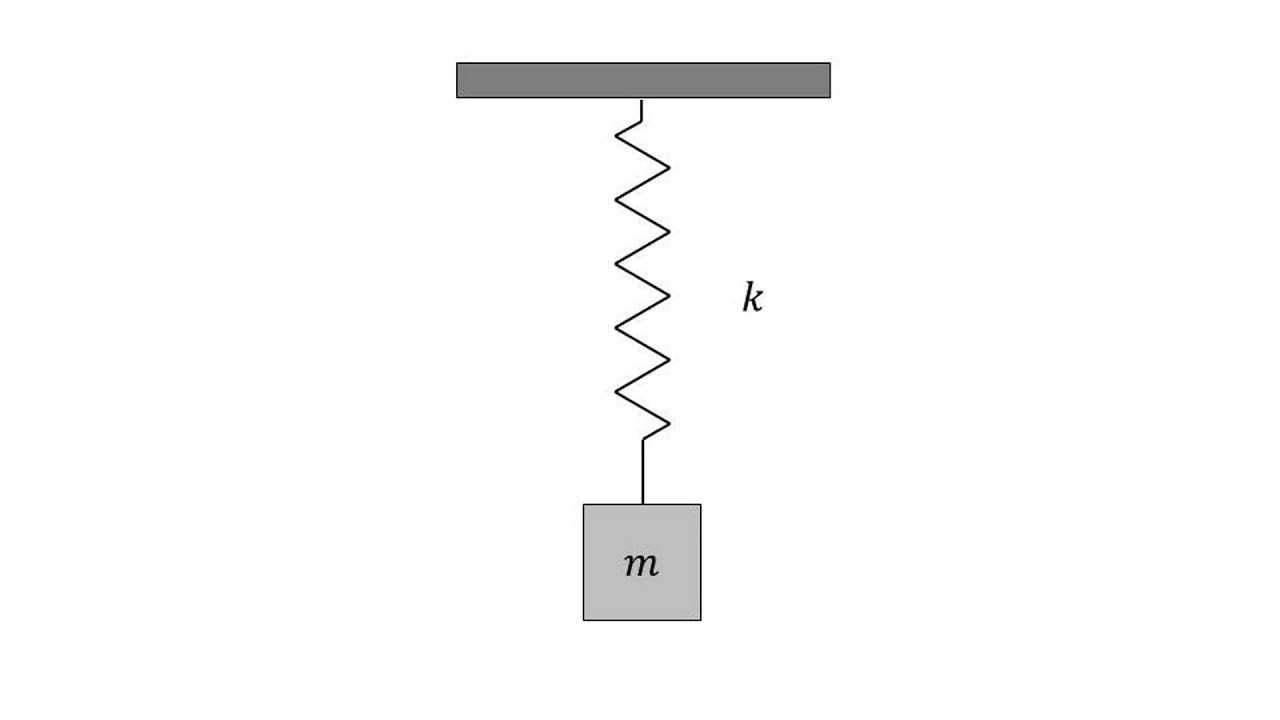
Imagine an system composed of a mass hanging from a spring, like this [1]. If you pull down the mass and release, the mass will move up and down (oscillate) at a set rate (the system's natural frequency). No matter how far you pull down the mass before release (the amplitude), the system will always oscillate at the same frequency.

Now, imagine you start pushing on the mass (applying forces) while it is in motion. If you were to push up on the mass while it is traveling down, you would decrease the distance the mass would move on subsequent oscillations (damping the amplitude). But if you were to push up on the mass as it travels up, you would be increasing the amplitude of oscillation.

That is what we call resonance.

[1]: https://i.ytimg.com/vi/lZPtFDXYQRU/maxresdefault.jpg

Re: Notes on Resonance

#36

Hah, when I skimmed this all I thought was "neat visualization." Then I came to the comments... It must be a real high as an author when you see your site is getting a flood of traffic from hacker news - then a hell of a crash when you check it out and all the comments are torching your work.

HN commenters have been highly favorable to Bret's work over the years, though it might not feel that way because a small portion of negative comments typically makes a deeper impression than large blocks of praise.

This submission is a special case because there's a controversy around a factual question and the article itself doesn't disambiguate it. No internet forum could resist being triggered in that case. Fortunately it doesn't happen often, and certainly not when discussing Bret Victor articles.

Re: Notes on Resonance

#37
I was hoping this was going to lead into a clear explanation of how a phased-lock loop works. Or a superheterodyne receiver. Or how periodic devices with almost the same frequency and a little coupling fall into synchronization.

But no.

Re: Notes on Resonance

#38
post #34
post #27

Earlier quoted context omitted.

It's the first one :) This page is more about constructive interference than it is about resonance. Maybe that's what you are thinking about also?

So you’re saying the page is simply incorrect and hints at no interesting ideas? I see the world as composed of interconnected entities which metaphorically influence and resonate with each other, and there is a lesson in the creation of (metaphorical) power by the closer synchronization of these entities. I extrapolate the implications of this as literally revealing a path leading to world peace. In sum, I enjoy tho…

It was never my intention to hate or shut out any possible metaphorical ideas.

I first heard of Bret couple times already in a very favourable light and he's on my read todo list.

The thing is that I have one very specific definition of resonance in my mind based on my line of work. Still I do believe it's always good to be open to different interpretations ...

Re: Notes on Resonance

#39
post #34
post #27

Earlier quoted context omitted.

It's the first one :) This page is more about constructive interference than it is about resonance. Maybe that's what you are thinking about also?

So you’re saying the page is simply incorrect and hints at no interesting ideas? I see the world as composed of interconnected entities which metaphorically influence and resonate with each other, and there is a lesson in the creation of (metaphorical) power by the closer synchronization of these entities. I extrapolate the implications of this as literally revealing a path leading to world peace. In sum, I enjoy tho…

>I see the world as composed of interconnected entities which metaphorically influence and resonate with each other, and there is a lesson in the creation of (metaphorical) power by the closer synchronization of these entities.

Well, half of Sedona residents would agree. But that doesn't describe anything specific of the physical world that a post on physics (as the post appears to intend to be) would cover.

Re: Notes on Resonance

#40
I love the visuals, but the problem is in the first sentence: "two sources of excitation." That's not it at all.

If this were remotely true, then when I synced the oscillators on my synthesizer, the volume level would grow uncontrollably. But of course what actually happens is that the amplitude (approximately) doubles.

The problem is that the diagrams do not show what resonance actually is, but only what happens then the frequency of an excitation source matches the resonant frequency of a receiving medium, and in addition when the energy input exceeds the damping effect of the medium.

Nevertheless, it's still a great visual, provided the explanation is corrected.

Post reply on HN