Live data from Hacker News

Microsoft MakeCode

makecode.com

71–80 of 94 posts

Re: Microsoft MakeCode

#71
post #60

Earlier quoted context omitted.

> spending months looking for the perfect candidate that would be willing to work at the misery that want to pay. That's what I don't understand. These companies completely forget the law of supply and demand when it comes to hiring. They keep complaining they can't find anyone yet the salary they are offering stays the same. I'll bet that if you double or triple what you're paying that shortage you're complaining ab…

If the salary stays the same it's because that is the value having someone in that position produces for the company. Paying your employees more than the value they produce is a quick was to bankruptcy.

Then maybe you should draw the conclusion that your company no longer has a valid business case.

Re: Microsoft MakeCode

#72
post #67
post #45

Earlier quoted context omitted.

This isn't the only reason. It's obvious that coding is becoming a skill on par with math for its utility in the modern world. If more people understand the fundamentals of coding, it will completely change the user interfaces and sophistication of applications in the future. People will be able to code up simple features and behaviours they need, for example.

I somewhat agree both with you and PP. But > It's obvious that coding is becoming a skill on par with math for its utility in the modern world. I am not sure it's obvious, sadly. I feel like having a programming environment on your computer is similar to having a workshop at home. So you could repair and build many physical things yourself. I can imagine an alternate reality where most people have workshops in their…

I work in civil engineering and literally every application used here comes with a very powerful scripting environment that could make just about everybody's jobs a lot easier if only they felt comfortable using them. Programming isn't just for programmers, but useful for everybody who has to use a computer as any a part of their job (which is verging on everybody).

Re: Microsoft MakeCode

#73
post #25

Earlier quoted context omitted.

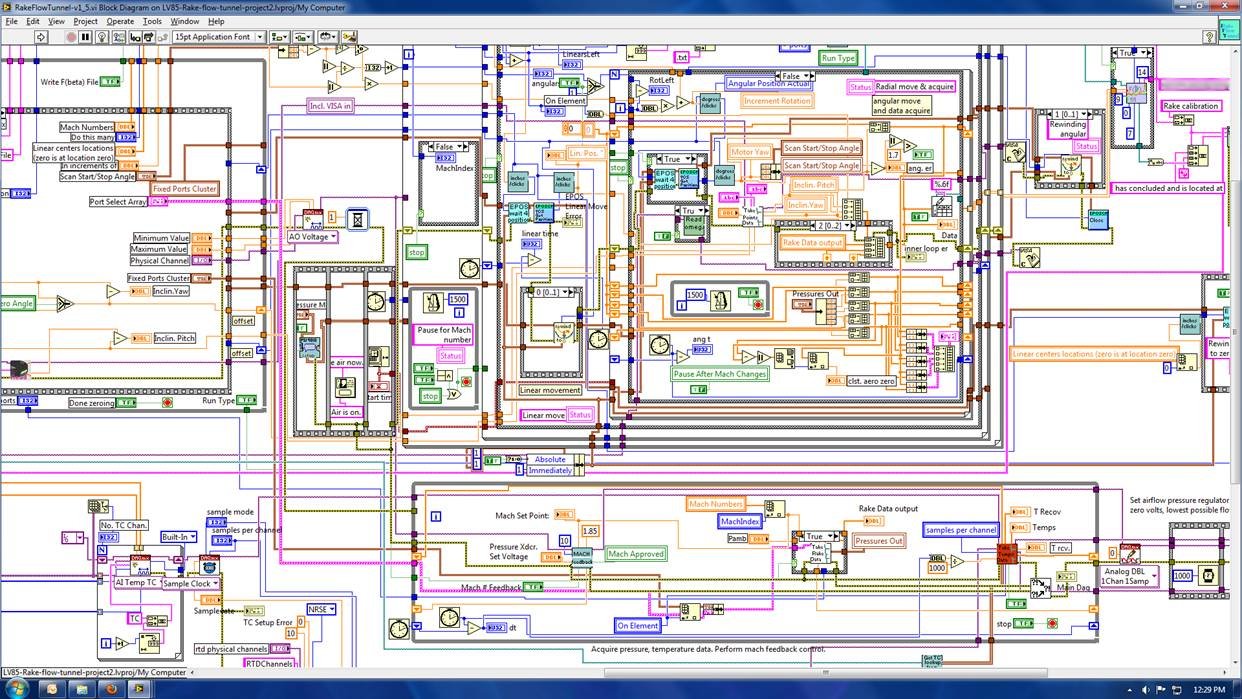
Visual programming is also very popular among engineers. All kinds of test, automation, are monitoring systems are built using LabVIEW.

I wonder at this point whether the causality isn't reversed. I.e. it's not LabVIEW that's popular because visual programming works for engineering; it's engineers doing visual programming because LabVIEW is the industry-standard fad, stuck in the self-reinforcing loop of universities teaching it because companies use it, and companies using it because potential candidates all know it.

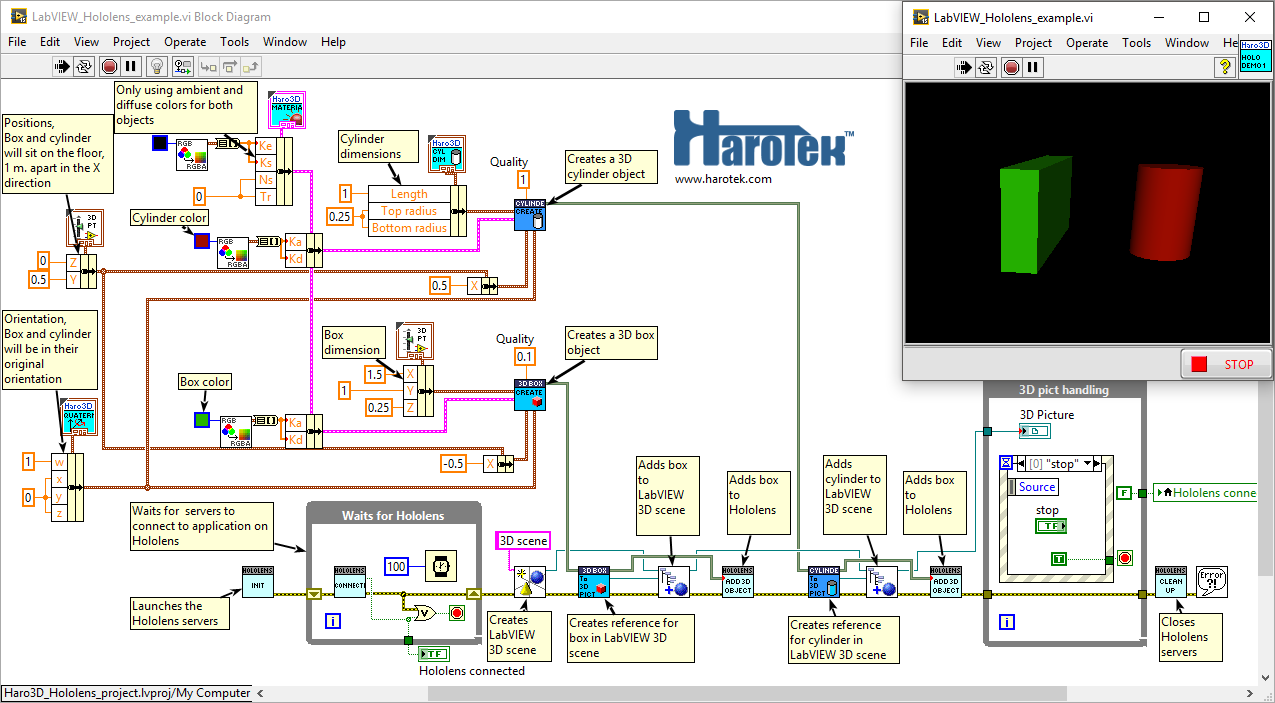
As a software architect (current title, but I had a technical education, "electrical/mechanical", incl. technical drawing, lab work, metal work, decades ago, before studying CS), who prefers text most of the time I still can see the appeal of something like this (All links lead to pictures):

- http://forums.ni.com/legacyfs/online/202594_Hololens_LabVIEW...

- http://sine.ni.com/cms/images/casestudies/a14_02.jpg?size

- https://m.eet.com/content/images/edn/LabVIEW-NXG_editor_1920...

Even this is not any worse than a complex text-based software project, you can zoom to the part that you want to look at in detail, just like you navigate between modules/classes/code files:

- http://www.ni.com/cms/images/devzone/pub/nrjsxmfm91216399872...

Also beneficial for a visual approach is that that is how electrical circuits are visualized. It's been a long time, maybe they describe more electrical circuits in text (I know VHDL but that is not for all kinds of circuits, nor does it concentrate on the electrical aspects), AFAIK it's still mostly diagrams.

Another point is that unlike software, where you deal with abstract things in any case (even registers, if you program in assembler, are pretty abstract). What you design in LabView is made of actual physical components, and you really physically run wires from one to the next.

What is shown as an enclosing box with "gates" between inside and outside as in this diagram really looks like this, LabView is a simulation of a physical system:

- http://www.egr.msu.edu/classes/me451/me451_labs/robot/LabVIE...

I have done quite a few courses (edX, Coursera) over the last few years, and when there were LabView portions I had no difficulty and actually found it quite appealing. I would not say the same for software, where I still prefer text.
Re: Microsoft MakeCode

#74
post #51
post #45

Earlier quoted context omitted.

This isn't the only reason. It's obvious that coding is becoming a skill on par with math for its utility in the modern world. If more people understand the fundamentals of coding, it will completely change the user interfaces and sophistication of applications in the future. People will be able to code up simple features and behaviours they need, for example.

Most people don't have the analytical approach engineering-minded people have. They understand most of their surrounding reality in terms of blackboxes. Pull a trigger and a bullet comes out. Press a button and receive a parking card. Touch the screen and the facebook app launches. They're not interested in the internal mechanisms. And if you're not already interested in that, then no amount of coding bootcamps are g…

Sure, most people don't, but an increasing number of people do.

Most people a few centuries ago used to think about the world without any scientific awareness.

There are still people like that, and there always will be, but people in developed nations with an education are far more scientific in their thinking as an average trend.

The same will be true of the analytical mindset for coding

Re: Microsoft MakeCode

#75
post #45
post #41

It's sad that these "get everyone and their dog into 'coding'" initiatives by large companies are just attempts to provide cheap workers for themselves in the future. There's so many of them, and yet there's no evidence that they help anyone other than the company's PR team in generating exposure and promoting their products.

This isn't the only reason. It's obvious that coding is becoming a skill on par with math for its utility in the modern world. If more people understand the fundamentals of coding, it will completely change the user interfaces and sophistication of applications in the future. People will be able to code up simple features and behaviours they need, for example.

I don't think so. Coding bootcamps might motivate and help those already fascinated with computers to some degree, but a vast majority of computer users just use it as a device, much like using a toaster or oven.

It's not even that their minds are different from technically inclined people or that they're just dumb. It's just that they have OTHER occupations in life, and using a computer may be just a means to look up info, entertainment, communication or as a digital assistant.

Computers are deep, involved and time-consuming, once you scratch below the surface. And you generally don't have the time in modern life to be holding a full-time career AND to investigate the innards of computing systems, even just the software.

Re: Microsoft MakeCode

#76
post #51
post #45

Earlier quoted context omitted.

This isn't the only reason. It's obvious that coding is becoming a skill on par with math for its utility in the modern world. If more people understand the fundamentals of coding, it will completely change the user interfaces and sophistication of applications in the future. People will be able to code up simple features and behaviours they need, for example.

Most people don't have the analytical approach engineering-minded people have. They understand most of their surrounding reality in terms of blackboxes. Pull a trigger and a bullet comes out. Press a button and receive a parking card. Touch the screen and the facebook app launches. They're not interested in the internal mechanisms. And if you're not already interested in that, then no amount of coding bootcamps are g…

To an extent though, is that something that you're born with, or something you can be taught? I think a lot of people attribute something to 'genetics' just because their parents have a particular trait. Parents are also the people raising you, so they have the highest impact regardless of genetics

Re: Microsoft MakeCode

#77
post #60

Earlier quoted context omitted.

If the salary stays the same it's because that is the value having someone in that position produces for the company. Paying your employees more than the value they produce is a quick was to bankruptcy.

Then maybe you should draw the conclusion that your company no longer has a valid business case.

Absolutely. But it explains why many companies are so reluctant to raise their wages. Admitting you no longer have a valid business is hard.

Re: Microsoft MakeCode

#78
post #67
post #45

Earlier quoted context omitted.

This isn't the only reason. It's obvious that coding is becoming a skill on par with math for its utility in the modern world. If more people understand the fundamentals of coding, it will completely change the user interfaces and sophistication of applications in the future. People will be able to code up simple features and behaviours they need, for example.

I somewhat agree both with you and PP. But > It's obvious that coding is becoming a skill on par with math for its utility in the modern world. I am not sure it's obvious, sadly. I feel like having a programming environment on your computer is similar to having a workshop at home. So you could repair and build many physical things yourself. I can imagine an alternate reality where most people have workshops in their…

> I would love coding to become a new form of literacy, and I am certainly going to treat it like that with my kids. But I currently don't believe many people will use these skills on regular basis

It's been added to the primary school curriculum in the UK. And annecdotally, a good number of my (20-something, recent univeristy grad) friends are finding that a little coding is neccesary for their jobs, even if it's not the main focus.

Re: Microsoft MakeCode

#79
post #72
post #67

Earlier quoted context omitted.

I somewhat agree both with you and PP. But > It's obvious that coding is becoming a skill on par with math for its utility in the modern world. I am not sure it's obvious, sadly. I feel like having a programming environment on your computer is similar to having a workshop at home. So you could repair and build many physical things yourself. I can imagine an alternate reality where most people have workshops in their…

I work in civil engineering and literally every application used here comes with a very powerful scripting environment that could make just about everybody's jobs a lot easier if only they felt comfortable using them. Programming isn't just for programmers, but useful for everybody who has to use a computer as any a part of their job (which is verging on everybody).

"Programming isn't just for programmers, but useful for everybody who has to use a computer as any a part of their job (which is verging on everybody)."

VBA does not get much respect, but there are probably a vast number of accountants, managers etc. today that write code in Office applications.

Re: Microsoft MakeCode

#80
post #67

Earlier quoted context omitted.

I somewhat agree both with you and PP. But > It's obvious that coding is becoming a skill on par with math for its utility in the modern world. I am not sure it's obvious, sadly. I feel like having a programming environment on your computer is similar to having a workshop at home. So you could repair and build many physical things yourself. I can imagine an alternate reality where most people have workshops in their…

> I would love coding to become a new form of literacy, and I am certainly going to treat it like that with my kids. But I currently don't believe many people will use these skills on regular basis It's been added to the primary school curriculum in the UK. And annecdotally, a good number of my (20-something, recent univeristy grad) friends are finding that a little coding is neccesary for their jobs, even if it's no…

That's nothing new, really. I was taught programming (but not much, just a little BASIC, and I already knew it by the time) in a public elementary school in Czechoslovakia in late 1980s, during the communist regime period.

But it should be pointed out that the real socialist society was much more do-it-yourself than western capitalist societies are. Mostly out of necessity, but partly because people had quite a bit of free time and couldn't freely associate (and argue about politics on social networks). So hypothetically, if the communist regime continued to this day, programming skills would probably become much more useful to an ordinary person.

Post reply on HN