Live data from Hacker News

Tesla big battery outsmarts lumbering coal units

reneweconomy.com.au

11–20 of 94 posts

Re: Tesla big battery outsmarts lumbering coal units

#11
post #4

I'm not a grid-scale engineer. My guess is that these batteries work by pushing more electricity into the grid when voltage / frequency is low; and putting less electricity into the grid when voltage / frequency is high.

Out of the wall in the US we get 120v @ 60Hz (elsewhere is 220v to 240v @ 50Hz). If the load becomes too high, the frequency starts to drop.

Inductive (motors and such) loads do not fare well when the frequency drops which can cause serious damage. Capacitive or Resistive loads can handle a bit more fluxation, but the whole system is built around the idea that voltage and frequency are fixed. Fluxations can cause grid failures, brownouts, or damage to consumer electronics.

AFAIK, that is precisely what is happening here. The batteries are dumping energy into the grid to bring the frequency back up to where it should be. What's cool is that Tesla was not contracted to do, but did anyway. Good PR.
Re: Tesla big battery outsmarts lumbering coal units

#14
This piece is clearly written by someone, who as no glue about the grid. (or wants to make a buzz out of nothing special)

Battery power is always faster then generator power. That is the reason why every data center has battery backup for immediate reaction and generator power for the longtime backup. Normally, the battery size is designed that the minimum time is at least twice as long as to start the generator.

Exactly that has happened with the grid. It is also not related to some contracting. Because the whole grid is connected. So the battery will always kick in, it does not matter where it is located.

Actually synchronizing the grid is tough task. A friend and colleague from my University started in this business after he made his Master Thesis tens of years ago.

By monitoring the frequency of the grid you know if there is too much energy produced (too less load, frequency to high) or vice versa. Everybody basically can do this from home. There are some maker projects and personal projects who do that.

Re: Tesla big battery outsmarts lumbering coal units

#15
This response by the battery is really interesting. And it is certainly helping the Australian grid.

However, it is worth noting that the Australian grid, South Australia's in particular, is so woefully mismanaged that almost anything goes. South Australia is in the running for the most expensive electricity in the world [1].

As far as I've been able to tell, we aren't building coal or nuclear because there are outrageous political risks (opposition party & green lobby policy will probably make them uneconomic in the next decade); we aren't building anything else because because the economic option is coal. I think there is some sort of fracking ban that seems to have caused a gas shortage - I don't really understand that.

Long story short; Australia has looming electricity generation problems due to government policy and this battery is helping, but it is not fixing them.

[1] http://www.abc.net.au/news/2017-11-17/curious-adelaide-the-p...

Re: Tesla big battery outsmarts lumbering coal units

#16
post #7

Earlier quoted context omitted.

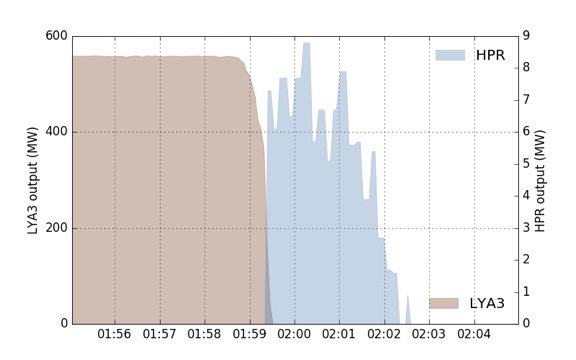
The takeaway (if I'm reading the graphs correctly) is that the Gladstone coal unit took over 3 minutes to respond to the Loy Yang failure. It was contracted to respond within 6 seconds, but couldn't. Fortunately the Tesla battery was able to respond within milliseconds and cover the gap. It's a good bit of PR for Tesla, and could have some negative implications for coal or gas fired backup units.

Where did you get the three minute response time number for Gladstone? It is not backed up by the article, it only mentions that it should respond within six seconds, but that "Data from AEMO (and gathered above by Dylan McConnell from the Climate and Energy College) shows that the Tesla big battery responded four seconds ahead of the generator contracted at that time to provide FCAS (frequency control and ancillary…

[deleted]

Re: Tesla big battery outsmarts lumbering coal units

#17
post #7

Earlier quoted context omitted.

The takeaway (if I'm reading the graphs correctly) is that the Gladstone coal unit took over 3 minutes to respond to the Loy Yang failure. It was contracted to respond within 6 seconds, but couldn't. Fortunately the Tesla battery was able to respond within milliseconds and cover the gap. It's a good bit of PR for Tesla, and could have some negative implications for coal or gas fired backup units.

Where did you get the three minute response time number for Gladstone? It is not backed up by the article, it only mentions that it should respond within six seconds, but that "Data from AEMO (and gathered above by Dylan McConnell from the Climate and Energy College) shows that the Tesla big battery responded four seconds ahead of the generator contracted at that time to provide FCAS (frequency control and ancillary…

The article is a bit sparse, but take a look at the output of the Loy Yang 3 and the Tesla (HPR) in this graph: http://reneweconomy.com.au/wp-content/uploads/2017/12/HPR-fr...

Tesla ramps up as the LYA3 is dropping at 1:59am, then the Tesla drops off a bit before 2:02 am as the Gladstone generator kicks in (not in the graph)

Re: Tesla big battery outsmarts lumbering coal units

#19
post #15

This response by the battery is really interesting. And it is certainly helping the Australian grid. However, it is worth noting that the Australian grid, South Australia's in particular, is so woefully mismanaged that almost anything goes. South Australia is in the running for the most expensive electricity in the world [1]. As far as I've been able to tell, we aren't building coal or nuclear because there are outra…

My understanding is that no one wants to build new coal power plants because renewables are going to be cheaper regardless of any government subsidies.

Re: Tesla big battery outsmarts lumbering coal units

#20
post #15

This response by the battery is really interesting. And it is certainly helping the Australian grid. However, it is worth noting that the Australian grid, South Australia's in particular, is so woefully mismanaged that almost anything goes. South Australia is in the running for the most expensive electricity in the world [1]. As far as I've been able to tell, we aren't building coal or nuclear because there are outra…

If you're including regulatory oversight (or lack of) under the 'management' heading, I'd definitely agree.

"Since 2009, the electricity networks that own and manage our “poles and wires” have quietly spent $45 billion on the most expensive project this country has ever seen. Allowed to run virtually unchecked, they’ve spent vast sums on infrastructure we don’t need, and have charged it all to us, with an additional fee attached. The spending was approved by a federal regulator, and yet the federal government didn’t even note it until it was well underway." [1]

> As far as I've been able to tell, we aren't building coal or nuclear because there are outrageous political risks ...

That adjective 'political' is not needed there, and serves to distract from the bigger, actual risks attached to those obsolete technologies. (With my usual caveat that I'm assuming people using the word nuclear mean only fission.)

> .. we aren't building anything else because because the economic option is coal.

Is it technically still an 'option' if you think there's only one?

Anyway, we (Australia(ns)) are not special.

Coal is not a sensible choice -- economic or otherwise -- anywhere on the planet.

Unfortunately many places, including here, haven't comprehended that yet. Or rather, the people that run the country -- both within and outside of the government -- prefer the extant power generation and delivery infrastructure for a variety of fairly obvious reasons.

[1] https://www.themonthly.com.au/issue/2014/july/1404136800/jes...

Post reply on HN