Live data from Hacker News

Why Education Startups Do Not Succeed (2011)

avichal.com

91–100 of 148 posts

Re: Why Education Startups Do Not Succeed (2011)

#91

I've told this story before: Back when I was in college, I had a summer internship at a place that was a service center for the K-12 schools in a large county. Microcomputers were the big new thing. We had a facility with one of each kind of computer (Commodore, Apple, Radio Shack, etc.) and all the software we could lay their hands on. Teachers could come in and try things out. My impression was that the "educationa…

Britain funded computing in schools very well from some point in the 1980s until the early 1990s. Lots of good software was produced. Schools had computers, and parents were encouraged to buy them for education at home.

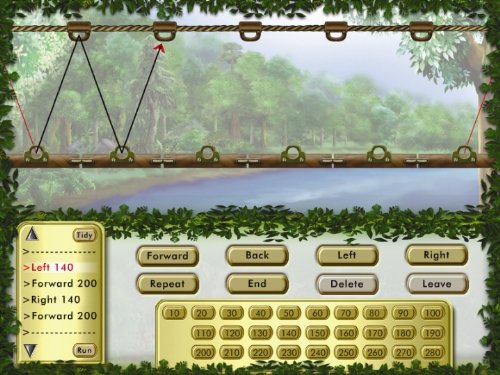
My favourite software was The Crystal Rainforest. I think this was for 6-8 year olds. There was a long story (4 floppy discs in 1992!) leading through a rainforest, solving puzzles using increasingly complicated computer programming along the way. Here's a screenshot of rebuilding a rope bridge using a simplified LOGO/turtle graphics: [1]. (There is a playthrough on Youtube, which has skipped all the puzzles. I think someone missed the point...)

I suspect the general market for software has increased so much, that the money to be made on educational software is no longer appealing. It's probably easier to cut out the learning and sell a game, rather than made a few hundred or thousand sales to schools.

[1] https://images-na.ssl-images-amazon.com/images/I/51UoAfDY57L...
Re: Why Education Startups Do Not Succeed (2011)

#92

This is well written, and frankly off the mark. If online education got people cushy jobs the way university degrees get people cushy jobs - online education would be massively profitable. That's not the case. There's nothing else to it. Regarding online education in general: Universities/colleges should have to post their full curriculum, lecture notes and all textbooks and chapters used for each class - that's enou…

Universities already do that. Simply go to google, type whatever course you want to learn followed by syllabus. Some of the bigger schools have all the teachers list their syllabus on a central page as well. Obviously it is for the benefit of the student but indirectly the syllabus is the outline of the course - lists textbooks used, chapters covered, homework problems etc. To get notes you might be able to find online somewhere.

Re: Why Education Startups Do Not Succeed (2011)

#93
post #58

I've told this story before: Back when I was in college, I had a summer internship at a place that was a service center for the K-12 schools in a large county. Microcomputers were the big new thing. We had a facility with one of each kind of computer (Commodore, Apple, Radio Shack, etc.) and all the software we could lay their hands on. Teachers could come in and try things out. My impression was that the "educationa…

Part of the problem is that programming is supposed to be "fun", as in "fun and games", not as in a serious topic that you enjoy so much you call it fun. This is why a lot of programming is taught through graphical games. I'm not knocking Minecraft style programming lessons, they can be very motivational and build up programming skills and thought processes. Unfortunately, I'm not that kind of programmer. I'm more th…

I think there's a spectrum from graphical games to full programming. Games can be designed which can explore problem solving, debugging and programming.

For example "Human resource machine" is entirely visual but if you happen to click 'export' you get a very basic assembly language style output. If you never clicked export you wouldn't even realise you were "programming", you were just solving the problems on screen. The game does at time explain the analogies used. If you prod the people they'll describe linked lists but such understanding isn't required to progress.

Moving across the spectrum a little there are games like TIS-100 and Shenzhen I/O which do involve programming but with very small instruction sets and graphical debugging and feedback.

These aren't aimed at children so are more complex than would be suitable for children but what I'm trying to get across is that they don't specifically teach programming. You won't come out of it knowing python or C. You won't know about stacks or function calls. But they do teach problem solving and the run/explode/debug loop of getting an instruction set to work on different sets of data.

By being games they gameify the process of wanting to reach acheivements while also solving the "what do I build?" aspect of more freeform/creative programming learning which can often be a dead-end without a sense of aiming toward a goal.

I think a Human Resources Machine style game aimed at a younger audience could be greatly impactful on teaching a programming mindset.

Re: Why Education Startups Do Not Succeed (2011)

#94

Figure out a way to franchise high schools to make them into coworking spaces. All teachers are remote and all teaching happens over skype. The employees on site are there only to make sure the kids dont kill each other. Offer an insane amount of subjects (this is possible since there might be only 30 kids worldwide interested in xyz, now they can take a class on it). The future of education is something along these…

What you seem to be describing approximates the inverted/flipped classroom model, which has been written about since the 1990s and applied in practice at the secondary and post-secondary level in a number of places. (Flipped classrooms are a little different in that the static lecture content is usually moved out of school entirely, while in school time is used for practical exercise with mentoring and supervision, essentially reversing the in-class vs. homework elements of traditional classrooms, hence the name.)

Re: Why Education Startups Do Not Succeed (2011)

#95
I worked for an Education startup a couple of years ago. They had a really good math learning product which blew away the competition in terms of software quality but they didn't achieve exponential growth. It was linear growth but at a very good rate. The trick was to sell directly to schools and educational institutions.

There are new challenges there but it's also very high-reward. You can sell 1000 licenses from a single deal with a school. If you get a government public school contract you could be looking at 100k licenses from a single deal.

I think that companies which do big b2b deals have become greatly undervalued. VCs are so obsessed chasing exponential growth curves that they seem to have forgotten that the earth only has limited population and that buying power has become much more centralized and is becoming increasingly centralized.

Re: Why Education Startups Do Not Succeed (2011)

#96

Earlier quoted context omitted.

"1:1 tutoring is the gold standard for educational outcomes." Is it? I'd be interested to see some data to support or refute this. I'd always assumed that students benefit somewhat from other students being around (due to observing how others learn, being pushed to be better etc.), so perhaps the ideal ratio would be in the 1:2 to 1:4 range. If people have really figured out that 1:1 is better than 1:2, 1:3 and 1:4,…

I worked in a high school for 5 years teaching English as a foreign language. I was not a great teacher because being a teacher is really hard, but I learned a lot in those 5 years. I will let you in on a secret. Education is not what the teacher does: it's what the student does. Most people think that the job of a teacher is to organise information and explain it to students to make it "easy to understand". This is…

As an ESL teacher myself I sympathize with you. For real, it's frustrating how people [more like parents] just expect to send their kid to a private academy after school [more like 3-4 academies] 2x/3x a week and just expect them to know English. Even if the kids are actually interested, that's a paltry amount of time actually spent practicing English. Very few people understand this so private academies continue to be a big industry.

Re: Why Education Startups Do Not Succeed (2011)

#99
I am trying to build an online coding school for kids ages 6-13. I mostly agree with what's being stated because we already have customers in China, Korea, and Japan despite doing no marketing there. They are hard markets to ignore, especially when US parents are a harder sell. In order for us to be successful in the long-term, we must be a cross-border company.

Coding is one of the things that parents are increasingly willing to pay for, but it is still in the process of becoming a middle-class family demand.

https://block.school

Re: Why Education Startups Do Not Succeed (2011)

#100

Earlier quoted context omitted.

"1:1 tutoring is the gold standard for educational outcomes." Is it? I'd be interested to see some data to support or refute this. I'd always assumed that students benefit somewhat from other students being around (due to observing how others learn, being pushed to be better etc.), so perhaps the ideal ratio would be in the 1:2 to 1:4 range. If people have really figured out that 1:1 is better than 1:2, 1:3 and 1:4,…

I worked in a high school for 5 years teaching English as a foreign language. I was not a great teacher because being a teacher is really hard, but I learned a lot in those 5 years. I will let you in on a secret. Education is not what the teacher does: it's what the student does. Most people think that the job of a teacher is to organise information and explain it to students to make it "easy to understand". This is…

I agree that:

- For language learning, total study time should be a multiple of classroom time. (From personal experience, I've found 10:3 to work pretty well.)

- Teaching can be very effective in groups of 1:10 or 1:20

- Classroom time should not be spent on introducing new material

However:

- For language learning in particular, I don't believe that 'let the students study and then watch them...' approach is best. If you're doing 1:1 or 1:2, you can actively manage the learning process by asking the student questions in the target language, and (for example) making them reply using newly-acquired grammatical structures.

- You've made the point that teacher:student ratio isn't the only important factor (agreed!) but haven't made a strong case that it's insignificant, or addressed my question about whether 1:1 is better (assuming money no object) than all other ratios.

Post reply on HN