Earlier quoted context omitted.
Yeah only pinko hippies like the IMF believe that :) https://www.imf.org/external/pubs/ft/sdn/2014/sdn1402.pdf
You know IMF is not infallible? For example they were one of the architects of the Greek debt crisis. Even after the initial outbreak of Greek debt problem when it was clear to everybody Greece cannot ever repay their debt and it will have to be restructured, they recommended further and further bailouts in order to protect German / French banks, effectively bailing out big banks with EU taxpayer money. Take a look a…
IT is the cause of rising income and wealth inequality since the 1970s [pdf]
81–90 of 199 posts
Re: IT is the cause of rising income and wealth inequality since the 1970s [pdf]
#82Earlier quoted context omitted.
> If "we" want to provide support to any group, it can be done through charity. Charity implies voluntarily providing support, leaving it to the benevolence (or lack thereof) of each individual. In the end, it teaches people that being uncharitable is OK and an acceptable trait, just like being charitable. I want a society that mandates that support -- and even more so, one where everybody is OK with that. In other w…
>Charity implies voluntarily providing support, leaving it to the benevolence (or lack thereof) of each individual. In the end, it teaches people that being uncharitable is OK and an acceptable trait, just like being charitable. Your use of "teaches" here implies that violence/imprisonment or the threat thereof teaches (if no mandatory charity teaches people that being uncharitable is okay, I assume you mean mandator…
It's not about knowing what each individual motives are though, it's about society setting X (we help the disabled) as a norm, rather as something that one may or may not decide to do.
In the end, some people might not like it, but more people will see it as a default/norm/baseline than in an opt-in society.
>Is a good deed a good deed if done unwillingly?
Yes, since again, the good is not in what it means for the one doing it, but in the good it does to the one receiving it.
>If people are free to donate as they choose and none chose to support the disabled, wouldn't that in fact show that society doesn't really care about helping the disabled anyway?
Yes, but there's nothing fatalistic about how a society "feels" (statistically) and what it cares about. Societies can be changed, and having helping as the default (and someone can always opt-in to help more), helps in establishing that kind of "help is good" change in my opinion.
>In which case what's the justification for a law forcing something that few in society want?
Well, what if few, including the black votes, (say, 10% of the 80% whites + 20% of blacks, so 70 vs 30) wanted the blacks to be free?
I would still justify such a law that goes again what the majority wants. Who gets to decide in general in such cases? That's a tricky question, but if it was up to my to decide, I'd decide in favor of that in that case.
>Conversely, given so many people do seem to care about the welfare of the disabled, why wouldn't they express this through charity?
Well, there's nothing stopping them to do so on top of state and structural assistance.
Re: IT is the cause of rising income and wealth inequality since the 1970s [pdf]
#83Why is income inequality bad anyway?
Generally speaking, income inequality leads to social instability. In the limit, that means violent revolution.
Re: IT is the cause of rising income and wealth inequality since the 1970s [pdf]
#84Earlier quoted context omitted.
If it's your parent, partner, or kids, (or even if it's not -- it could be anyone) you're welcome to provide for them yourself. You're also welcome to donate to (or even work for!) charities that provide for them. But it's not OK to force everyone else to provide for them.
Mark Blyth (prof. of political economy at Brown) has advice for anyone with this attitude: "The Hamptons is not a defensible position"[1]. What are you going to do when a large fraction of the population starts getting hungry and they decide taking what they need from you (and everyone else with wealth/resources)? Do you really think that the police will simply arrest them? What about when someone starts shooting and…
For me, personally, a random town in Germany is more pleasant from the social aspect than San Francisco with all its riches and its hobos.
Re: IT is the cause of rising income and wealth inequality since the 1970s [pdf]
#85Serious question: if technology makes everyone better off but increases inequality, is that a bad outcome? Why or why not?
Capitalism attempts to distribute the wealth produced by the nation according to the value each individual (and that individual's property) contributes to the economy. There are false positives and false negatives there (people who make more money than their contribution is worth and vice versa), but that's the theory.
A fundamental assumption of that system is that almost everyone (apart from the sick or handicapped) can produce enough value to sustain themselves. Even if someone has no capital or no education, we assume that they can trade unskilled labor and that the value of that labor suffices to buy them, at least, the things they need to satisfy their most basic needs.
That assumption might become untrue in the future. If that happens, the problem won't be that we don't produce enough value to support these people, but that the current system for distributing that wealth will no longer work.
Re: IT is the cause of rising income and wealth inequality since the 1970s [pdf]
#86Earlier quoted context omitted.
The severely disabled, we should provide zero social supports for them and their families so? It's nobody's fault that they're garbage people. Luck of the lottery.
>The severely disabled, we should provide zero social supports for them and their families so? If "we" want to provide support to any group, it can be done through charity. I'd argue this way is more moral: it's more of a good deed to be generous with one's own money than with other peoples', and it's not much of a good deed to give money if one's only doing so due to threat of imprisonment for failing to comply. The…
Re: IT is the cause of rising income and wealth inequality since the 1970s [pdf]
#87Serious question: if technology makes everyone better off but increases inequality, is that a bad outcome? Why or why not?
The economy of a nation produces a certain amount of wealth, and that wealth needs to be distributed in a way that is as efficient and fair as possible (for some notion of fair). Capitalism attempts to distribute the wealth produced by the nation according to the value each individual (and that individual's property) contributes to the economy. There are false positives and false negatives there (people who make more…
Where are you getting this from? I am aware of no such attempt. I thought that, in idealized capitalism, everyone gets as much as they are able to convince or legally force others to pay them, and 'value' produced is irrelevant.
Re: IT is the cause of rising income and wealth inequality since the 1970s [pdf]
#88Earlier quoted context omitted.
You know IMF is not infallible? For example they were one of the architects of the Greek debt crisis. Even after the initial outbreak of Greek debt problem when it was clear to everybody Greece cannot ever repay their debt and it will have to be restructured, they recommended further and further bailouts in order to protect German / French banks, effectively bailing out big banks with EU taxpayer money. Take a look a…
Perhaps the solution then is not redistribution of money, but common control over the means of production, the way by which people sustain themselves.
Re: IT is the cause of rising income and wealth inequality since the 1970s [pdf]
#89Earlier quoted context omitted.
Perhaps the solution then is not redistribution of money, but common control over the means of production, the way by which people sustain themselves.
Communism is not a solution. It was tried in my home country with horrible results. It's been 25 years since end of communism and we are still recovering from the damage it has done to us.
Re: IT is the cause of rising income and wealth inequality since the 1970s [pdf]
#90Earlier quoted context omitted.
>Charity implies voluntarily providing support, leaving it to the benevolence (or lack thereof) of each individual. In the end, it teaches people that being uncharitable is OK and an acceptable trait, just like being charitable. Your use of "teaches" here implies that violence/imprisonment or the threat thereof teaches (if no mandatory charity teaches people that being uncharitable is okay, I assume you mean mandator…
> I assume you mean mandatory charity through taxation teaches people to be charitable?). That certainly isn't a given; how do you know whether people have been taught to be charitable by the threat of violence/imprisonment [so] they're only paying taxes to avoid being imprisoned? It's not about knowing what each individual motives are though, it's about society setting X (we help the disabled) as a norm, rather as s…
This is a supposition. I could suppose that (and I've certainly read this somewhere) actively giving to charity encourage people to give more; giving is like a skill, generosity is like a muscle, growing with practice. If giving is abstracted out to the state, if people think "I don't have to give to charity, my taxes give enough", people are deprived of that development. Who's supposition is more correct? I don't know, but it's not something that can be decided based on theory alone.
>Well, what if few, including the black votes, (say, 10% of the 80% whites + 20% of blacks, so 70 vs 30) wanted the blacks to be free?
>I would still justify such a law that goes again what the majority wants. Who gets to decide in general in such cases? That's a tricky question, but if it was up to my to decide, I'd decide in favor of that in that case.
The difference here is, if you have a society/governance structure that rejects the notion of using violence to enforce certain beliefs on others, there'd be no mechanism for keeping people in slavery. A society rejecting violence in the absolute sense would barely even support notions of property, yet alone slavery. The difference stems from the fact that neglect is a passive harm; if the person doing the neglect didn't exist, the neglectee wouldn't be in a better situation. If the man watching the downing man didn't exist, the drowning man isn't more likely to be saved. Violence is an active harm: if the person doing the violence didn't exist, the victim would be better off (at least from the victim's perspective); if the slaver didn't exist, the slave would be better off.
>Conversely, given so many people do seem to care about the welfare of the disabled, why wouldn't they express this through charity?
>Well, there's nothing stopping them to do so on top of state and structural assistance.
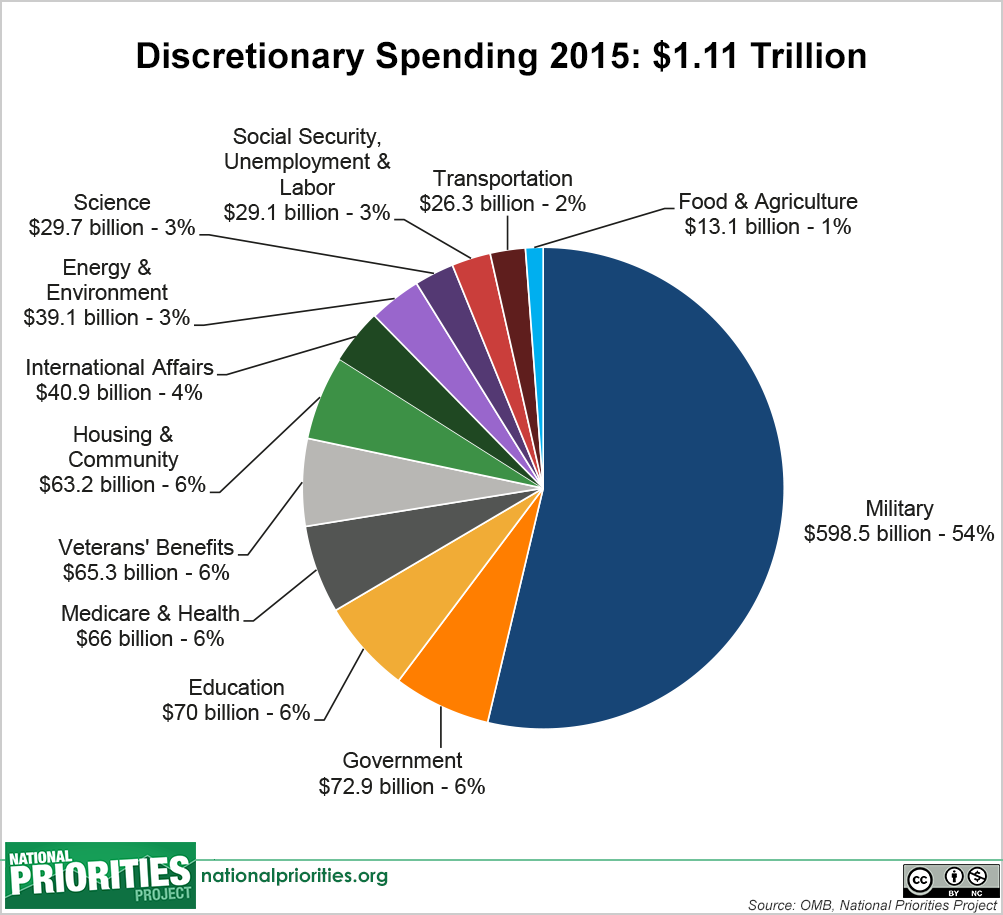
And people do give quite a lot. According to https://givingusa.org/giving-usa-2016/, Americans gave 373 billion in 2015. With a lower tax burden, people would have even more to give. https://media.nationalpriorities.org/uploads/discretionary_s... shows that in 2015, 54% of American government spending was military spending. Do you think if individuals had more choice over precisely how to spend that money, they'd put so much into the military?