Live data from Hacker News

Our Copyfish extension was stolen and adware-infested

a9t9.com

41–50 of 217 posts

Re: Our Copyfish extension was stolen and adware-infested

#41

Earlier quoted context omitted.

It's counter intuitive. I bet you $5 that if I target you, and you're not expecting it, I can phish you. I've seen this happen in the field, and it doesn't have much to do with education. Relax for an instant and I have you. The only real defense is to glance at the url bar every time you're about to enter your password. And even I find myself not doing that 100% of the time. It's a numbers game. A policy of popping…

> The only real defense is to glance at the url bar every time you're about to enter your password. With i18n not even that: https://www.theguardian.com/technology/2017/apr/19/phishing-... Benign POC: https://www.xn--80ak6aa92e.com/ (open it and it'll look like a normal "l" in the url box)

Browser shows https://www.xn--80ak6aa92e.com to me, Chrome on Android. What browser are you using that shows non-ascii with .com?
Re: Our Copyfish extension was stolen and adware-infested

#42
post #10

> “Click here to read more details” the email said. The click opened the “Google” password dialog, and the unlucky team member entered the password for our developer account. This looked all legit to the team member, so we did not notice the pishing attack as such at this point. Pishing for Chrome extensions was simply not on our radar screen. First, it is excellent that you disclosed the issue. Second, based upon th…

I rely on my password manager: if it isn't filling in the password automatically, something is suspect. I wonder if I'm the only one who does this.

Re: Our Copyfish extension was stolen and adware-infested

#43
post #14

Earlier quoted context omitted.

While I normally agree, I think it's important that they referred to the specific person without using blaming language. The team failed and screwed up because they had bad policies with their account. The individual team member who was holding the keys when the screw-up happened? Unlucky. Fix the process, not the people. It's good that they're not throwing the poor person under the bus.

I don't think more policies will make a better place. One of the team member screw up and stuff like this happen. I am questioning his security education to have been phished so easily.

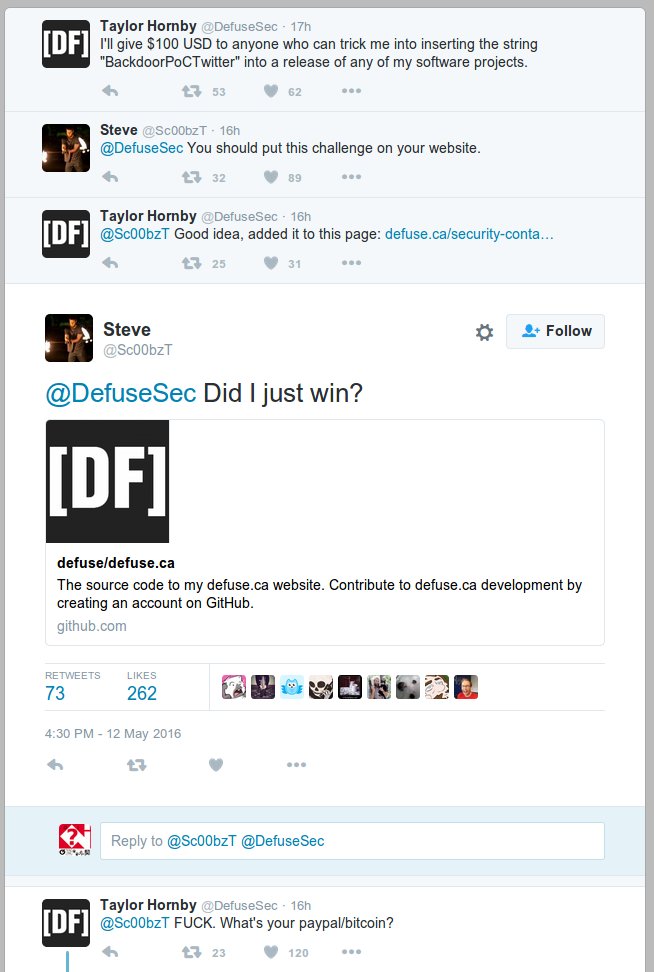
You might be surprised: https://pbs.twimg.com/media/CiWPIQSU4AAIndY.jpg

Re: Our Copyfish extension was stolen and adware-infested

#44

Earlier quoted context omitted.

It's counter intuitive. I bet you $5 that if I target you, and you're not expecting it, I can phish you. I've seen this happen in the field, and it doesn't have much to do with education. Relax for an instant and I have you. The only real defense is to glance at the url bar every time you're about to enter your password. And even I find myself not doing that 100% of the time. It's a numbers game. A policy of popping…

Lastpass will tell you whether it recognizes the site when you go to fill in the password (yes, I use it despite the scary stuff, I know I probably should switch to OnePassword). Do other password managers not do that? Just curious, not trying to engage the bigger question of whether getting phished is the user's fault.

One password has similar behaviour as well as verifying the integrity of the browser[1]. It's not perfect, I'm sure a malicious extension would be unimpeded, but these little features all added up and eventually made me switch.

[1] https://support.1password.com/code-signature/

Re: Our Copyfish extension was stolen and adware-infested

#45

Earlier quoted context omitted.

I don't think more policies will make a better place. One of the team member screw up and stuff like this happen. I am questioning his security education to have been phished so easily.

It's counter intuitive. I bet you $5 that if I target you, and you're not expecting it, I can phish you. I've seen this happen in the field, and it doesn't have much to do with education. Relax for an instant and I have you. The only real defense is to glance at the url bar every time you're about to enter your password. And even I find myself not doing that 100% of the time. It's a numbers game. A policy of popping…

>> The only real defense is to glance at the url bar every time you're about to enter your password

With Google specifically, the worst part is you really do have to look at the URL every single time you go to enter your password. And by that I mean that if you land on the login page, verify the URL, enter your password, submit, and get the error page saying you got the password wrong... you must check the URL again before re-entering your password.

Why? Because Google's login, by design - and repeatedly defended by them as being "acceptable" - allows redirecting off Google's properties after login. So hackers send you to the real Google login page, with a post-login redirect to a fake but perfect copy of the "wrong password, try again" page, where they then capture the passwords of people who mindlessly re-enter their password without double checking the URL a second time.

Most importantly, 2FA does not help you here. You'll enter a currently valid 2FA code on the hacker's site, and they will immediately use that code to actually log in to your account. Before you realize what is happening, you are already locked out of your account - new password, 2FA stripped or replaced, security questions changed, and all pre-existing sessions/devices wiped.

Re: Our Copyfish extension was stolen and adware-infested

#46

I'd have though that two-factor authentication could have prevented this type of attack?

Only with U2F, because the hardware dongle would refuse to provide the OTP to a different domain

Yeah, we really need to distinguish between a 2FA app and a dedicated hardware key. My phone is probably the least secure thing I've ever owned, both in terms of technical security, and physical security.

This whole 2FA thing has been really jarring for me, because I always treated my phone like a public space: no password, no private data (that I know of), ready for inspection by foreign authorities. Of all the things the world could ask me to trust, why the phone?

Re: Our Copyfish extension was stolen and adware-infested

#47
post #10

> “Click here to read more details” the email said. The click opened the “Google” password dialog, and the unlucky team member entered the password for our developer account. This looked all legit to the team member, so we did not notice the pishing attack as such at this point. Pishing for Chrome extensions was simply not on our radar screen. First, it is excellent that you disclosed the issue. Second, based upon th…

The password login system is seriously flawed. I think people and websites should switch to physical keys. They are also easier to use because you don't have to remember complicated passwords.

Re: Our Copyfish extension was stolen and adware-infested

#48

Earlier quoted context omitted.

It's counter intuitive. I bet you $5 that if I target you, and you're not expecting it, I can phish you. I've seen this happen in the field, and it doesn't have much to do with education. Relax for an instant and I have you. The only real defense is to glance at the url bar every time you're about to enter your password. And even I find myself not doing that 100% of the time. It's a numbers game. A policy of popping…

>> The only real defense is to glance at the url bar every time you're about to enter your password With Google specifically, the worst part is you really do have to look at the URL every single time you go to enter your password. And by that I mean that if you land on the login page, verify the URL, enter your password, submit, and get the error page saying you got the password wrong... you must check the URL again…

Physical keys would solve the problem of redirecting to a fake page (and maybe they would make 3-rd party auth protocols like OAuth or Github login unnecessary).

Re: Our Copyfish extension was stolen and adware-infested

#50
post #49

Can someone explain to me why the attacker wrote the script source tag as "var config_fragment = ' ';" Instead of just: var config_fragment = ' ';

To make it mor difficult to analyze the script. A simple string search will fail to catch the offending code.
Post reply on HN