Live data from Hacker News

Cicada: A Distributed Direct Democracy and Decentralized Application Platform

github.com

61–70 of 140 posts

Re: Cicada: A Distributed Direct Democracy and Decentralized Application Platform

#61
post #44

First of all, regardless of all the claims made in the document, I find it awesome to see such a gigantic writeup that tries to be at least a bit internally consistent. It reminds me of Bit451 [1][2], although that one was simply insane. So about Cicada: the document quickly notes that the 'human unique identifier' is at the core of the proposal. It is claimed that it "allows us to prevent Sybil attacks and ensure ev…

Here's a web of trust design that comes with a conflict resolution mechanism.

https://github.com/neyer/respect

http://s3.neyer.me/respect-matrix-slides.pdf

Re: Cicada: A Distributed Direct Democracy and Decentralized Application Platform

#62

Earlier quoted context omitted.

That's true, but you would still have a balance of power so that a court could overturn a law created by direct democracy.

> you would still have a balance of power so that a court could overturn a law created by direct democracy Presumably based on the laws this direct democracy enacts? Observe California and imagine if every single law had to be passed through referendum. The system fails because people don't compromise across large, unaccountable groups. Direct democracy is better used as a check on a small group of leaders, e.g. a ri…

> imagine if every single law had to be passed through referendum

And what do you think will happen then?

I hope you respect the readers by not assuming that it will be paper ballot referendums.

Re: Cicada: A Distributed Direct Democracy and Decentralized Application Platform

#63

Earlier quoted context omitted.

That's why systems like Liquid Democracy have delegation features. You don't elect representatives, but you can delegate ("lend", if you will) your vote on certain issues to them. And revoke the delegation at any time. Maybe Cicada could be equipped with something like this, but sentences like "The concept is so new that the word representativeless does not even exist. We had to invent it." don't look like the author…

This is a github post that tries to pass itself off as a "paper" (because it sounds official, right), and ends with "And that can change the world". Wow that's academic and objective. Why are we upvoting delusional content that lacks a real understanding of behavior, politics, and law? Because if you want to change the world, a basic understanding of that might help. He could start with Plato and Xenophon and the Tri…

Primarily because HN is very libertarian-leaning, and has a lot of people who do not understand people or societies as a result.

Re: Cicada: A Distributed Direct Democracy and Decentralized Application Platform

#64

Earlier quoted context omitted.

It's also easy to counter. I can think how and so can you. What's the point of "ramming through" if it gets repealed in terror at the start of next cycle? Very potent point is that laws should be tried and then most of them should be repealed. Only a minority of laws should survive to permanence. Right now we pretend that we're capable of writing good laws from the first attempt.

> What's the point of "ramming through" if it gets repealed in terror at the start of next cycle? You just characterized the see-saw retributionary populist democracies that trashed Latin America's economies over the 20th century. Policy instability is anathema for lower-level civic and economic self-organization.

I'm not sure you are right. Many Latin American countries fair just fine when you adjust for their inherent handicap.

Maybe they had bad policies, maybe whey didn't, I'm not sure they'll be massively better off under any other system. If we're not talking about Cuba and Venezuela which have exactly opposite problem of failing to turn evidently unsuccessful decisions.

Re: Cicada: A Distributed Direct Democracy and Decentralized Application Platform

#65
post #44

First of all, regardless of all the claims made in the document, I find it awesome to see such a gigantic writeup that tries to be at least a bit internally consistent. It reminds me of Bit451 [1][2], although that one was simply insane. So about Cicada: the document quickly notes that the 'human unique identifier' is at the core of the proposal. It is claimed that it "allows us to prevent Sybil attacks and ensure ev…

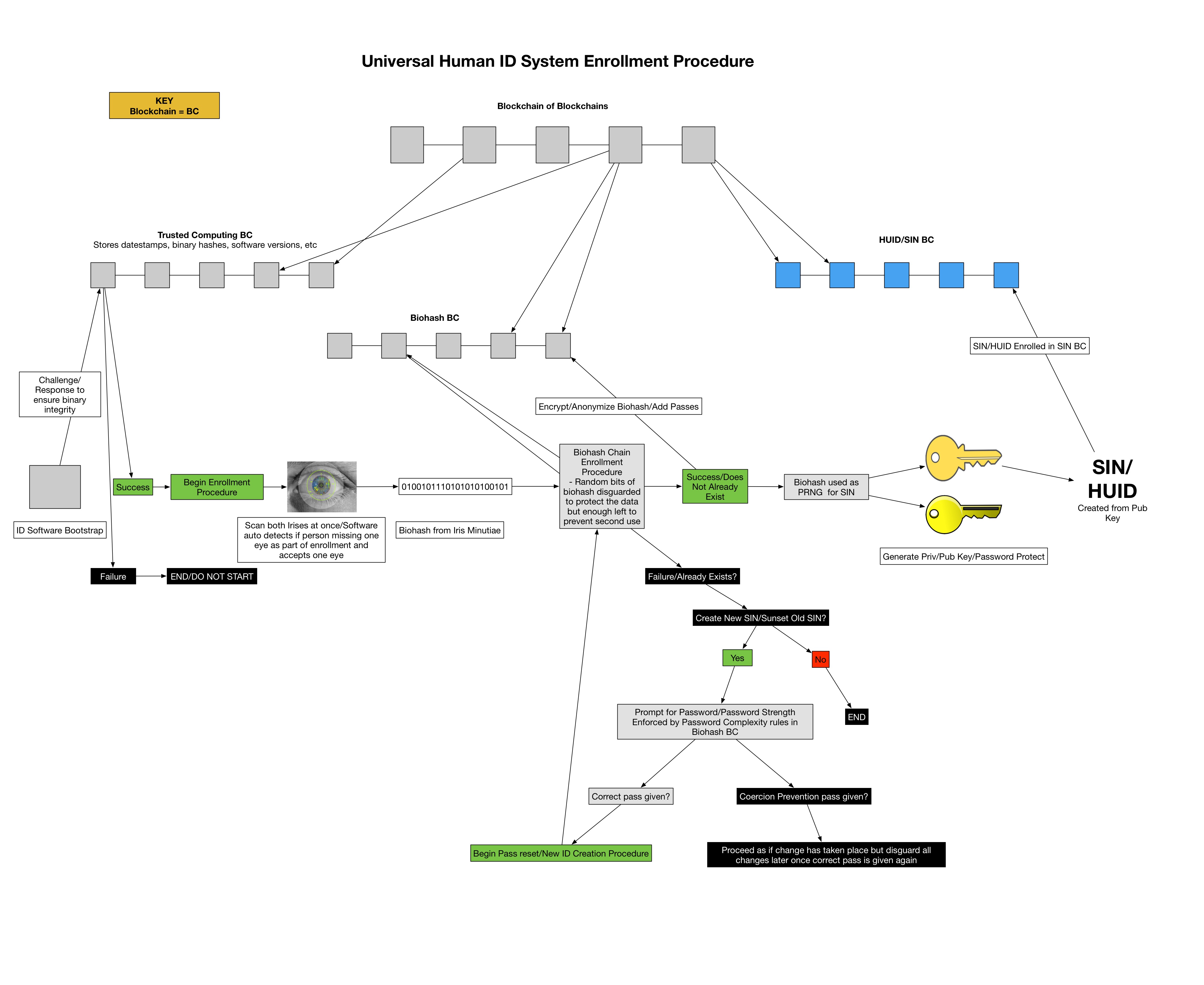
Their claim/assumption is based in trust of the enrollment system. Check the section on enrollment - this image is especially helpful: https://raw.githubusercontent.com/the-laughing-monkey/cicada....

The enrollment software is supposed to be verified using "Challenge/Response", which is supposed to ensure the guarantees provided by the HUIDs.

Of course, given enough incentive, this can (and will) be cracked...

Re: Cicada: A Distributed Direct Democracy and Decentralized Application Platform

#66

Earlier quoted context omitted.

1. It's harder to bribe all Joes. Much easier to bribe 500 people in a 300 million people. Actually, you may just have to bribe 100 or so, enough to tilt partisan things in your favor. 2. Direct democracy would not follow party lines, there is no need to. You can have gun rights and abortion rights. You can have social safety net programs and curb illegal immigration. You can be tough on crimes and treat drug addicti…

> You can have gun rights and abortion rights. You can have social safety net programs and curb illegal immigration. You can be tough on crimes and treat drug addiction as mental issue. You can have higher taxes but lower regulations. You can have higher military spending but no wasteful spending. You can have higher marginal tax rate while having simple tax code. Well, you can. But will that really happen? Especiall…

See Prop 8 where the Mormon church and other groups predominately not located in California lobbied hard (and won).

The authors are proposing that for everything? Say good bye to civil rights.

Re: Cicada: A Distributed Direct Democracy and Decentralized Application Platform

#67
I imagine this thing doesn't have a way to determine if the State is itself legitimate, or a way to achieve consensus on which State (of multiple ones that may exist in each geographic area) is the master-legislator.

It probably assumes and hardcodes the current State.

Re: Cicada: A Distributed Direct Democracy and Decentralized Application Platform

#68
This is too complicated. If a simple thing like Bitcoin fails to be mainstream because most people don't even want to start thinking through it, imagine THIS.

Also, there will be so many room for bugs that the number of issues will make GitHub servers explode.

Re: Cicada: A Distributed Direct Democracy and Decentralized Application Platform

#69

Earlier quoted context omitted.

> What's the point of "ramming through" if it gets repealed in terror at the start of next cycle? You just characterized the see-saw retributionary populist democracies that trashed Latin America's economies over the 20th century. Policy instability is anathema for lower-level civic and economic self-organization.

I'm not sure you are right. Many Latin American countries fair just fine when you adjust for their inherent handicap. Maybe they had bad policies, maybe whey didn't, I'm not sure they'll be massively better off under any other system. If we're not talking about Cuba and Venezuela which have exactly opposite problem of failing to turn evidently unsuccessful decisions.

> Many Latin American countries fair just fine when you adjust for their inherent handicap

Policy volatility is about as significant a driver of Latin American per-capita economic growth as income inequality. Capital inflows and debt are insignificant; only U.S. interest rate volatility is comparable to domestic factors.

"Regarding macroeconomic policies, the higher the volatility of discretionary fiscal policy, the lower the growth.

...

Despite several episodes of reform reversals, most countries made progress in market-oriented structural reforms during 1970–2004, except Venezuela. The intensity of reversals was highest in Argentina, Bolivia, Paraguay, and Venezuela. Chile, Costa Rica, El Salvador, and Uruguay made the most progress during the 35 years. Greater market-oriented reforms and fewer reform reversals were associated with higher growth."

https://www.imf.org/en/Publications/WP/Issues/2016/12/31/Vol... pages 26 and 28; also see Table 17 on page 45

Re: Cicada: A Distributed Direct Democracy and Decentralized Application Platform

#70
post #44

First of all, regardless of all the claims made in the document, I find it awesome to see such a gigantic writeup that tries to be at least a bit internally consistent. It reminds me of Bit451 [1][2], although that one was simply insane. So about Cicada: the document quickly notes that the 'human unique identifier' is at the core of the proposal. It is claimed that it "allows us to prevent Sybil attacks and ensure ev…

Personal identity seems like a generally intractable problem, despite the lofty goals stated in the introduction. And without it, the document is built on a foundation of sand.

An argument that I find myself having quite frequently about Bitcoin and pseudonymity is that pseudonymity and concealing identity is not a feature of the system, but rather that defining two-way identity in any sort of useful way is such a difficult problem that solving it would be a bigger achievement than Bitcoin itself.

Seeking a biological equivalent to a non-portable key in a TPM is pretty hopeless, and that's what you'd need to get a HUID -- not just a hash fingerprint that anyone can appropriate, but an internal signing mechanism to allow zero-knowledge verification of identity. And the inverse problem, the Sybil problem, is just as intractable, and as far as I know has never really been solved without a centralized issuing authority or reliance on a scarce resource (like proof-of-work, which even there solves only a weak variant of the Sybil problem by conflating the unit of "identity" with a unit of "work").
Post reply on HN