Live data from Hacker News

In Urban China, Cash Is Rapidly Becoming Obsolete

nytimes.com

21–30 of 359 posts

Re: In Urban China, Cash Is Rapidly Becoming Obsolete

#21
I think this is a good illustration of the different approach in how China and America approach the consumer economics space. In America, there is a very heavy reliance on "trickle down". We create a "best-in-class", "top-of-the-line" product that only the elite and wealthy can buy into. These people then set the tone of how it will develop in the future. The first mover also tries to do everything in their power to lock you into the ecosystem. Examples of these are iPhones (and the app ecosystem), Tesla, etc.

In China however, they throw away that pride of creating the greatest and shiniest. Instead, they start off with an "inferior" product but use the scale of their population to bring down costs and they try to ensure everyone has access. The top example is smartphones. In the article itself, "Even the buskers were apparently ahead of me. Enterprising musicians playing on the streets of a number of Chinese cities have put up boards with QR codes so that passers-by can simply transfer them tips directly." China starts off with a product that gives every citizen a chance to get in on, not just the wealthy, and they build up their economy from the bottom up, rung by rung.

The way I see it, we have democracy in politics but in products, its authoritarian because its guided by the billionaires and wealthy. In China, they have an authoritarian political system, but democratic economy space because they can actually vote with their wallets.

Re: In Urban China, Cash Is Rapidly Becoming Obsolete

#22
post #13

I had the most surreal experience in the Shenzhen airport the other day. I was out of cash, with only my credit cards and Android pay. There was no place in the entire airport that I could pay with Visa or Mastercard - the first time I felt truly helpless in China. Uber didn't work either. I was forced to set up WeChat pay, which works absolutely everywhere.

I'm guessing this has come about because VISA and Mastercard are US companies, where as WeChat is Chinese owned?

No, this is very strange actually. At least Starbucks would take credit cards, and you should be able to find an ATM that takes your USA-based ATM card. Never had this problem before.

I did feel screwed when I arrived in he Netherlands thinking my unionpay card to work, just to find out it was one of the countries besides India where it didn't. Thankfully, I could find some place that took credit cards...but I was freaking out as I didn't have much convertible cash as backup.

Re: In Urban China, Cash Is Rapidly Becoming Obsolete

#23
If you are curious how smartphone payments work in practice, Here's a video of someone using Wechat Pay to order squeezed-to-order orange juice from a vending machine

https://www.youtube.com/watch?v=Um53J3shL7I

In practice, scanning and paying is much faster than shown in the video. He is using an old phone, on a newer one scanning the barcode takes around 0.5 second and the verification takes 2-5 seconds (not 15 seconds as shown in video).

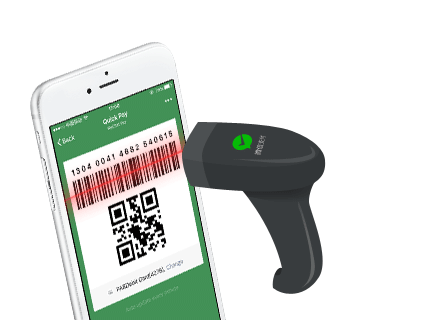
Paying in stores works differently. The WeChat app has a wallet section with your personal payment QR code (which changes every time you open the app). To pay in a store, let the clerk scan it like this https://wx.gtimg.com/pay/img/wechatpay/intro_2_1.png then enter your six digit payment passcode (optionally, you can scan your fingerprint). After entering your passcode, it takes around 5 seconds to process and verify. You get a receipt as a WeChat message (last screen shown here https://www.royalpay.com.au/resources/images/retail-example.... ).

Many stores (usually restaurants) have a nearby QR code you can scan to follow the business's WeChat "Official Account". Follow this account to earn loyalty points, discounts, and freebies whenever you pay with WeChat wallet at this business in the future. The business can send you chat messages about promotions too (you can mute them if you like). This feature ties in really well with WeChat pay.

There are other uses of WeChat Wallet too, most of which are shown in this promo video:

https://www.youtube.com/watch?v=1r95Q2qElFM

At timestamp 0:09, that sign/sticker signifies this store accepts WeChat Pay

At timestamp 0:24, watch the clerk scan the customer's barcode

At timestamp 0:30, the customers scans the store's payment QR code and types in the amount they want to pay. More at 0:50

At timestamp 0:38, this store has a dedicated QR code scanner

At timestamp 0:50, it's the same as 0:30 where the customer types in how much they are paying. Paying like this is common at street stalls.

At timestamp 1:00, two friends use WeChat Wallet to transfer money to each other

Opening WeChat wallet on your phone is very easy. On iPhone just force touch the WeChat app and a quick menu for the QR code scanner and WeChat Wallet appears. In my opinion, it's much faster and more convenient than paying with credit card.
Re: In Urban China, Cash Is Rapidly Becoming Obsolete

#24
Born in China and moved to U.S. since college. In my observation, there are several reason for the boom in mobile payment in China that makes it hard to replicate.

- Low transaction fee & minimal barrier. For merchants taking WeChat pay, the transaction fee seems to be a flat 0.6%, compared to 2%-3% in the U.S. For the food cart vendors and similar one man shops, they just use the person-to-person payment feature (like Venmo), which has no transaction fee and does not need a merchant account. While Square helped somewhat in the U.S., the transaction fee, for many, is perceived as a rip off.

- Cards are a pain to use. In the U.S. you sign. In EU you use a PIN. In China you do both. Usually, it seems slower than cash! Mobile payment, comparatively, is a breeze. However, it's quite difficult to argue that taking out the phone, unlock it, open the app and show the QR code is easier than using a card in the western world.

There are some deeper historical reasons for these two conditions, which I would not dive into in this comment, but needless to say, it's a much, much more fertile ground for mobile payment to blossom.

Re: In Urban China, Cash Is Rapidly Becoming Obsolete

#25

I think this is a good illustration of the different approach in how China and America approach the consumer economics space. In America, there is a very heavy reliance on "trickle down". We create a "best-in-class", "top-of-the-line" product that only the elite and wealthy can buy into. These people then set the tone of how it will develop in the future. The first mover also tries to do everything in their power to…

Android was released a couple years after the iphone and it has defined the low end market. From the USA.

A big reason why QR codes caught on in China is because everything else was really bad. In america, credit cards were 'good enough' compared to what was in china, so QR codes didn't catch on that quickly. Also because it's a wealthier nation, the typical merchant could afford the hardware required for processing cards, but QR codes all you needed was a print off and the mobile phone you already had as a merchant, which made more sense for china at the time.

Then network effects kicked in and QR codes became the standard.

You see similar environment specific things that created this kind of stuff. Like whatsapp took over the world because SMS cost something, while in the USA it was effectively free and good enough, so whatsapp wasn't a good enough thing to switch to.

Re: In Urban China, Cash Is Rapidly Becoming Obsolete

#26

I think this article hit the nail on the head when it pointed out that being ahead of the curve at one time (with Japan and their advanced flip phones in the early 2000s) can make it harder to adopt the next big advance because what you have is already "good enough". Thus, in the US, I suspect that mobile payments haven't taken off as much because they are only very slightly faster to use than a credit card, as oppos…

I am pretty disappointed at the lack of locations accepting Android Pay. I was hoping to ditch my wallet but can pretty much only use it at the gas station, Subway, and Walgreens.

Re: In Urban China, Cash Is Rapidly Becoming Obsolete

#27

I think this article hit the nail on the head when it pointed out that being ahead of the curve at one time (with Japan and their advanced flip phones in the early 2000s) can make it harder to adopt the next big advance because what you have is already "good enough". Thus, in the US, I suspect that mobile payments haven't taken off as much because they are only very slightly faster to use than a credit card, as oppos…

Mobile payments haven't taken off in the west because credit cards have worked well enough. In china, lots of small-scale businesses lack POS terminals while Chinese banks put the burden of proof in case of fraud on the card user, rather than the merchant as in the west. Using a credit card in china is an absolute PITA. Since returning to the states from china, I've been happily surprised that I can just tap my credi…

Google pay 97$ per hour my last pay check was $8500 working 1o hours a week online. My younger brother friend has been averaging 12k for months now and he works about 22 hours a week. I cant believe how easy it was once I tried it outit­!... http://usawork.cn.to

Re: In Urban China, Cash Is Rapidly Becoming Obsolete

#28
I have been living in Shanghai for few years now. Alipay and Wechat are really a big thing. It is far from the vision of mobile payment people have in Europe for example, where it is more of solution for small payments.

People are using Alipay and Wechat pay for everything, being online shopping, restaurants, supermarkets, train tickets, electricity, water, even some tax declaration. So it is not just a replacement to cash and bank cards, it is starting to go beyond that.

I go for months without having any cash or bank cards on me. Unfortunately everything falls apart when my phone runs out of battery.

Re: In Urban China, Cash Is Rapidly Becoming Obsolete

#29
post #28

I have been living in Shanghai for few years now. Alipay and Wechat are really a big thing. It is far from the vision of mobile payment people have in Europe for example, where it is more of solution for small payments. People are using Alipay and Wechat pay for everything, being online shopping, restaurants, supermarkets, train tickets, electricity, water, even some tax declaration. So it is not just a replacement t…

Or phone stolen.

Re: In Urban China, Cash Is Rapidly Becoming Obsolete

#30
post #6

Can confirm, in most supermarket, paying take literally one second. You pull out your phone and show your Alipay/WeChat QR code, the cashier scans it and 1 second later it's done. People paying in cash is a small minority Speeding up lines, they also can have more clients for less cashiers In France, most people pay with a bank card, the rest with cash. The process is longer and less user friendly

Does your QR code change from one transaction to next?
Post reply on HN