Live data from Hacker News

What happens when you swipe a credit card

tech.affirm.com

41–50 of 178 posts

Re: What happens when you swipe a credit card

#41

Earlier quoted context omitted.

well, there's the rest of the world, and there's the US, where chip cards are recent and still lack chip+pin requirement for now. we still use imperial units, too! not to mention the worst (read: non-existent) maternity-leave laws on earth - worse than many less developed countries.

> well, there's the rest of the world, and there's the US, where chip cards are recent and still lack chip+pin requirement for now. And don't forget paper checks are still circulating. I didn't try last time I was there but I imagine that when you go to cash a paper check you go to a guy sitting by an abacus.

No, most(?) people cash paper checks on their phone. Or rather, using their phone.
Re: What happens when you swipe a credit card

#42

Earlier quoted context omitted.

You can actually put your card in at the beginning with certain machines in the UK, and then it picks it up once the cashier starts the payment process. You'll get weird looks if you do. The slot for the card is almost always at the bottom, under the PIN pad. I assume the US uses different machines, since you need to do some awkward signature thing?

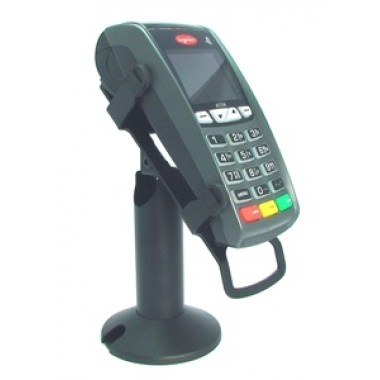
This is what a payment terminal looks like in most US chain stores. It would be attached to a mount of some sort on the customer side of a cashier booth: http://www.ncrcounterpoint.com/media/catalog/product/cache/1... It has a slot for a chip card at the bottom, a slot to swipe a card on the right, a PIN pad for debit transactions, and may be tap-enabled. The screen portion displays the order total and other instruct…

The ones at regular checkouts in the UK tend to look like this - https://www.primatel.co.uk/image/cache/data/ICT-EFT%20T&S%20...

You can swivel it, tilt it, and even pick it up off of its mount if it's in an awkward position.

Re: What happens when you swipe a credit card

#43

i've always found it to be profoundly messed up that address validation (AVS) and security code validation (CVV/CSC) happen after the funds are authorized and held by the issuing bank. this means if you choose to decline transactions for cvv or avs reasons in your gateway settings, those funds are still actually held by the customer's bank as pending for ~24h, preventing them from trying the auth again if it puts the…

We wrote our own system that preauths to get AVS, mandates a match to proceed or automatically voids the auth. You wouldn't believe his many people don't seem to know their own billing address. Customers get frustrated about the strict enforcement but we've only ever had one or two complaints about held funds. We just explain that those pending charges will fall off in 24 hrs, and they accept. Frankly, if the charge risks putting the customer over their limit, then it might not be such a good idea to deal with those customers. The cheapest customers are the most trouble and carry a higher incidence of returns fraud, fraudulent chargebacks, etc.

Re: What happens when you swipe a credit card

#44
post #23

Earlier quoted context omitted.

In my experience most stores are pretty good at this point about having some sort of sign or label if their chip reader isn't working. But I'm sure it's not always the case and there was certainly a lot of confusion a year or so ago when they were first phased in.

Well, now they would do well to put a sign up if the chip reader is working. Because now I by default assume the terminal vendor is lazy and won't implement it until they have a financial incentive to do so.

> until they have a financial incentive to do so.

They have had that for over a year in the States. Weakest point in the chain takes liability.

Re: What happens when you swipe a credit card

#46

i've always found it to be profoundly messed up that address validation (AVS) and security code validation (CVV/CSC) happen after the funds are authorized and held by the issuing bank. this means if you choose to decline transactions for cvv or avs reasons in your gateway settings, those funds are still actually held by the customer's bank as pending for ~24h, preventing them from trying the auth again if it puts the…

> i've always found it to be profoundly messed up that address validation (AVS) and security code validation (CVV/CSC) happen after the funds are authorized and held by the issuing bank.

That's because the alternative is the acquiring/issuing bank doesn't immediately reflect the authorisation in the shadow balance and only deducts it once either a confirmation has been received or a certain amount of time has elapsed, and of course that leads to a very chatty protocol and race conditions. Not to mention that the systems on the backend side at the acquiring/issuing bank would have to put the parts together.

My experience with writing integrations with acquiring banks was that you needed to issue a reversal to have the held funds actually removed from the shadow balance. But it didn't always work, something about the reversals having to be the next request immediately after the corresponding auth. Obviously this was a system not built to scale and the whole AVS/CVV was a bolt on.

AVS is most interesting because (at least using APACS 70, not so much ISO 8583 depending on the acquirer/issuer) it only works on the address numerics and not the other chars. So when you input your street number and postcode (at least outside the US) you can put whatever you want in the form as long as numbers match, anything else is thrown away.

Re: What happens when you swipe a credit card

#47

Earlier quoted context omitted.

> well, there's the rest of the world, and there's the US, where chip cards are recent and still lack chip+pin requirement for now. And don't forget paper checks are still circulating. I didn't try last time I was there but I imagine that when you go to cash a paper check you go to a guy sitting by an abacus.

No, most(?) people cash paper checks on their phone. Or rather, using their phone.

[deleted]

Re: What happens when you swipe a credit card

#48
What annoys me is the expiry date and CVV. It seems like their solution to "more secure" is just to add more numbers. How about put the last 3 digits on the back, and call it the cvv ? How about use alphanumeric card numbers so we dont have to use as many digits ? Get rid of the expiry date used as validation. It's just more entropy, if you need more entropy then add another digit. It's just annoying having to type that crap in all the time.

Re: What happens when you swipe a credit card

#49
post #4

> swipe your card Sadly swiping is being replaced by chipcard.

> Sadly swiping is being replaced by chipcard.

I see this being downvoted, and I'm wondering if it's not simply just misinterpreted.

Most places in the US I've used chip&pin, the process goes like this:

- arrive at merchant, select goods, get total.

- look for a sign that says chip is not enabled.

- failing that, move assuredly towards the chip reader and keep an eye on the cashier to ensure he or she doesn't move to stop you.

- put card in reader (if enabled you can do this at any time - but doing it earlier won't save you time)

- wait 2-10s while the reader figures out what to do

- approve whatever you need to when it pops up.

- wait 30-60 seconds for the transaction to go through, then find out you miskeyed your pin.

- Repeat previous steps and associated waiting. Ignore eye-rolling of others in line.

- walk out a satisfied customer.

Obviously I drew it out as long as possible there for effect, but I've only ever seen very slow C&P implementations here. I am usually spending up to a minute waiting for the transaction to clear.

By way of comparison, swipe cards take about 3-4 seconds to process. Debit cards with pins take 3-4 seconds + however long it takes you to type in the pin.

So I full understand the "sadly" prepended to the statement.

Re: What happens when you swipe a credit card

#50

Earlier quoted context omitted.

Wow, that took me back. I don't remember seeing anyone swiping their card in recent years, even chipcards are becoming more and more uncommon - contact-less payment leads the way now.

Where do you live?

Outside the United States.
Post reply on HN