Live data from Hacker News

Seven earth-sized planets discovered circling a star 39 light years from Earth

nature.com

61–70 of 754 posts

Re: Seven earth-sized planets discovered circling a star 39 light years from Earth

#61
post #39
post #33

To get a spacecraft there it would take: Accelerating at 1g the 1st half, and decelerating at 1g the 2nd half, the traveler would experience 7.3 years of time. For observers it would take 41.8 years at a max speed of 0.998c If you had a near perfect hydrogen -> helium fusion engine, it'd take about 6 million tons of fuel (about the mass of the Pyramids of Egypt or 2,000 Saturn V rockets)

We don't have any spacecraft that can go that fast, do we?

No. If I'm not mistaken we're in the order of magnitude of 0.0001c.
Re: Seven earth-sized planets discovered circling a star 39 light years from Earth

#62
post #39
post #33

To get a spacecraft there it would take: Accelerating at 1g the 1st half, and decelerating at 1g the 2nd half, the traveler would experience 7.3 years of time. For observers it would take 41.8 years at a max speed of 0.998c If you had a near perfect hydrogen -> helium fusion engine, it'd take about 6 million tons of fuel (about the mass of the Pyramids of Egypt or 2,000 Saturn V rockets)

We don't have any spacecraft that can go that fast, do we?

No, but we probably could with enough fuel. The bigger issue is space dust. Hitting it at relativistic speeds would be like flying into a cosmic shotgun for the entire journey.

Re: Seven earth-sized planets discovered circling a star 39 light years from Earth

#63
post #5

Let's go

It's a Trap ;) On a serious note, if we can travel close to the speed of light , say 95%, using for example, nuclear rockets, how long would it take to arrive ? ( from the travellers perspective )

The answer for an outside observer is: @ 1g of acceleration it would take 11 months to accelerate to the speed of light. A formula you can put in Google is: (285000000/9.8)/(60x60x24).

So 39-(.475x2) = 38, and 38/.95 = 40. So 42 years is your answer.

I have no idea how to calculate the relativistic spaceship's elapsed time.

It's all wishful thinking. The fastest thing man has created, the Juno spacecraft, travels, by some quick calculations, @ 0.00147% of the speed of light.

Re: Seven earth-sized planets discovered circling a star 39 light years from Earth

#64

> Gillon says that the six inner planets probably formed farther away from their star and then migrated inward. Now, they are so close to each other that their gravitational fields interact, nudging one another in ways that enabled the team to estimate each planet's mass. They range from around 0.4 to 1.4 times the mass of the Earth. Given that these planets are so close to each other, and interacting with each other…

According to the Nature paper (last section of http://www.nature.com/nature/journal/v542/n7642/full/nature2...) --

We computed [via n-body and other simulations] that TRAPPIST-1 has a 25% chance of suffering an instability over 1 Myr, and an 8.1% chance of surviving for 1 billion years (Gyr), in line with our n-body integrations.

And, further,

However, [these lifetimes] do not take into account the proximity of the planets to their host star and the resulting strong tidal effects that might act to stabilize the system. ... The masses and exact eccentricities of the planets remain uncertain, and our results make it likely that only a very small number of orbital configurations lead to stable configurations. ... The system clearly exists, and it is unlikely that we are observing it just before its catastrophic disruption, so it is probably stable over a long timescale. These facts and the results of our dynamical simulations indicate that, given enough data, the very existence of the system should bring strong constraints on its components’ properties...

Re: Seven earth-sized planets discovered circling a star 39 light years from Earth

#65
post #17

Earlier quoted context omitted.

Out of interest , although dimmer, are there any potential hazards simply due to the proximity of a dim star?

Actually they are fewer. A dim star has less high energy radiation and a lower probability of harmful solar flares.

But the danger of both of those things surely decreases with the square of the distance to the star?

Re: Seven earth-sized planets discovered circling a star 39 light years from Earth

#66
post #4

Let's go

Well, it's estimated that it will still be around in 4-5 trillion years, so, if we can get there, and it's habitable, that gives humanity a little longer lease in the universe.

Source on the 'trillions of years' number?

Re: Seven earth-sized planets discovered circling a star 39 light years from Earth

#67
post #38
post #33

To get a spacecraft there it would take: Accelerating at 1g the 1st half, and decelerating at 1g the 2nd half, the traveler would experience 7.3 years of time. For observers it would take 41.8 years at a max speed of 0.998c If you had a near perfect hydrogen -> helium fusion engine, it'd take about 6 million tons of fuel (about the mass of the Pyramids of Egypt or 2,000 Saturn V rockets)

What if we used engines powered by nuclear energy (fission or fusion)? Could we reduce the amount of fuel, since the energy density is so much higher?

This estimation was already assuming a fusion engine.

Re: Seven earth-sized planets discovered circling a star 39 light years from Earth

#69
Based on Voyagers current speed it would take approximately 18000 years to reach this system, the referance of a jet airplane taking millions of years seemed a bit misleading, with current technology and using gravitational boosting I would think that the time could be much less. Maybe it would be worth sending a probe? Granted I will never see it in my lifetime but it might be a project I could get behind.

Re: Seven earth-sized planets discovered circling a star 39 light years from Earth

#70
post #6

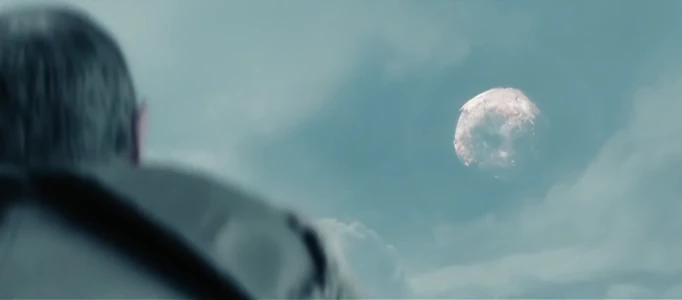
My favourite part of the press release: > The planets also are very close to each other. If a person was standing on one of the planet’s surface, they could gaze up and potentially see geological features or clouds of neighboring worlds, which would sometimes appear larger than the moon in Earth's sky. > In contrast to our sun, the TRAPPIST-1 star – classified as an ultra-cool dwarf – is so cool that liquid water cou…

So, basically, this is cooler than just about any world that's been depicted in sci-fi.

I guess J.J. Abrams is somewhat forgiven for this, then:

http://vignette4.wikia.nocookie.net/startrek/images/2/29/Vul... [edited for direct .jpg]

Post reply on HN